Background
In materials science, the discovery of new catalysts, high-performance batteries, and superconductors is vital for advancements across diverse industries, including energy, environment, and electronics. Traditionally, material discovery has relied on time-consuming and expensive experimental trial-and-error. AI technologies like Graph Neural Networks are addressing this bottleneck by enabling the direct prediction of material functionalities from atomic structures and electronic properties, thereby drastically shortening research and development cycles. The release of open datasets and models is particularly impactful, fostering a collaborative ecosystem that accelerates community-wide research and cultivates a competitive landscape.
Key Findings
A new Graph Neural Network (GNN) model has been developed to dramatically increase the speed of electronic fingerprint generation, thereby accelerating the prediction and discovery of novel materials on a large scale and at a substantially lower computational cost than previous methods. This groundbreaking approach holds immense potential for maximizing the efficiency of material exploration, particularly in critical sectors such as catalysis and battery technology.
Technical Details
The innovation of this GNN model lies in its training methodology, which utilizes Projected Density of States (PDOS). PDOS provides detailed information about a material’s electronic structure, enabling the model to capture physical and chemical properties with greater accuracy. The research demonstrated the model’s capability to rapidly generate fingerprints for over 100,000 material structures, significantly expanding the scope of computational exploration and allowing for efficient identification of promising candidates from a vast pool of potential materials. Further bolstering progress in this field, Meta AI has released the OMat24 inorganic materials dataset and the high-performing EquiformerV2 GNN model. EquiformerV2 has demonstrated superior results on the Matbench Discovery leaderboard, a key benchmark for materials discovery.
Outlook and Strategic Impact
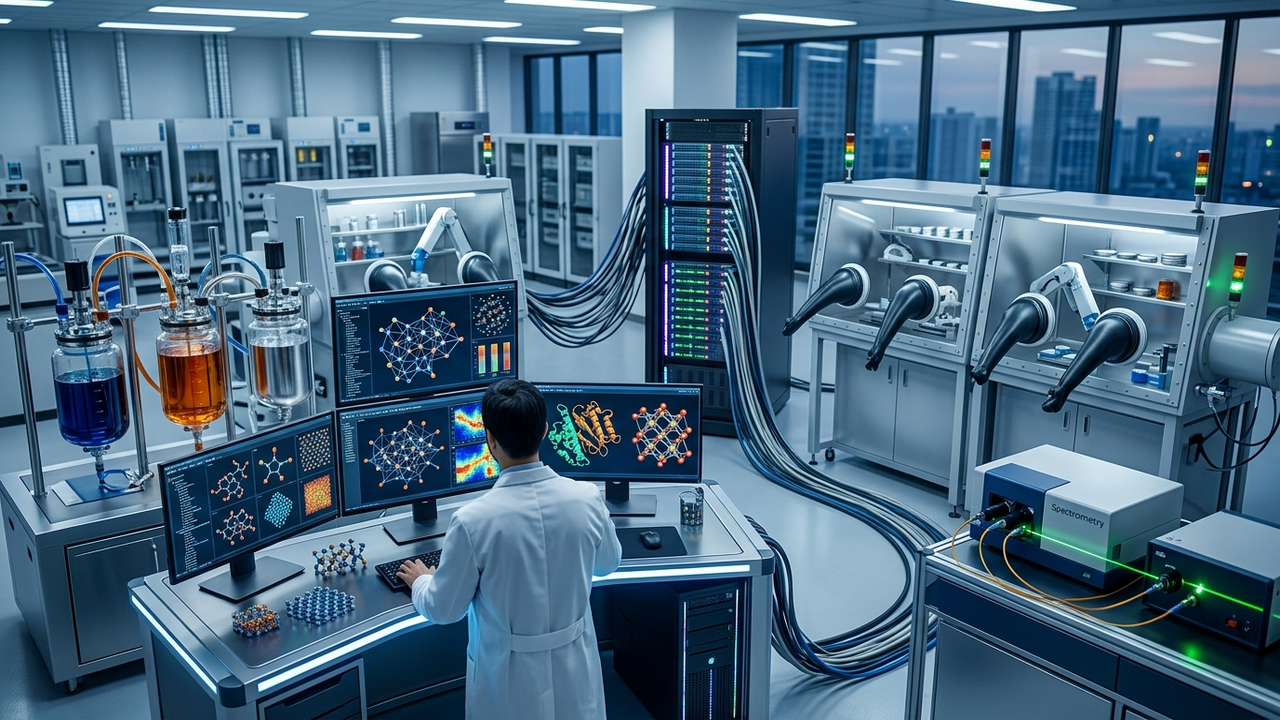
This new GNN model, along with Meta AI’s released dataset and model, is poised to provide significant momentum to materials informatics research. Future applications are expected to include more complex material systems and the inverse design of materials with specific functionalities, such as high thermal stability or superconductivity. Furthermore, the integration of GNNs with autonomous laboratory systems is anticipated to establish ‘closed-loop discovery cycles,’ where AI-proposed materials are automatically synthesized and characterized by robots, with feedback continuously refining the AI models. This synergistic approach will further accelerate the pace of material development and substantially reduce the time it takes for innovative materials to reach the market.
Get our weekly technology intelligence — free
Receive an infographic that lets you judge at a glance whether each field’s analysis report is worth reading.
Subscribe Free — Weekly Tech Intelligence
By subscribing, you’ll receive Troy-Technical’s weekly technology intelligence newsletter.
- Your email and selected fields are used only to deliver the newsletter.
- We never share your information with third parties.
- You can unsubscribe anytime via the link in each email.
See our Privacy Policy for details.
Takes about a minute · Unsubscribe anytime








Comments