
Key Findings
A joint research team from Karlsruhe Institute of Technology in Germany and the University of Tsukuba in Japan has successfully developed a groundbreaking heat-driven cooling system that operates without relying on electric motors. This innovative prototype demonstrated a component-level temperature differential of approximately 4°C when its actuator was heated to 86°C, indicating a significant potential for highly energy-efficient refrigeration that consumes minimal electricity compared to conventional technologies.
Technical Details
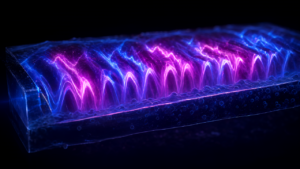
At the core of this novel cooling system are two ultra-thin films fabricated from a nickel-titanium shape memory alloy (SMA). Shape memory alloys possess the unique property of transforming their shape in response to temperature changes, which can be harnessed to generate a cooling effect. The research team ingeniously exploited the superelastic properties of this material to directly convert thermal energy into mechanical motion, which then drives a thermodynamic cycle leading to refrigeration. As the SMA films expand and contract upon heating and cooling, they draw heat from their surroundings, producing a noticeable cooling effect. This entirely passive process consumes negligible electricity, making it particularly attractive for applications where sustainability and energy independence are paramount.
Background & Context
Cooling systems, including air conditioning and refrigeration, account for a substantial portion of global energy consumption. Conventional vapor-compression systems often rely on potent greenhouse gases and demand considerable electrical power, contributing significantly to environmental burden. With the escalating urgency of addressing climate change, there is a pressing need for more environmentally friendly and energy-efficient cooling technologies. Heat-driven cooling, particularly utilizing waste heat or solar thermal energy, has been a promising area of research, but practical implementation has faced challenges related to efficiency and compactness. This latest research, by optimizing the unique properties of SMAs, offers a potential solution to these long-standing issues.
Strategic Significance & Outlook
This heat-driven cooling system holds immense promise as a sustainable and eco-friendly alternative to traditional electrically powered refrigeration. Potential future applications include automotive air conditioning, solar-powered domestic cooling systems, process cooling in industrial settings utilizing waste heat, and even portable refrigeration devices. The research team is committed to further enhancing the system’s cooling efficiency and temperature differential, alongside rigorous validation of its scalability and long-term durability for commercialization. Widespread adoption of this technology could substantially contribute to global energy consumption reduction and greenhouse gas emission mitigation, marking a pivotal step towards a more sustainable global energy landscape.
Get our weekly technology intelligence — free
Receive an infographic that lets you judge at a glance whether each field’s analysis report is worth reading.
Subscribe Free — Weekly Tech Intelligence
By subscribing, you’ll receive Troy-Technical’s weekly technology intelligence newsletter.
- Your email and selected fields are used only to deliver the newsletter.
- We never share your information with third parties.
- You can unsubscribe anytime via the link in each email.
See our Privacy Policy for details.
Takes about a minute · Unsubscribe anytime







Comments