Key Findings
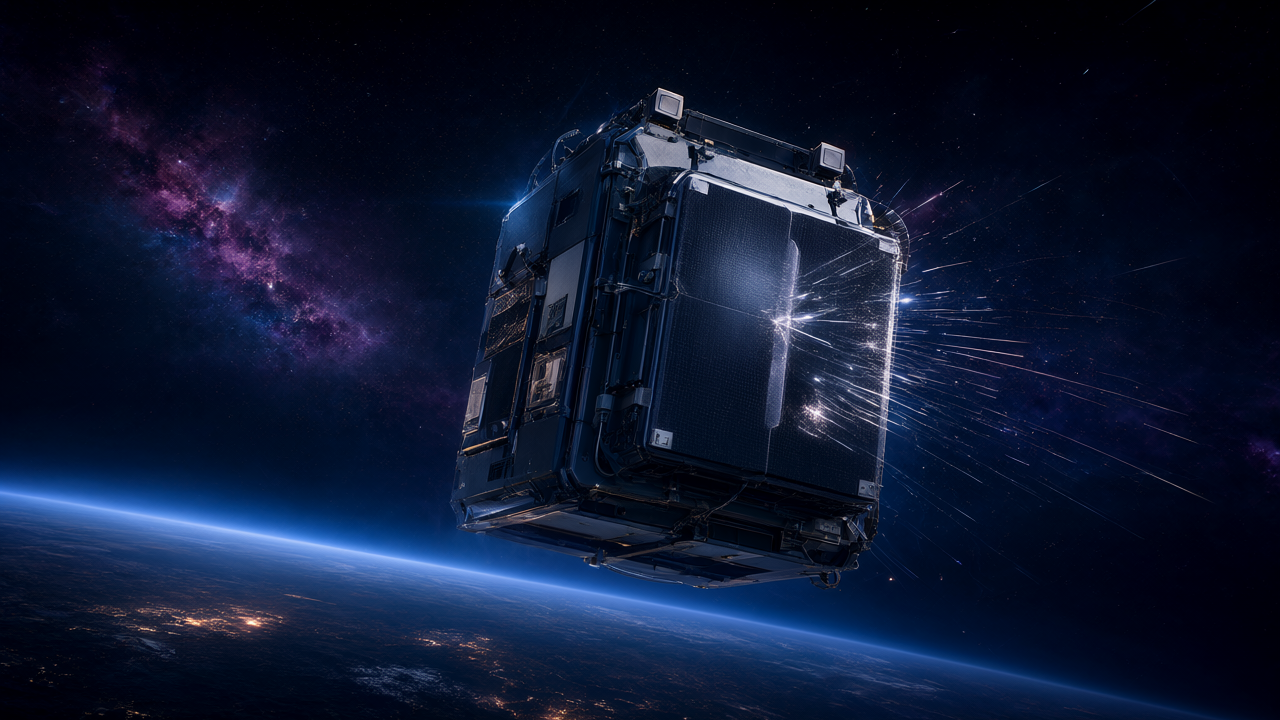
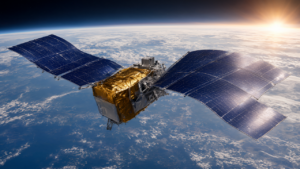
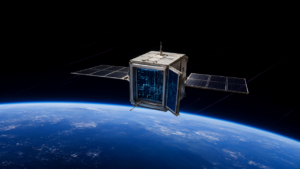
Google is launching the first in-orbit test of its Project Suncatcher, a long-term research initiative focused on deploying AI in space. A prototype satellite, equipped with Google’s Tensor Processing Units (TPUs), will embark on a SpaceX Transporter-18 mission to assess how these AI-specialized chips perform under the extreme conditions of space, including intense launch vibrations, cosmic radiation, and the vacuum environment’s cooling challenges. Early ground-based testing has already shown that the TPU chips can withstand radiation doses exceeding the total ionizing dose expected over a typical five-year space mission, marking a significant advancement for space-based AI computing.
Technical / Clinical Details
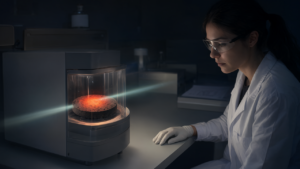
The TPUs, originally designed for terrestrial data centers, require substantial modifications and rigorous testing to endure spaceflight. Key technical challenges addressed include surviving the violent vibrations and accelerations of rocket launches (often exceeding 10 Gs), protecting against high-energy cosmic radiation (hundreds of Sieverts annually in LEO), and managing heat dissipation in a vacuum. Google has enhanced the TPU’s packaging and radiation-hardening design. Specifically, tests for Total Ionizing Dose (TID) tolerance confirmed the chips’ ability to operate reliably even after exposure to cumulative radiation levels higher than those encountered during a five-year mission in low-Earth orbit. This resilience positions TPUs as potential core components for on-board data processing in satellites, real-time analytics for Earth observation data, and autonomous systems for future deep space probes.
Background & Context
Deploying AI computing in space is crucial for reducing reliance on Earth-based data centers, enabling real-time, on-board processing of vast amounts of data collected by satellites, and minimizing the volume of data transmitted back to Earth. This capability facilitates low-latency decision-making, with applications spanning disaster monitoring, precision agriculture, defense, and scientific research. For deep space missions, where communication delays with Earth are substantial, on-board AI for autonomous decision-making and action is indispensable. Google’s initiative fundamentally shifts the paradigm of data processing in space, potentially laying the groundwork for a new space economy driven by distributed AI intelligence.
Strategic Significance & Outlook
The success of Project Suncatcher’s in-orbit test is a pivotal milestone towards Google’s ambitious vision of establishing ‘AI data centers’ in space. This achievement will decrease dependence on terrestrial cloud infrastructure, dramatically enhancing the autonomy and efficiency of space assets. In the future, AI integration could power lunar bases, Mars missions, and advanced on-board processing for large-scale satellite constellations in low-Earth orbit, solidifying space as a new computing frontier. Beyond bolstering the safety and efficiency of space exploration, this technology promises to deliver innovative services and capabilities that will have profound impacts on life on Earth, from environmental monitoring to global connectivity.
Get our weekly technology intelligence — free
Receive an infographic that lets you judge at a glance whether each field’s analysis report is worth reading.
Subscribe Free — Weekly Tech Intelligence
By subscribing, you’ll receive Troy-Technical’s weekly technology intelligence newsletter.
- Your email and selected fields are used only to deliver the newsletter.
- We never share your information with third parties.
- You can unsubscribe anytime via the link in each email.
See our Privacy Policy for details.
Takes about a minute · Unsubscribe anytime



Comments