Key Findings
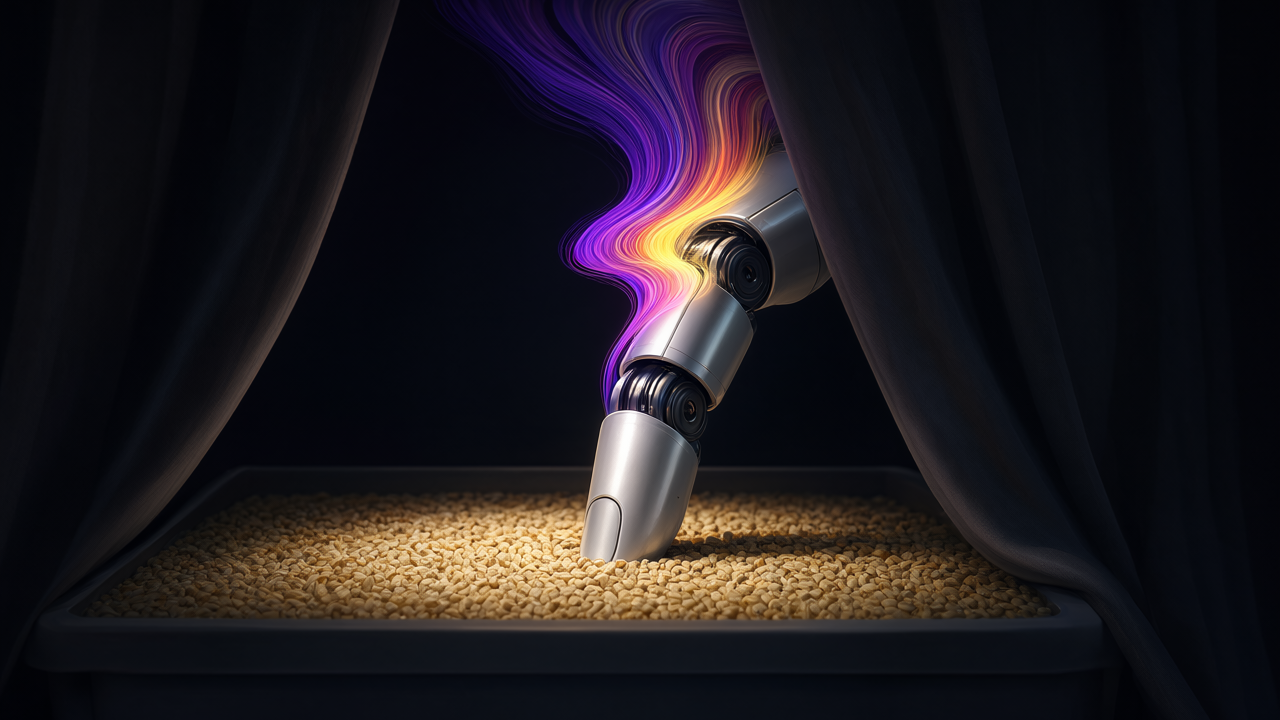
This research introduces “SpectRobot,” an innovative framework designed to learn high-bandwidth tactile perception from single-point tactile signals. SpectRobot transforms these signals into compact time-frequency spectrograms, which are then encoded as fixed-size, image-like representations, making them amenable to processing by standard vision encoders. This approach demonstrates the ability to solve visually occluded manipulation tasks by exploiting the rich dynamics inherent in sparse, high-bandwidth single-point measurements, rather than relying on increased spatial density.
Technical / Clinical Details
The core of SpectRobot lies in its efficient encoding of tactile history through time-frequency spectrograms. This allows for the compact representation of vast tactile datasets, enabling the application of established image processing techniques. Specifically, high-frequency information, such as vibrations and pressure changes when a robot arm touches an object, is captured spectrally over time. This process extracts detailed insights into material properties and contact dynamics. Experimental results confirm that this framework achieves remarkable success rates in complex tasks like grasping and manipulating objects in visually obstructed environments.
- Time-Frequency Spectrogram Conversion: Efficiently extracts high-bandwidth information from single-point tactile signals.
- Vision Encoder Compatibility: Leverages powerful existing vision AI models to learn tactile perception.
- Enabling Visually Occluded Manipulation: Allows robots to perform complex tasks using only tactile feedback, without direct visual input.
Background & Context
For robots to achieve human-like dexterity in real-world environments, tactile information is as crucial as visual input. However, developing high-resolution, wide-area tactile sensors presents significant technical challenges, and processing their complex data is equally difficult. SpectRobot addresses this by providing a novel approach to extract richer information from limited single-point tactile data. This directly translates to improved precision in industrial assembly tasks and enhanced ability for service robots to handle diverse objects in home environments.
Strategic Significance & Outlook
Frameworks like SpectRobot open a new frontier in tactile sensing, laying the groundwork for robots to operate more autonomously and dexterously in complex environments. Future prospects include reducing robot design costs and complexity while dramatically improving capabilities, as fewer sensors will be needed to gather more comprehensive information. This innovation is expected to accelerate the application of robots across various sectors, including manufacturing, healthcare, and service industries.
Source: https://papers.cool/arxiv/2609.24621
Get our weekly technology intelligence — free
Receive an infographic that lets you judge at a glance whether each field’s analysis report is worth reading.
Subscribe Free — Weekly Tech Intelligence
By subscribing, you’ll receive Troy-Technical’s weekly technology intelligence newsletter.
- Your email and selected fields are used only to deliver the newsletter.
- We never share your information with third parties.
- You can unsubscribe anytime via the link in each email.
See our Privacy Policy for details.
Takes about a minute · Unsubscribe anytime








Comments