
Key Findings
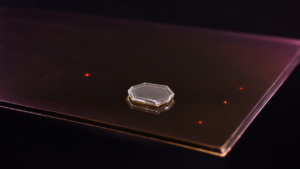
Recent international research has unveiled a significant breakthrough in lead-free tin-based perovskite solar cell materials, demonstrating that ‘hot electrons’ generated by light illumination can retain their excess energy for nanoseconds, a dramatic extension from conventional picosecond durations. This 1000-fold increase in lifetime holds the potential to enable the development of next-generation solar cells exceeding the theoretical efficiency limit of 33%, marking a substantial advancement for solar energy technology.
Technical / Clinical Details
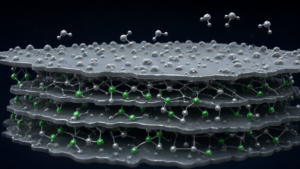
Researchers discovered that this prolonged hot electron lifetime is attributed to a unique charge carrier cooling mechanism within tin-based perovskites. Specifically, the process by which electrons lose energy to lattice vibrations (phonons) is dramatically slowed, allowing them to remain in a high-energy state for longer periods. This increases the opportunity for electrons to extract more energy from the harvesting layer, consequently boosting the device’s power conversion efficiency. This innovation opens up a new energy conversion pathway, previously unattainable with traditional silicon-based solar cells, allowing for the utilization of a broader solar spectrum.
Background & Context
Perovskite solar cells are gaining significant attention as a next-generation solar technology due to their high efficiency and low manufacturing costs. However, improving the efficiency and stability of lead-free materials has been a persistent challenge. The concept of utilizing hot electrons has been studied for years as a potential route to break through the Shockley-Queisser limit of silicon solar cells, but demonstrating this effect with practical lifetimes in actual materials has been difficult. This discovery is critically important for the industry as it provides a concrete pathway to overcome this challenge using environmentally friendlier tin-based perovskites.
Strategic Significance & Outlook
This finding is expected to accelerate research and development in optimizing material design and device structures for tin-based perovskite solar cells to push efficiencies beyond 33%. If hot electron utilization technology can be commercialized, it would dramatically improve the cost-effectiveness of solar power generation and further propel the transition to clean energy. In the future, it is anticipated to contribute to the widespread adoption of higher-performance, more sustainable solar cells and serve as a catalyst for innovation in the energy sector.
Get our weekly technology intelligence — free
Receive an infographic that lets you judge at a glance whether each field’s analysis report is worth reading.
Subscribe Free — Weekly Tech Intelligence
By subscribing, you’ll receive Troy-Technical’s weekly technology intelligence newsletter.
- Your email and selected fields are used only to deliver the newsletter.
- We never share your information with third parties.
- You can unsubscribe anytime via the link in each email.
See our Privacy Policy for details.
Takes about a minute · Unsubscribe anytime






Comments