Key Findings
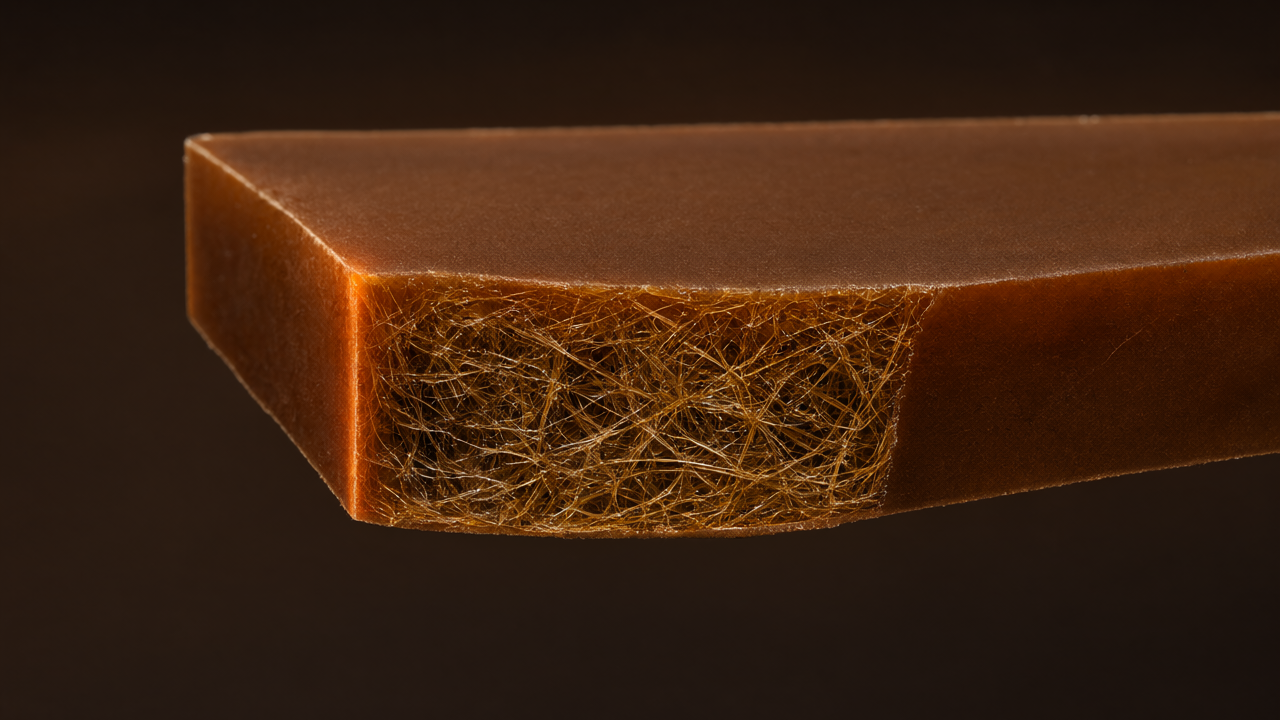
A research team led by Professor Hyun-Wook Yeo at Kyungpook National University in South Korea has successfully developed a groundbreaking liquid crystalline bismaleimide (BMI)-based vitrimer that exhibits ultra-high heat resistance, capable of withstanding temperatures over 300°C, while also being re-moldable after initial hardening. This innovative polymer achieves an impressive glass transition temperature (Tg) of 304.6°C, positioning it as a transformative material for industries requiring both extreme thermal stability and reprocessability.
Technical / Clinical Details
The newly developed vitrimer represents a hybrid class of polymers that combines the desirable attributes of both thermosets and thermoplastics. Like thermosets, it forms a robust cross-linked network, providing high mechanical strength and thermal stability. However, unlike conventional thermosets, its cross-linked structure can undergo reversible bond exchange reactions (specifically, transesterification) when heated to a specific temperature range, allowing the material to be reshaped and reprocessed multiple times. The critical feature of this liquid crystalline BMI-based vitrimer is its remarkably high Tg of 304.6°C, confirming its ability to maintain structural integrity in environments exceeding 300°C. This performance meets or even surpasses the thermal resistance of high-temperature composite materials, such as those based solely on BMI resins, commonly used in aerospace applications. This reprocessability simultaneously addresses the long-standing challenges of recycling and repairing thermoset composites, which are typically intractable once cured.
Background & Context
The demand for high-performance polymers capable of enduring extreme conditions is rapidly increasing across sectors like aerospace, defense, and advanced electronics. Traditional thermoset resins, while offering excellent thermal and mechanical properties, are difficult to reprocess once cured, leading to challenges in waste management and repair costs. Conversely, thermoplastics are reprocessable but often fall short in terms of heat resistance and mechanical strength compared to their thermoset counterparts. Vitrimers have emerged as a promising solution to overcome this trade-off. The Korean team’s development of a vitrimer with over 300°C heat resistance significantly expands the potential applications, particularly in high-temperature environments. For semiconductor packaging, where both high operating temperature reliability and manufacturing flexibility (including reworkability) are crucial, this new material presents immense value.
Strategic Significance & Outlook
This ultra-high heat-resistant and re-moldable vitrimer is expected to find broad applications in critical components such as aerospace engine nacelles and structural parts, high-temperature electrical and electronic devices, and insulating materials for next-generation semiconductor packaging. Its compatibility with advanced manufacturing techniques like 3D printing could enable the creation of complex, thermally resistant parts that can be repaired or recycled throughout their lifecycle, contributing to more sustainable high-performance material systems. This technology has the potential to profoundly impact the future of the aerospace and electronics industries by simultaneously enhancing performance and reducing environmental burden.
Source: https://mbiz.heraldcorp.com/article/10882132
Get our weekly technology intelligence — free
Receive an infographic that lets you judge at a glance whether each field’s analysis report is worth reading.
Subscribe Free — Weekly Tech Intelligence
By subscribing, you’ll receive Troy-Technical’s weekly technology intelligence newsletter.
- Your email and selected fields are used only to deliver the newsletter.
- We never share your information with third parties.
- You can unsubscribe anytime via the link in each email.
See our Privacy Policy for details.
Takes about a minute · Unsubscribe anytime



Comments