


Key Findings
Researchers at Chalmers University of Technology have engineered an AI system that autonomously generates scientific hypotheses, designs and executes experiments using automated lab equipment, and interprets the results to learn. This “AI scientist” successfully identified aminoadipate, a novel compound that enhanced yeast growth by approximately 7% per millimolar under formic-acid stress, demonstrating a complete closed-loop scientific discovery process.
Technical / Clinical Details
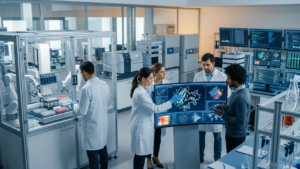
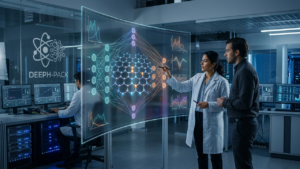
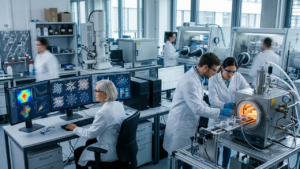
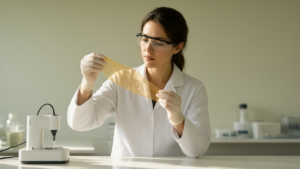
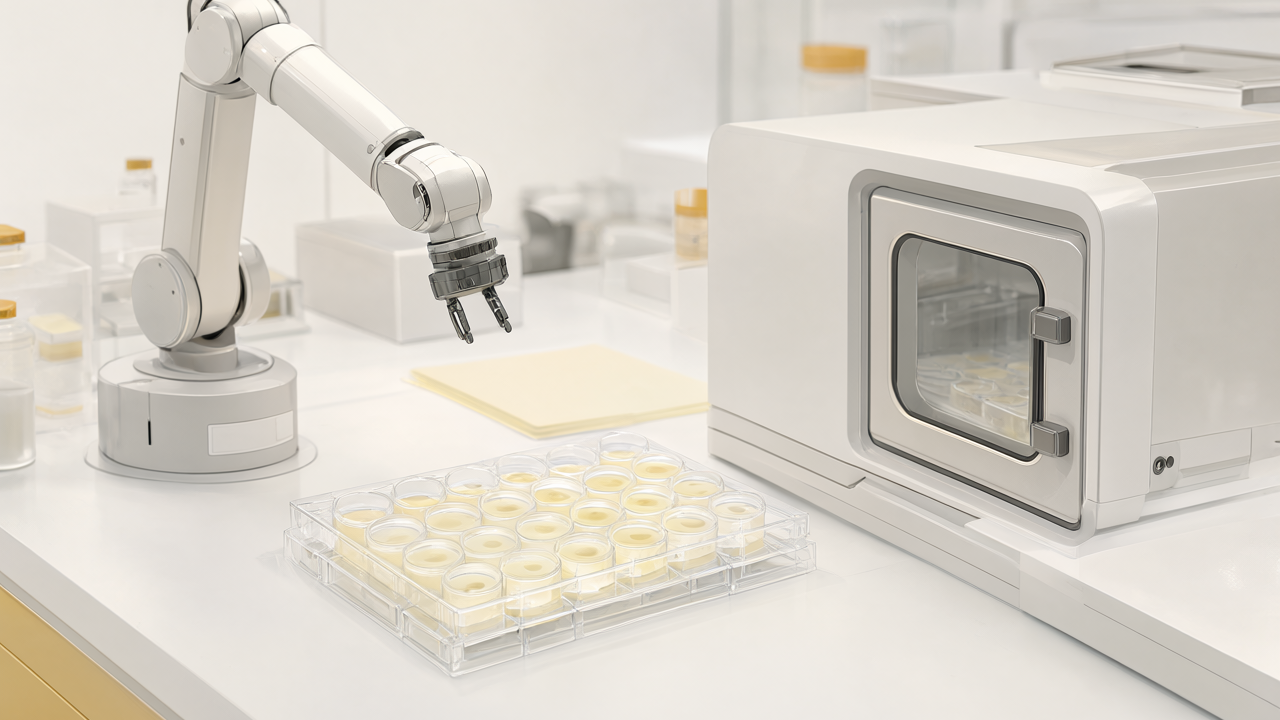
The developed AI system is designed to perform the entire research cycle without human intervention. Initially, it generates scientific hypotheses by analyzing existing knowledge bases and data. Subsequently, it designs experimental protocols to test these hypotheses and then controls automated laboratory equipment (a robotic system) to conduct the actual experiments. Upon obtaining experimental results, the AI analyzes the data to validate its hypotheses. This iterative process forms a feedback loop, allowing the AI to learn from past experiments and refine its subsequent hypothesis generation and experimental design. In the demonstration, the AI analyzed metabolic pathway information to search for compounds that could optimize the growth of yeast (Saccharomyces cerevisiae) under formic-acid stress. It successfully identified aminoadipate as an effective enhancer, with experimental validation confirming an approximately 7% increase in yeast growth rate upon its addition. This system showcases high efficacy, particularly in biological and chemical discovery, where large search spaces and trial-and-error approaches are often indispensable.
Background & Context
The pace of scientific research has historically been constrained by the time and resources required for complex experimental design, execution, and data analysis. Advances in AI and robotics promise to alleviate these bottlenecks, dramatically accelerating the rate of discovery. Concepts such as ‘self-driving labs’ and ‘AI scientists’ aim to offload many manual research tasks to AI, enabling human researchers to focus on higher-level creative thinking. Such systems are poised to make a significant impact across industries where the discovery of new molecules and processes is critical, including drug discovery, materials science, and biotechnology.
Strategic Significance & Outlook
The development of this AI scientist represents a major stride towards achieving truly autonomous scientific discovery systems. In the future, such systems are expected to generate novel hypotheses that human researchers might overlook, leading to unexpected breakthroughs. Specifically, for pressing industrial challenges—such as more efficient biofuel production, the discovery of new antibiotics, or the development of environmentally friendly catalysts—AI is anticipated to autonomously explore and optimize solutions. This technology has the potential to significantly reduce research and development timelines and costs, redefining the boundaries between science and industry.
Source: https://www.zmescience.com/science/ai-scientist-biology/
Get our weekly technology intelligence — free
Receive an infographic that lets you judge at a glance whether each field’s analysis report is worth reading.
Subscribe Free — Weekly Tech Intelligence
By subscribing, you’ll receive Troy-Technical’s weekly technology intelligence newsletter.
- Your email and selected fields are used only to deliver the newsletter.
- We never share your information with third parties.
- You can unsubscribe anytime via the link in each email.
See our Privacy Policy for details.
Takes about a minute · Unsubscribe anytime