

Key Findings
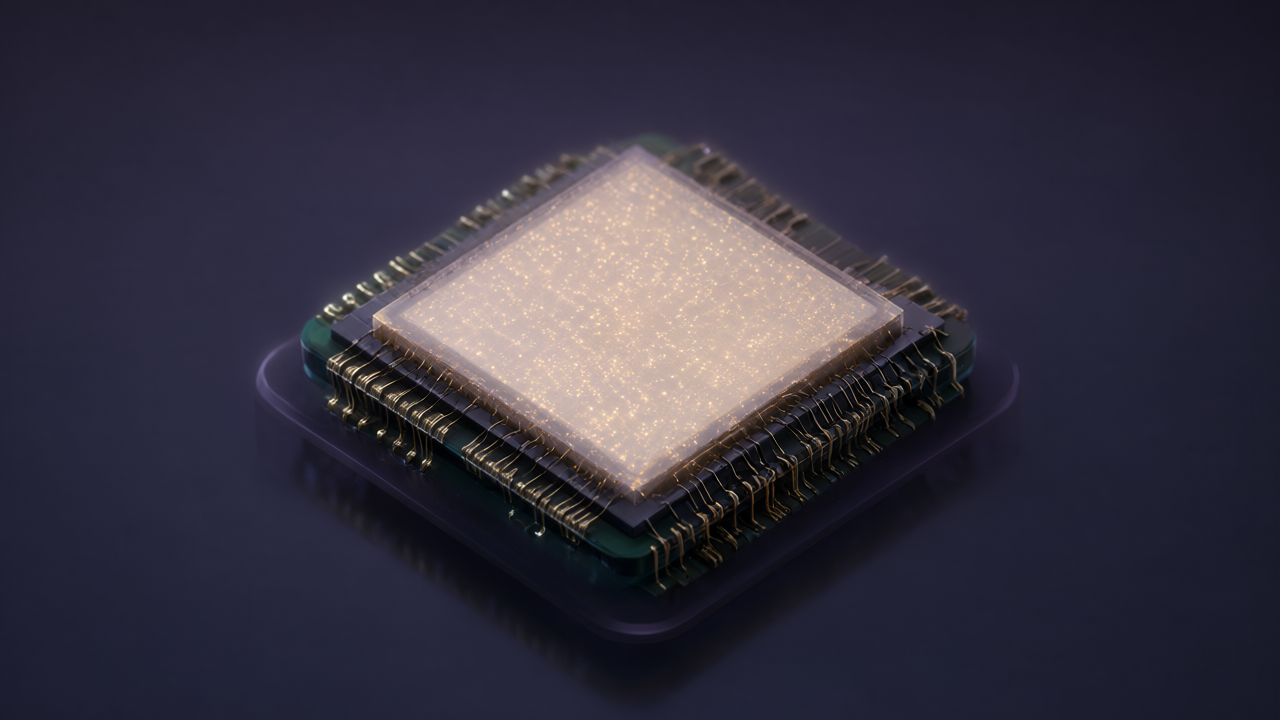
Researchers at the University of Texas at San Antonio (UTSA)’s MATRIX AI consortium have announced the development of “Genesis,” a revolutionary spike neuromorphic accelerator chip that allows AI systems to continuously accumulate new knowledge without overwriting previously learned information. This breakthrough directly addresses the critical “catastrophic forgetting” problem in AI, enabling autonomous, on-device learning in environments with limited resources.
Technical Details
The Genesis chip utilizes a spike neuromorphic architecture, designed for ultra-low power operation at the milliwatt level. This characteristic makes it ideally suited for edge AI applications where constant connection to data centers or reliable cloud infrastructure is not feasible. The chip’s ability to prevent catastrophic forgetting means that AI models can adapt and evolve over their operational lifetime without requiring frequent retraining or significant memory resources. Potential applications span a wide range of devices, including drones that must adapt to changing environmental conditions, medical implants that continuously learn patient-specific data, and wearable sensors that personalize user experiences over time.
Background & Context
Catastrophic forgetting has been a major impediment to the deployment of AI systems in real-world scenarios that demand continuous adaptation. Traditional neural networks often struggle to integrate new information without degrading performance on previously mastered tasks. The Genesis chip overcomes this fundamental limitation, paving the way for more robust and truly autonomous AI. This innovation positions UTSA as a leader in next-generation AI hardware designed for practical, long-term deployment at the edge, contrasting with cloud-centric AI solutions and offering a distinct advantage for real-world material discovery applications where continuous learning from experimental results is crucial.
Strategic Significance & Outlook
This technology represents a significant step towards realizing lifelong learning AI, where systems can acquire and integrate knowledge over their entire operational lifespan, much like biological brains. The ultra-low power consumption further contributes to extended battery life for IoT devices, accelerating the pervasive integration of AI into various facets of society and industry. The ability of AI to learn and adapt continually on the device itself opens new paradigms for intelligent systems that are self-sufficient and resilient, potentially revolutionizing areas such as adaptive material design and smart manufacturing.
Source: https://news.utsa.edu/2026/09/meet-genesis-the-ai-chip-that-doesnt-forget/
Get our weekly technology intelligence — free
Receive an infographic that lets you judge at a glance whether each field’s analysis report is worth reading.
Subscribe Free — Weekly Tech Intelligence
By subscribing, you’ll receive Troy-Technical’s weekly technology intelligence newsletter.
- Your email and selected fields are used only to deliver the newsletter.
- We never share your information with third parties.
- You can unsubscribe anytime via the link in each email.
See our Privacy Policy for details.
Takes about a minute · Unsubscribe anytime