Key Findings
Researchers at WashU Medicine have achieved a significant breakthrough by using CRISPR gene-editing technology to engineer donor stem cells, specifically by removing the CD33 antigen, to protect healthy blood cells during aggressive cancer treatment. In a 30-patient clinical trial, these modified stem cells successfully engrafted in patients and demonstrated the ability to shield healthy hematopoietic cells from CD33-targeted cancer treatments. This innovation directly addresses a critical challenge in treating blood cancers like acute myeloid leukemia (AML), enabling more potent therapeutic strategies without incurring severe off-target toxicities to the healthy hematopoietic system.
Technical / Clinical Details
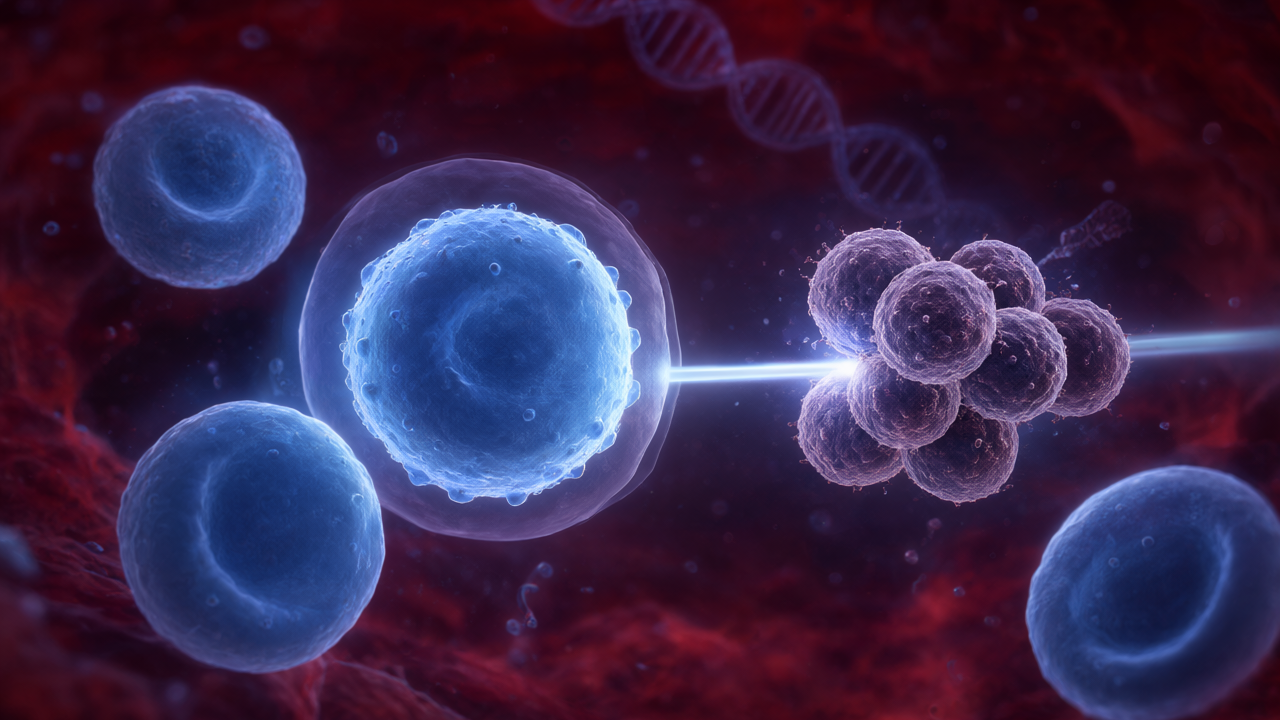
The core of this advancement lies in the precise application of CRISPR-Cas9 to knock out the CD33 gene in donor-derived hematopoietic stem cells. CD33 is a common target in AML therapies, including CAR T-cell approaches, due to its high expression on leukemia cells. However, its presence on healthy myeloid progenitor cells has historically led to severe myelosuppression and bone marrow aplasia as a side effect. By transplanting CD33-negative edited stem cells, patients can reconstitute a healthy, CD33-deficient hematopoietic system. This allows subsequent CD33-directed therapies to effectively eliminate leukemia cells while sparing the engineered, healthy donor cells. The trial confirmed successful engraftment of the edited cells, paving the way for reduced hematological toxicity post-CD33 targeted treatment.
Background & Context
Acute myeloid leukemia (AML) remains a formidable challenge, particularly for patients with relapsed or refractory disease, where curative options are limited. While CAR T-cell therapies hold great promise for AML, the ubiquitous expression of pan-leukemia antigens like CD33 on both malignant and healthy hematopoietic cells has posed a significant barrier. Current CD33-targeting strategies often lead to unacceptable bone marrow toxicity, necessitating rescue stem cell transplants. This CRISPR-based strategy circumvents this by making the donor cells resistant to CD33-directed toxicity, thereby widening the therapeutic window and potentially enhancing the efficacy of AML treatment without compromise on patient safety.
Strategic Significance & Outlook
This achievement represents a pivotal step in the evolution of targeted cancer therapies, particularly for hematological malignancies. By decoupling the anti-leukemic effect from the hematopoietic toxicity, the CRISPR-edited stem cell approach could enable the use of more potent CD33-targeted CAR T-cell therapies or antibody-drug conjugates, previously limited by safety concerns. Beyond AML, this strategy could be adapted to other cancers where target antigens are also expressed on healthy tissues. The long-term implications include improved patient outcomes, reduced treatment-related morbidity, and a broader applicability of precision gene-editing in conjunction with cellular immunotherapies, marking a significant advance in personalized medicine.
Source: https://www.sciencedaily.com/releases/2026/09/260924020408.htm
Get our weekly technology intelligence — free
Receive an infographic that lets you judge at a glance whether each field’s analysis report is worth reading.
Subscribe Free — Weekly Tech Intelligence
By subscribing, you’ll receive Troy-Technical’s weekly technology intelligence newsletter.
- Your email and selected fields are used only to deliver the newsletter.
- We never share your information with third parties.
- You can unsubscribe anytime via the link in each email.
See our Privacy Policy for details.
Takes about a minute · Unsubscribe anytime