Key Findings
Securecell has achieved notable success in optimizing Adeno-associated virus (AAV) manufacturing processes by implementing its innovative automated multi-vessel sampling system, Numera. This system has specifically led to precise and reproducible improvements in critical quality attributes (CQAs) of AAV, including viral titer, infectivity, viable cell density, and viability, particularly in HEK293 cell-based high-cell-density fed-batch and perfusion processes.
Technical / Clinical Details
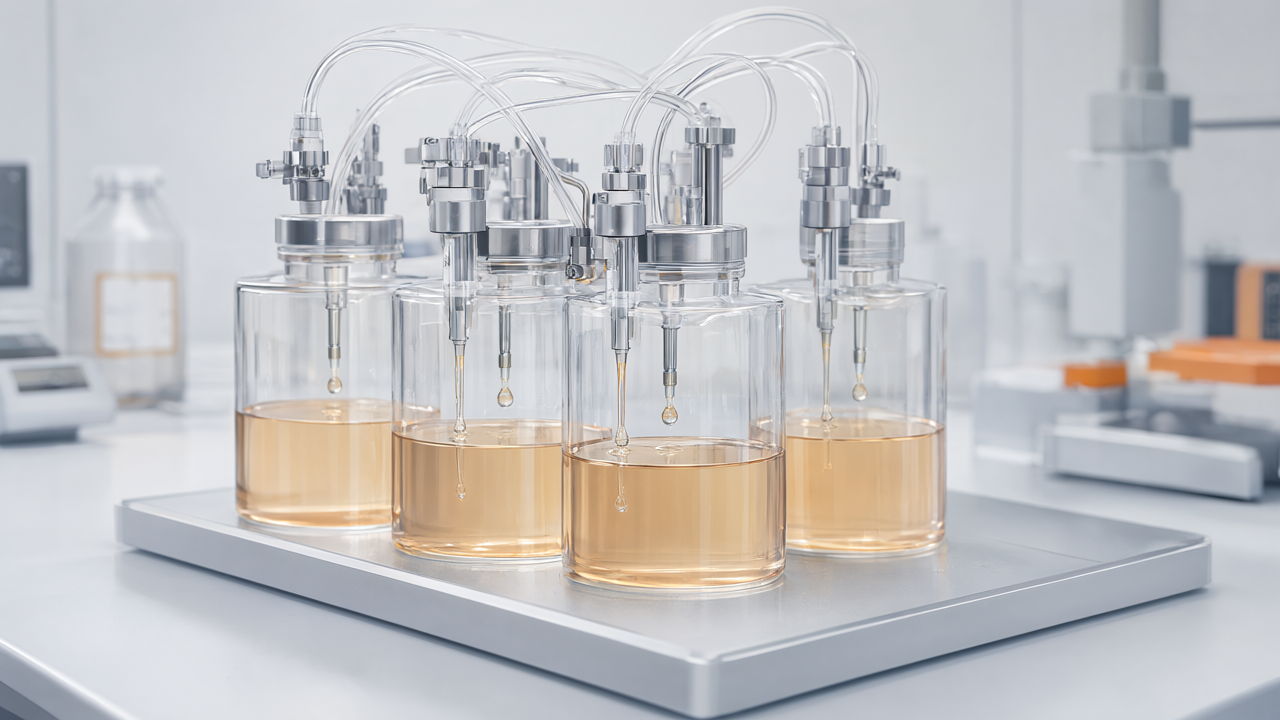
The Numera system boasts the capability to automatically, frequently, and aseptically draw samples from multiple bioreactors simultaneously. This eliminates errors and contamination risks associated with manual sampling, establishing an extremely reproducible data flow. The collected data is utilized for real-time monitoring and analysis of critical process parameters (CPPs) and CQAs in AAV manufacturing, enabling key optimizations:
- Optimization of high-cell-density culture: Identifying conditions that support high-density maintenance and proliferation of HEK293 cells in fed-batch and perfusion cultures, finely tuning processes to ensure cells maintain an optimal physiological state for AAV production.
- Enhanced viral titer: Dynamically adjusting culture conditions, such as media supplementation, pH, and dissolved oxygen, based on sampling data to maximize viral vector production efficiency.
- Improved infectivity: Identifying culture strategies to reduce incomplete viral particles and increase the proportion of functional viral particles.
- Strengthened quality control: High-frequency data enables early detection of process variations, ensuring the quality and consistency of AAV products.
This automated approach resolves AAV manufacturing bottlenecks, enabling more efficient and robust production.
Background & Context
Adeno-associated virus (AAV) vectors are rapidly gaining demand as the primary delivery tool for various gene therapies. However, AAV manufacturing is complex, plagued by scale-up challenges, low yields, and high costs across the industry. Optimizing and automating manufacturing processes are crucial to overcome these hurdles and deliver gene therapies to more patients. Solutions like Securecell’s embody the principles of Industry 4.0 in biomanufacturing, playing a vital role in accelerating the commercialization of next-generation gene therapy products.
Strategic Significance & Outlook
The implementation of automated multi-vessel sampling systems like Numera is a significant step towards driving overall automation and digitalization in biopharmaceutical manufacturing processes, including AAV. In the future, integrating this high-precision data acquisition capability with AI and machine learning algorithms is expected to enable predictive control and fully automated “closed-loop systems.” This will further reduce manufacturing costs for gene therapies, shorten production lead times, and ultimately provide more patients access to these innovative treatments. It also contributes to the rapid development and commercialization of emerging cell and gene therapy modalities, holding the potential to significantly transform the future of medicine.
Get our weekly technology intelligence — free
Receive an infographic that lets you judge at a glance whether each field’s analysis report is worth reading.
Subscribe Free — Weekly Tech Intelligence
By subscribing, you’ll receive Troy-Technical’s weekly technology intelligence newsletter.
- Your email and selected fields are used only to deliver the newsletter.
- We never share your information with third parties.
- You can unsubscribe anytime via the link in each email.
See our Privacy Policy for details.
Takes about a minute · Unsubscribe anytime