Key Findings
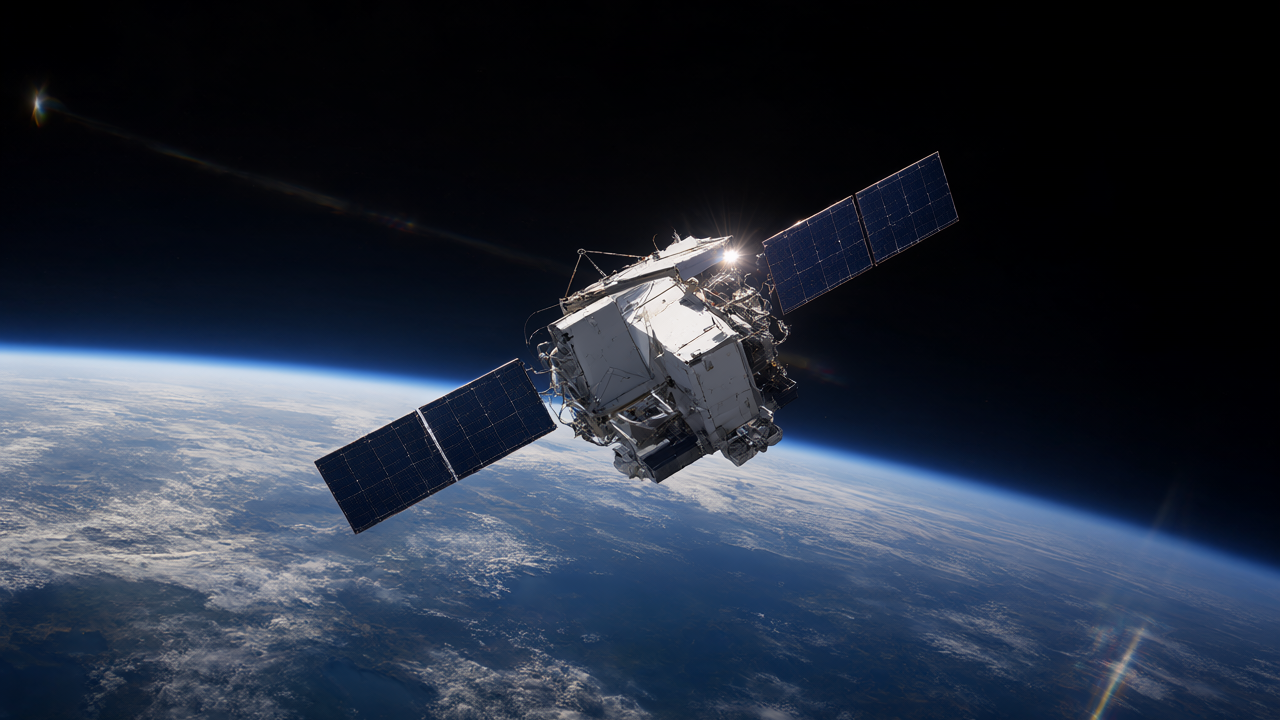
Google has successfully launched “Project Suncatcher,” a prototype satellite carrying its Tensor Processing Units (TPUs), marking a significant step towards deploying AI data centers in space. The primary objective of this mission is to rigorously evaluate how AI hardware performs and endures the harsh cosmic environment, exploring the feasibility of high-performance computing beyond Earth.
Technical / Clinical Details
- TPU Space Suitability Assessment: The Project Suncatcher satellite is equipped with Google’s custom-designed Trillium TPU chips, optimized for machine learning on Earth-based data centers. Operating in space presents unique challenges, including intense radiation, extreme temperature fluctuations, severe vibrations during launch, and the complexities of vacuum cooling. The satellite continuously monitors the functionality and resilience of the TPUs under these conditions, gathering crucial data on their reliability and performance in a space environment.
- Radiation Hardness Demonstration: Pre-flight ground testing confirmed that the Trillium TPU can withstand total ionizing radiation doses higher than those anticipated over a five-year space mission. This exceptional radiation tolerance is a critical factor for executing AI workloads reliably in space.
- Orbital Dynamics and Power Supply: The satellite is positioned in a sun-synchronous orbit, ensuring its solar panels receive nearly continuous sunlight. This design minimizes the need for heavy batteries and complex backup power systems, leading to a more power-efficient operation.
- Future Network Vision: Google’s long-term vision involves connecting clusters of satellites using high-bandwidth lasers to create a distributed AI data center network in space. This would significantly reduce data transmission latency to Earth, enhancing real-time AI processing capabilities for various space applications.
Background & Context
The demand for onboard data processing in space is rapidly increasing, driven by advancements in Earth observation, space communication, and autonomous missions. Traditional spaceflight computers have been performance-limited due to the stringent requirements for radiation hardening. However, the evolution and increasing complexity of AI models necessitate more powerful on-orbit processing capabilities. Project Suncatcher aims to bridge this gap by bringing cutting-edge AI to the forefront of space operations.
Strategic Significance & Outlook
The outcomes of Project Suncatcher have the potential to unlock new frontiers for AI technology in space. If successful, large-scale AI processing, once confined to Earth, could become a reality in orbit, promising transformative advancements across diverse sectors such as space exploration, Earth environmental monitoring, and space resource development. Ultimately, a network of distributed AI data centers orbiting Earth could revolutionize how data is collected and analyzed from space, ushering in a new era of space computing.
Get our weekly technology intelligence — free
Receive an infographic that lets you judge at a glance whether each field’s analysis report is worth reading.
Subscribe Free — Weekly Tech Intelligence
By subscribing, you’ll receive Troy-Technical’s weekly technology intelligence newsletter.
- Your email and selected fields are used only to deliver the newsletter.
- We never share your information with third parties.
- You can unsubscribe anytime via the link in each email.
See our Privacy Policy for details.
Takes about a minute · Unsubscribe anytime