Key Findings
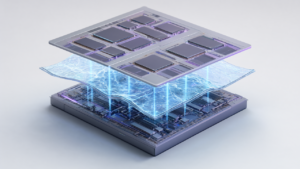
Samsung Electronics is projecting substantial price increases for its high-performance HBM4 products next year, bolstered by its confidence in supply capabilities and the accelerating performance demands of AI accelerators. Capitalizing on its unique trifecta of memory, foundry, and advanced packaging capabilities, Samsung is strategically integrating these technologies to develop next-generation HBM solutions. A key initiative is the development of “zHBM,” a 3D architecture designed to achieve up to eight times the performance and three times the power efficiency of HBM5 by vertically stacking memory on AI accelerators.
Technical / Clinical Details
Samsung’s focus for next-generation HBM technology centers on its innovative “zHBM” 3D architecture. This groundbreaking approach involves vertically stacking memory directly onto AI accelerators. This design dramatically shortens the data transfer distance between the chip and memory, leading to significant improvements in data bandwidth and latency.
Through zHBM, Samsung aims to achieve transformative performance enhancements:
- Up to 8x Performance Improvement: The goal is to boost AI workload processing capability by up to eight times compared to conventional HBM5. This is critical for accelerating AI model training times and enabling the execution of more complex, larger-scale AI models.
- 3x Power Efficiency: By minimizing data transfer distances and optimizing interconnects, zHBM targets a three-fold reduction in power consumption relative to HBM5. This will significantly contribute to lowering operational costs for AI data centers and enhancing sustainability.
The realization of zHBM is driven by the synergistic integration of Samsung’s internal memory manufacturing, logic foundry, and advanced packaging expertise (e.g., heterogeneous integration technologies like I-Cube). Advanced packaging, in particular, is indispensable for efficiently integrating multiple chips and establishing high-speed, low-power connections.
Background & Context
The explosive growth of AI has propelled an unprecedented demand for high-performance HBM. The performance of AI accelerators is heavily dependent on the bandwidth and efficiency of their adjacent memory, making HBM a critical component for overcoming AI chip bottlenecks. Samsung’s unique position, possessing capabilities in memory manufacturing, foundry services, and advanced packaging, provides a significant competitive advantage. This vertically integrated business model allows Samsung to establish distinct superiority in the design and manufacturing of next-generation HBM, setting new benchmarks for semiconductor competition in the AI era.
Strategic Significance & Outlook
Samsung’s zHBM development is poised to further solidify its leadership in the AI semiconductor market. The ambitious targets of up to eight times performance and three times power efficiency hold the potential to unlock the next frontier in AI technology. This innovative 3D architecture will facilitate the development of new high-performance, low-power solutions across a wide array of AI applications, including data centers, edge AI, and autonomous driving. The success of HBM4 and zHBM will be a crucial milestone for Samsung in maintaining a price premium and establishing its technological dominance in the evolving AI semiconductor landscape.
Source: https://www.mk.co.kr/en/business/12167424
Get our weekly technology intelligence — free
Receive an infographic that lets you judge at a glance whether each field’s analysis report is worth reading.
Subscribe Free — Weekly Tech Intelligence
By subscribing, you’ll receive Troy-Technical’s weekly technology intelligence newsletter.
- Your email and selected fields are used only to deliver the newsletter.
- We never share your information with third parties.
- You can unsubscribe anytime via the link in each email.
See our Privacy Policy for details.
Takes about a minute · Unsubscribe anytime