


Key Findings: AMD Samples Versal AI Core Adaptive SoC in Enhanced Space-Grade Package for Extended Missions
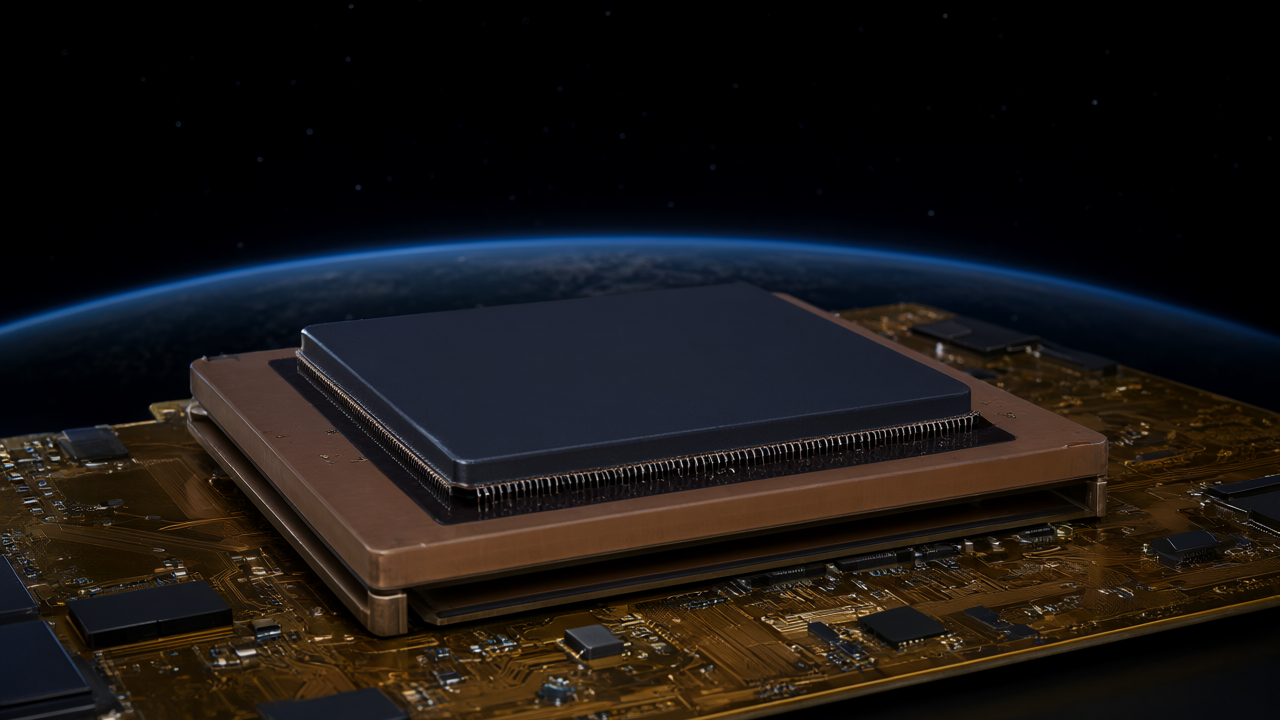
AMD has announced the sampling of its Versal AI Core XQRVC1902 adaptive SoC (System-on-Chip) housed in an enhanced space-grade organic lidless package. This innovative packaging solution is specifically engineered to endure the extreme conditions of long-duration space missions, with a target operational lifespan of up to 15 years. The design incorporates conservative design rules and advanced organic substrate materials, meticulously chosen to mitigate thermal and mechanical stresses inherent in space environments. This development marks a pivotal step toward achieving Class Y qualification, the most stringent quality and reliability standard for spaceflight components.
Technical Details: Reliability and Performance of Lidless Organic Packaging for Space
- Space Environment Resilience: Semiconductor devices in space are exposed to harsh conditions including extreme temperature fluctuations, radiation, and vacuum. For missions spanning over a decade, minimizing component degradation and failure risks from these factors is paramount. AMD’s new package is purpose-built to address these unique challenges.
- Enhanced Lidless Organic Package: Unlike traditional ceramic packages, organic packages offer advantages in weight and thermal dissipation. The “lidless” design further improves thermal resistance by optimizing the heat path directly from the chip to the heatsink, facilitating more efficient heat removal. The use of “enhanced organic substrate material” is critical for better managing thermal expansion coefficient mismatches, thereby improving the reliability of the interconnections between the die and the package over extended periods.
- Conservative Design Principles: To ensure long-term reliability, AMD has applied stringent, wider-margin design rules in both the circuit and package architecture. This approach enhances robustness against manufacturing variations and environmental stresses, enabling the achievement of a 15-year operational lifetime.
- Milestone for Class Y Qualification: Class Y is the highest level of quality and reliability for spaceflight components, demanding exceptional robustness and endurance. The initiation of sampling indicates AMD’s significant progress towards this top-tier certification, which is expected to broaden the adoption of its products in future space missions, from communication satellites to deep-space probes.
Background & Context: Growing Demand for High-Performance Computing in Space
The space industry is increasingly demanding more sophisticated onboard processing capabilities for satellites and exploratory probes. Implementing edge AI, real-time data analytics, and advanced communication functionalities in space requires high-performance and highly reliable FPGAs and SoCs. AMD’s Versal AI Core adaptive SoCs are designed precisely to meet these requirements, integrating AI engines with adaptive computing fabrics to offer both flexibility and formidable processing power in radiation-hardened formats.
Strategic Significance & Outlook: Accelerating AI Computing in Aerospace
AMD’s announcement represents a critical stride in accelerating the integration of high-performance computing and AI within the space sector. As Class Y qualification progresses, the Versal AI Core adaptive SoC is anticipated to be adopted across a wide range of space applications, including next-generation communication satellites, Earth observation missions, and deep-space exploration. This will contribute to advancements in real-time data analysis and autonomous systems in orbit, further expanding the possibilities of human endeavors in space.
Source: https://newsroom.amd.com/news/amd-sampling-versal-ai-core-adaptive-soc/
Get our weekly technology intelligence — free
Receive an infographic that lets you judge at a glance whether each field’s analysis report is worth reading.
Subscribe Free — Weekly Tech Intelligence
By subscribing, you’ll receive Troy-Technical’s weekly technology intelligence newsletter.
- Your email and selected fields are used only to deliver the newsletter.
- We never share your information with third parties.
- You can unsubscribe anytime via the link in each email.
See our Privacy Policy for details.
Takes about a minute · Unsubscribe anytime