


Key Findings
Hitachi has introduced two primary technological advancements focused on optimization. In semiconductor design, the company utilized agentic AI to reduce the number of design candidates for chiplet packages by more than 90%. Simultaneously, in the power sector, Hitachi combined CMOS annealing with AI and mathematical optimization to generate large-scale power supply-demand plans in 60 minutes—a process that previously took over a day using conventional mathematical optimization methods, representing a speedup of 20 times or more.
Technical Details
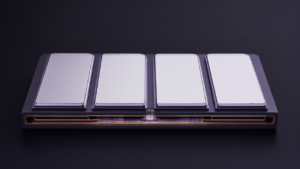
The chiplet design foundation integrates agentic AI for automated candidate narrowing with high-speed physical analysis technology. Designers input requirements in natural language, and the system automatically suggests chip combinations, layouts, and package structures while considering component procurement availability. This allows for rapid evaluation of electrical, thermal, and stress characteristics to minimize rework.
The power planning technology utilizes CMOS annealing, a method based on the Ising model that operates at room temperature and handles over 100,000 variables. For generator startup and shutdown planning (SCUC), CMOS annealing narrows promising candidates, which are then iteratively refined using AI, mathematical optimization, and power grid analysis to evaluate reserve capacity, output ramp rates, and operating costs.
Background & Context
Chiplet semiconductors, which combine small chips into a single device, are increasingly used in autonomous driving, edge AI, and industrial IoT. However, the complexity of layout and wiring often leads to lengthy early-stage design phases. In the power sector, the rise of data centers and renewable energy has increased the complexity of power grids, making traditional computation for 500+ generators difficult.
Significance & Outlook
These technologies support Hitachi’s “IWIM” social infrastructure intelligence platform and are intended for deployment within the “Lumada 3.0” solution. While verification shows significant lead-time reductions in the semiconductor supply chain and cost suppression in power grids, Hitachi has not yet disclosed the timing for commercialization or actual system application.
Source: https://finance.biggo.com/news/0743db9c-1a88-4d16-860f-72441620ae6b
Get our weekly technology intelligence — free
Receive an infographic that lets you judge at a glance whether each field’s analysis report is worth reading.
Subscribe Free — Weekly Tech Intelligence
By subscribing, you’ll receive Troy-Technical’s weekly technology intelligence newsletter.
- Your email and selected fields are used only to deliver the newsletter.
- We never share your information with third parties.
- You can unsubscribe anytime via the link in each email.
See our Privacy Policy for details.
Takes about a minute · Unsubscribe anytime