Key Findings: Samsung Reinforces HBM4E Cooling Solutions Amidst Growing Interposer Sizes and Thermal Challenges
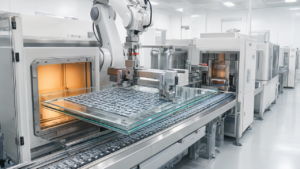
Samsung Electronics is significantly enhancing its cooling technologies for HBM4E, directly addressing the critical challenge posed by the dramatic expansion of interposer sizes for AI semiconductors and the corresponding increase in heat generation. The company is implementing innovative thermal management solutions, including Hybrid Copper Bonding (HCB) and Heat Path Block (HPB), to reduce package thickness, improve heat dissipation, and optimize thermal pathways. Furthermore, Samsung is actively fostering collaborations with equipment manufacturers and back-end partners to develop holistic cooling technologies that extend from the package level to entire server systems.
Technical Details: HCB and HPB for Advanced Thermal Management
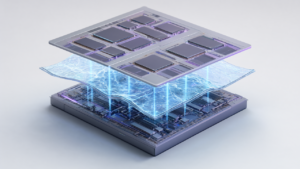
- Challenge of Larger Interposers: AI semiconductors are increasingly integrating more GPU cores, HBM stacks, and additional chiplets, necessitating larger silicon interposers. As interposer area grows, the total heat generated by the integrated chips escalates, making efficient thermal management paramount. Next-generation HBM4E, designed for higher data rates and bandwidth, will inherently produce even greater heat, exacerbating this challenge.
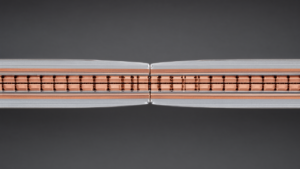
- Hybrid Copper Bonding (HCB): HCB is an advanced bonding technique that replaces traditional micro-bumps with direct copper-to-copper interconnects. This method significantly reduces the bond line thickness, thereby improving thermal conductivity. Copper’s superior thermal properties enable HCB to more efficiently extract heat generated within the HBM4E stack, preventing overheating of the stacked DRAM dies. This directly translates to enhanced chip reliability and sustained high performance.
- Heat Path Block (HPB): HPB is a thermal mitigation strategy designed to improve heat dissipation even without hybrid bonding. While specific implementation details are not fully disclosed, HPB typically involves identifying high thermal resistance paths within a package and enhancing them through the insertion of high-thermal-conductivity materials or structural optimizations. This aims to suppress temperature spikes at specific hotspots and promote a more uniform thermal distribution across the entire chip.
- Comprehensive Collaborative Strategy: Samsung is not solely relying on individual technologies but is pursuing an integrated development approach through collaborations. They are partnering with equipment manufacturers for process optimization and with back-end partners for package structure design and material selection. This collaborative effort seeks to optimize the entire thermal pathway, from the chip through the package to the server system, which is crucial for achieving superior cooling performance.
Background & Context: AI Semiconductor Competition and Thermal Design Imperatives
The AI semiconductor market is characterized by intense competition among industry giants like NVIDIA, Intel, AMD, and Samsung. A critical differentiator in this race is thermal design, which dictates how effectively chip performance can be maximized. While HBM technology has dramatically boosted AI chip capabilities, it has simultaneously introduced thermal dissipation as a major physical bottleneck. Effective thermal management directly influences chip stability, power consumption, and lifespan, making it a top priority in future AI semiconductor development.
Strategic Significance & Outlook: Thermal Management as a Key Success Factor for Next-Gen AI Chips
Samsung’s adoption of HCB and HPB technologies, coupled with its comprehensive collaborative strategy, will play a pivotal role in the mass production and performance enhancement of next-generation AI semiconductors. Innovations in thermal management are not only critical for HBM4E but also for the feasibility of future HBM generations and increasingly complex heterogeneous integration schemes. As AI technology continues to advance and demands higher computational density, superiority in thermal dissipation technology will undoubtedly become a decisive factor in the competitiveness of semiconductor companies.
Source: https://biz.chosun.com/en/en-it/2026/10/02/6IRHMQAOHVFIBMEHDWSP4XRSQQ/?outputType=amp
Get our weekly technology intelligence — free
Receive an infographic that lets you judge at a glance whether each field’s analysis report is worth reading.
Subscribe Free — Weekly Tech Intelligence
By subscribing, you’ll receive Troy-Technical’s weekly technology intelligence newsletter.
- Your email and selected fields are used only to deliver the newsletter.
- We never share your information with third parties.
- You can unsubscribe anytime via the link in each email.
See our Privacy Policy for details.
Takes about a minute · Unsubscribe anytime