Key Findings
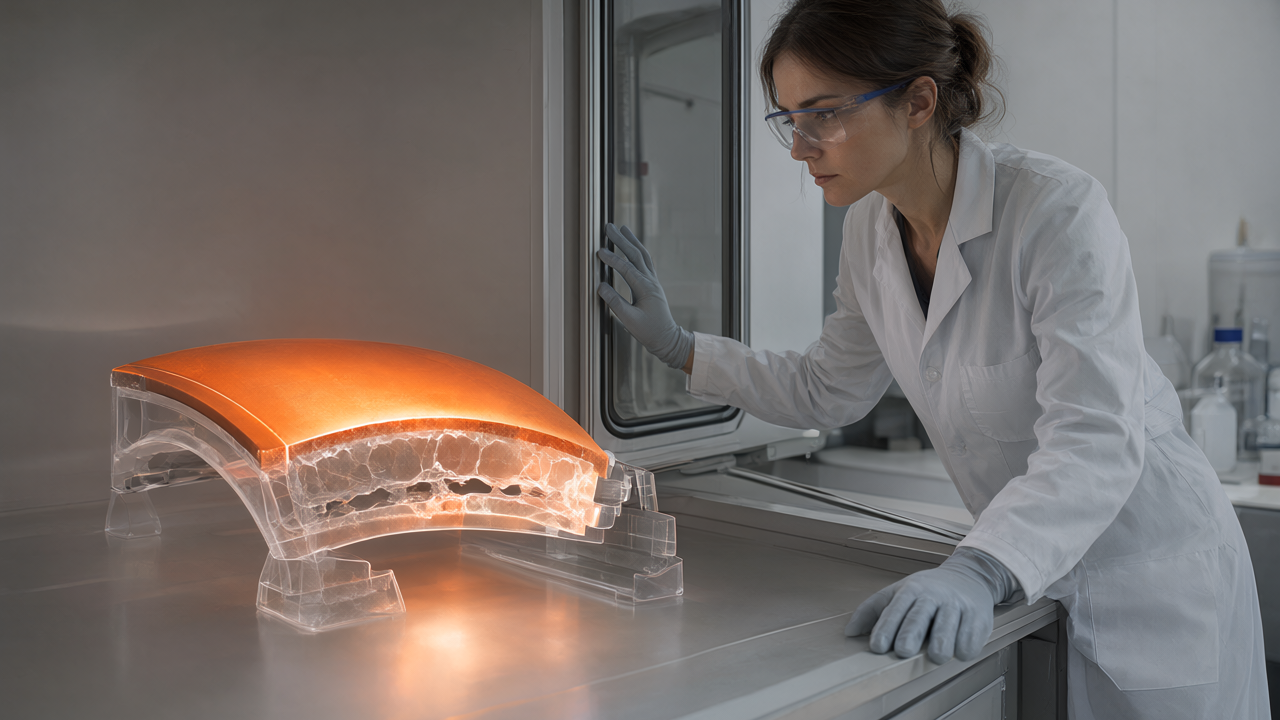
A team of scientists has achieved a significant breakthrough by combining advanced X-ray imaging with artificial intelligence to observe the real-time internal structural evolution of spacecraft heat shields during atmospheric reentry. This unprecedented capability provides precise insights into how materials deform and melt under extreme temperatures, offering crucial data for the optimization of thermal protection systems.
Technical / Clinical Details
The innovative technique leverages high-brilliance X-rays generated at the Advanced Light Source facility at Lawrence Berkeley National Laboratory, coupled with AI-driven image analysis algorithms developed at the University of Illinois Urbana-Champaign. The research specifically examined aerospace-grade thermal protection materials, including SLA-561V and SLA-220, as they were subjected to temperatures exceeding 3,000 degrees Fahrenheit (approximately 1,650 degrees Celsius). Unlike previous surface-level observations or post-mission analyses, this method precisely captures internal degradation pathways and the dynamic formation of internal voids (bubbles) caused by intense heat. This provides a detailed understanding of which material regions respond most critically to thermal stress and how. The data derived from these real-time observations are essential for accurately modeling changes in thermal conductivity, density, and mechanical properties of the ablative materials, which directly impact the shield’s protective capacity.
Background & Context
During atmospheric reentry, spacecraft experience hypersonic speeds, generating plasma-like temperatures of several thousand degrees due to friction with the surrounding atmosphere. Heat shields are paramount for protecting astronauts and sensitive equipment from this hostile environment. However, evaluating heat shield performance has traditionally relied on post-flight analysis or computational simulations, with real-time observation of internal behavior remaining elusive. This breakthrough significantly deepens the understanding of the physical processes involved during reentry, paving the way for the development of lighter, more robust, and more reliable thermal protection systems.
Strategic Significance & Outlook
This real-time imaging capability will directly contribute to the design of next-generation thermal protection systems essential for future space missions, particularly those involving human exploration to Mars and beyond, where reentry conditions can be even more extreme. Engineers and material scientists can utilize these new insights to refine material selection, optimize layered structures, and improve manufacturing processes, thereby enhancing spacecraft safety and increasing payload capacity. Beyond aerospace, this imaging technique holds potential for application in other extreme-environment material analyses, with implications for industries dealing with high-temperature processes or materials under severe stress.
Get our weekly technology intelligence — free
Receive an infographic that lets you judge at a glance whether each field’s analysis report is worth reading.
Subscribe Free — Weekly Tech Intelligence
By subscribing, you’ll receive Troy-Technical’s weekly technology intelligence newsletter.
- Your email and selected fields are used only to deliver the newsletter.
- We never share your information with third parties.
- You can unsubscribe anytime via the link in each email.
See our Privacy Policy for details.
Takes about a minute · Unsubscribe anytime