Key Findings
Google has clearly articulated that the most formidable unresolved problem in orbital computing is not the high-performance AI chips themselves, but rather the “wiring” connecting satellites—meaning, high-speed, high-capacity data communication. To address this challenge, the company is championing optical communication as the foundational next-generation technology, with plans to launch two additional satellites by 2027 to further this endeavor.
Technical / Clinical Details
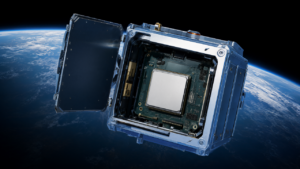
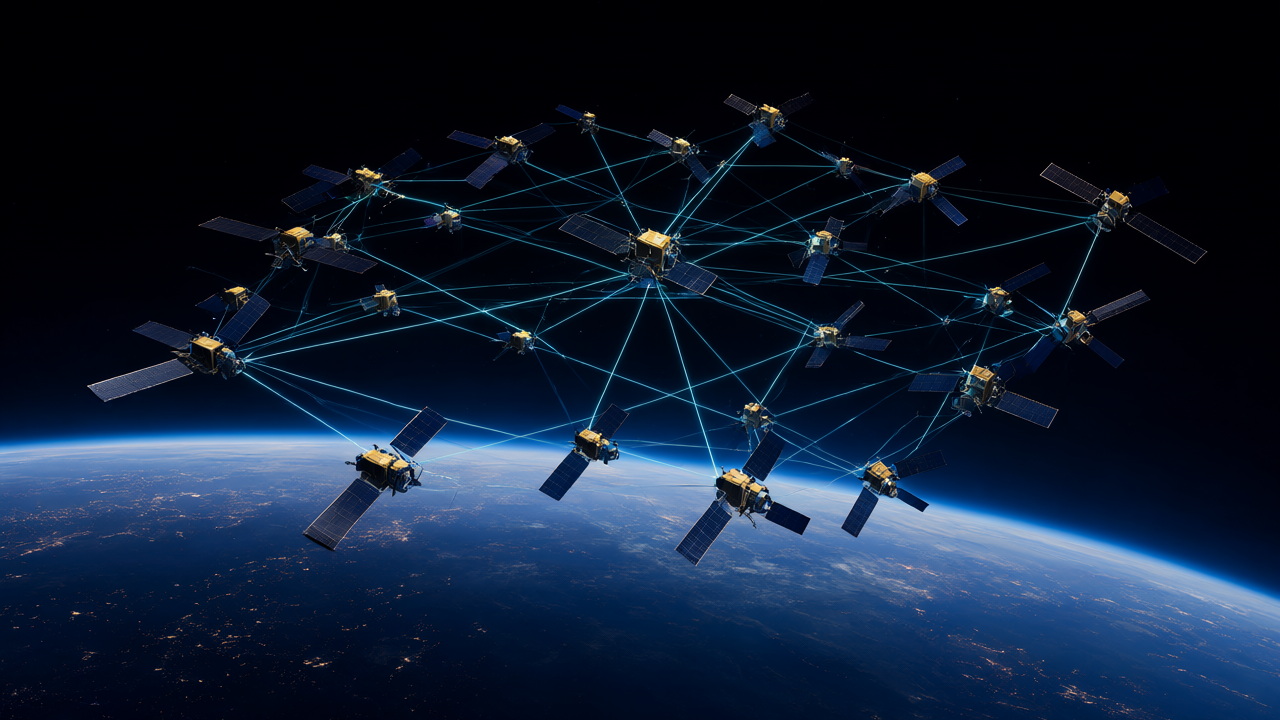
In Google’s ‘Project Suncatcher,’ inter-satellite communication relies on Free-Space Optical (FSO) links using lasers, rather than conventional radio frequency links. FSO offers a decisive advantage: significantly higher bandwidth per unit of power compared to radio. Furthermore, FSO does not require licenses for electromagnetic spectrum usage, leading to fewer regulatory constraints and enabling more flexible network designs. This approach builds the necessary infrastructure for vast amounts of data generated for in-orbit AI processing to be exchanged rapidly and efficiently between satellites, maximizing the performance of the TPU-equipped satellites Google has already deployed in low Earth orbit.
Background & Context
The demand for data processing in space is surging, driven by Earth observation, space situational awareness, and the anticipated realization of future orbital data centers. However, meeting this demand requires not only advancements in AI chip performance but also the elimination of data communication bottlenecks between chips and, more broadly, across satellite constellations. Traditional radio communication increasingly faces limitations due to spectrum availability and interference issues, making it difficult to meet future data throughput needs. Google’s strategy offers a compelling solution to this problem, aiming to establish a new generation of space infrastructure standards.
Strategic Significance & Outlook
Google’s emphasis on optical communication and its plans for further satellite launches will undoubtedly accelerate the evolution of communication technologies within the space industry. As more data is generated and processed in space, dependence on terrestrial infrastructure will diminish, paving the way for the development of autonomous AI ecosystems in orbit. This shift promises numerous benefits, including reduced data transmission costs, enhanced security, and the delivery of low-latency services to users on Earth. Ultimately, this “wiring” technology will play a central role in shaping a future where space becomes a critical extension of Earth’s digital economy.
Source: https://shattered.io/google-suncatcher-planet-2-satellites-2027-2026/
Get our weekly technology intelligence — free
Receive an infographic that lets you judge at a glance whether each field’s analysis report is worth reading.
Subscribe Free — Weekly Tech Intelligence
By subscribing, you’ll receive Troy-Technical’s weekly technology intelligence newsletter.
- Your email and selected fields are used only to deliver the newsletter.
- We never share your information with third parties.
- You can unsubscribe anytime via the link in each email.
See our Privacy Policy for details.
Takes about a minute · Unsubscribe anytime