


Key Findings
Researchers identified dibucaine as a compound capable of inducing autophagic flux in neuronal models. In human induced pluripotent stem cell (iPSC)-derived dopaminergic neurons from a Parkinson’s disease (PD) patient with an SNCA duplication, dibucaine treatment reduced cellular levels of Ser129-phosphorylated α-synuclein (pS129 α-syn). Additionally, in SH-SY5Y cells, dibucaine was found to increase 5’-AMP-activated protein kinase (AMPK) Thr172 phosphorylation.
Technical Details
The study utilized high-throughput screening in rat embryonic primary neurons to identify the compound, followed by validation in human iPSC-derived neurons. The researchers observed that LY364947 partially attenuated the accumulation of LC3-II induced by dibucaine in iPSC-derived neurons, although the specific mechanism for this attenuation remains unidentified. While the exact requirement for AMPK and the precise mechanism underlying the reduction of pS129 α-syn are not yet fully resolved, the data confirms the induction of autophagic flux in disease-relevant human neurons.
Background and Context
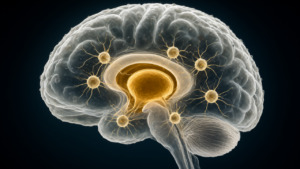
Parkinson’s disease is characterized by the accumulation of α-synuclein (α-syn) aggregates, known as Lewy bodies and Lewy neurites, in the dopaminergic neurons of the substantia nigra. These aggregates propagate in a prion-like manner, driving disease progression. While α-syn can be degraded via the ubiquitin–proteasome system (UPS) and the autophagy–lysosome pathway (ALP), the UPS only handles small, soluble oligomers. Because autophagic activity declines with age and is impaired in PD patients, targeting macroautophagy—which delivers cytoplasmic material to lysosomes via autophagosomes—is a critical therapeutic target.
Significance and Outlook
Current PD treatments provide only symptomatic relief and are often associated with severe side effects. By targeting the macroautophagy pathway to enhance the clearance of α-syn aggregates, this research addresses an urgent unmet medical need for disease-modifying therapies. The ability of dibucaine to reduce pS129 α-syn levels in human neurons with SNCA duplication provides a basis for further investigation into autophagy-modulating drugs.
Source: https://www.frontiersin.org/journals/neurology/articles/10.3389/fneur.2026.1891393/full
Get our weekly technology intelligence — free
Receive an infographic that lets you judge at a glance whether each field’s analysis report is worth reading.
Subscribe Free — Weekly Tech Intelligence
By subscribing, you’ll receive Troy-Technical’s weekly technology intelligence newsletter.
- Your email and selected fields are used only to deliver the newsletter.
- We never share your information with third parties.
- You can unsubscribe anytime via the link in each email.
See our Privacy Policy for details.
Takes about a minute · Unsubscribe anytime