

Key Findings
The primary objective of this early-phase clinical trial is to evaluate the safety and feasibility of transplanting CRISPR-edited donor livers. The study focuses on whether these edited organs can function normally and if the genetic modifications successfully reduce immune responses, specifically acute rejection and anti-donor T cell activation, over time.
Technical Details
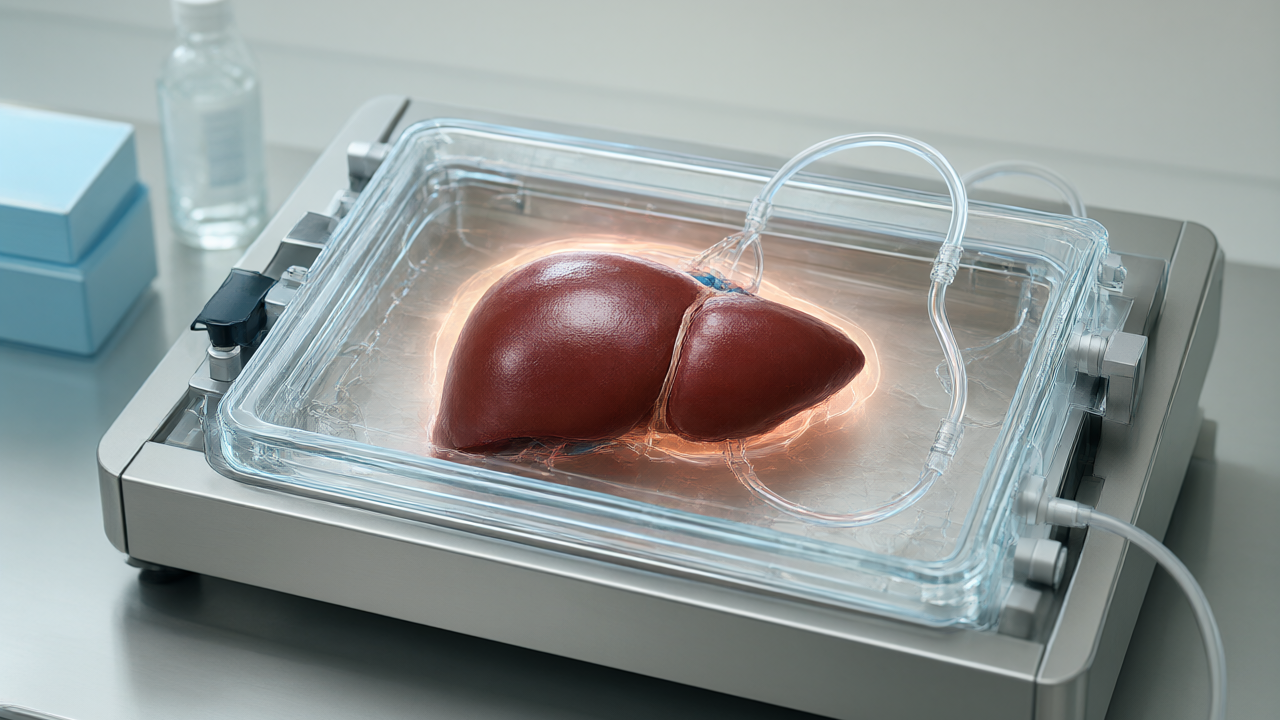
The procedure utilizes ex vivo CRISPR-Cas9 genome editing performed during machine perfusion, where the deceased-donor liver is kept alive outside the body. A CRISPR-Cas9 ribonucleoprotein—consisting of the Cas9 enzyme complexed with guide RNAs—is delivered into the liver tissue via the perfusion circuit. The editing targets three specific areas:
- HLA-A and HLA-B: These class I genes are knocked out to eliminate major alloantigens.
- CIITA: The class II transactivator gene is disabled to abolish the expression of HLA-DR, DQ, and DP.
- HLA-C: This gene is left intact to maintain some HLA presence, which is intended to mitigate “missing-self” responses from natural killer cells.
Before transplantation, the graft is verified via biopsy immunostaining or flow cytometry. Only livers demonstrating high-efficiency editing, defined as greater than 90% target gene disruption, are used for the transplant.
Background & Context
Organ rejection is driven by the immune system recognizing donor human leukocyte antigen (HLA) molecules as foreign. Mismatches in HLA-A and HLA-B are strongly immunogenic and provoke T-cell mediated rejection, while HLA class II molecules activate CD4⁺ T cells. While current therapies rely on immunosuppressive drugs, these carry significant risks. Preclinical data indicates that “erasing” these molecules can blunt immune responses; in vitro tests showed little to no T cell proliferation in cells with HLA-A, HLA-B, and HLA-DR knocked out, and xenotransplant models showed prolonged graft survival with triple knockout of class I and CIITA.
Significance & Outlook
By performing the editing ex vivo, the trial avoids direct in vivo gene therapy in the recipient. If successful, this approach could allow donor organs to evade the human immune system to a large extent, potentially reducing the reliance on traditional immunosuppression and delaying or preventing graft rejection.
Source: https://www.trialx.com/clinical-trials/listings/319005/crispr-edited-hla-donor-liver/
Get our weekly technology intelligence — free
Receive an infographic that lets you judge at a glance whether each field’s analysis report is worth reading.
Subscribe Free — Weekly Tech Intelligence
By subscribing, you’ll receive Troy-Technical’s weekly technology intelligence newsletter.
- Your email and selected fields are used only to deliver the newsletter.
- We never share your information with third parties.
- You can unsubscribe anytime via the link in each email.
See our Privacy Policy for details.
Takes about a minute · Unsubscribe anytime