
Key Findings
The development of high-entropy molecular contacts (HE-MCs) has pushed the power conversion efficiency (PCE) of inverted perovskite solar cells to a champion value of 27.50% under reverse-scan conditions. The Tianjin Institute of Metrological Supervision and Testing independently certified a steady-state efficiency of 27.31% for one of the devices. Compared to devices using a single-component CbzNaph contact, the HE-MC-based cells improved average PCE from 26.37% to 27.29%, driven by enhancements in open-circuit voltage (VOC) and fill factor (FF).
Technical Details
The HE-MCs were created by blending three carbazole-based molecules—CbzNaph, CbzNaphBF, and CbzNaphBT—at a 1:1:1 molar ratio. CbzNaphBF and CbzNaphBT incorporate oxygen- and sulfur-containing units, respectively, to create diverse intermolecular interactions and non-centrosymmetric units that promote complex molecular stacking. The fabrication process involved:
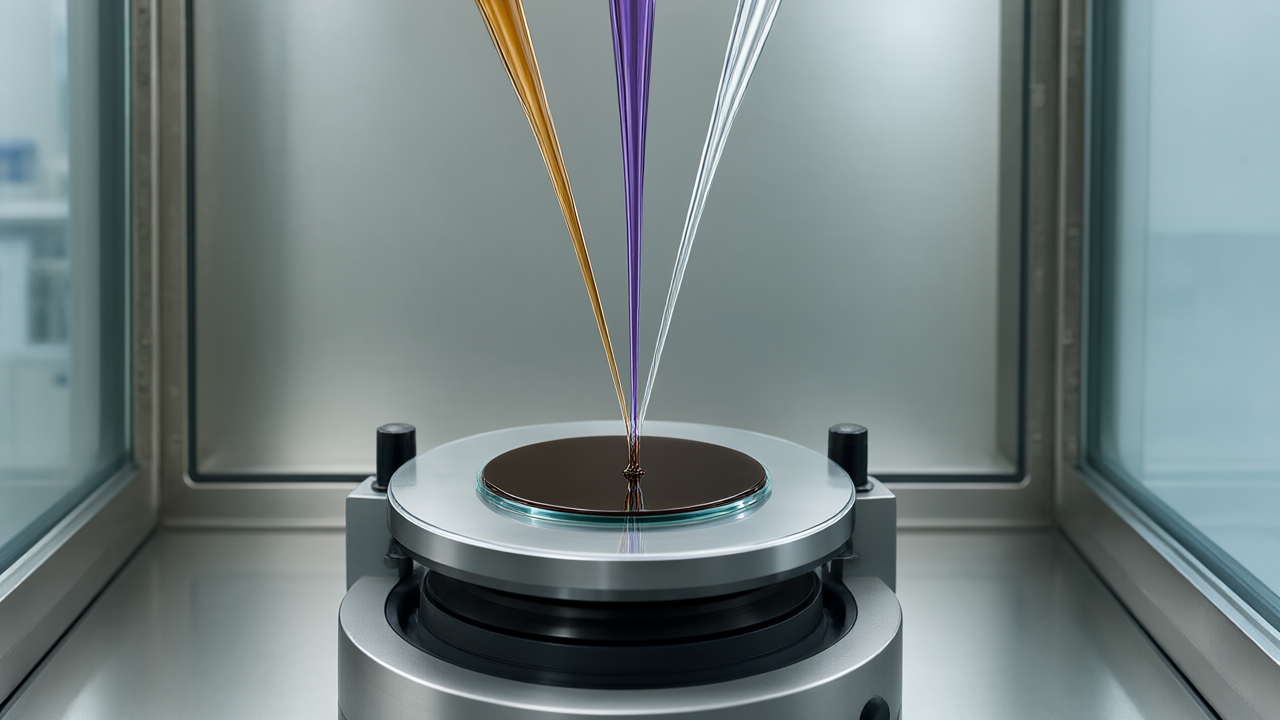
- Spin-coating the molecular blend onto fluorine-doped tin oxide (FTO) glass, followed by annealing at 100 C for 10 minutes.
- Depositing a perovskite absorber (1.55 eV bandgap) via a two-step spin-coating process with chlorobenzene as an antisolvent, annealed at 100 C for 30 minutes.
- Applying a 30 nm fullerene (C60) layer, a 40 nm tin oxide (SnO2) layer, and a 100 nm copper rear electrode.
- Adding a 120 nm magnesium fluoride coating to the back of the glass to minimize reflection losses.
The champion device recorded a VOC of 1.202 V, a short-circuit current density of 26.40 mA/cm2, and a fill factor of 86.67%.
Background & Context
Conventional single-component molecular contacts often suffer from thermal instability, where thermal stress causes the loss of ordered molecular packing, accelerating device degradation. The research team, comprising scientists from City University of Hong Kong, Jilin University, and Sun Yat-sen University, sought to balance ordered self-assembly with high-entropy structural complexity to prevent this collapse. Their findings were published in Nature Photonics.
Significance & Outlook
The HE-MC approach addresses the critical trade-off between efficiency and long-term operational stability. The devices were evaluated through prolonged exposure to 85 C, thermal cycling, and maximum power point tracking under continuous one-sun illumination at 85 C. This result is closely competitive with a May 2026 report of 27.41% efficiency for inverted cells achieved by researchers from Shaanxi Normal University and Linköping University.
Get our weekly technology intelligence — free
Receive an infographic that lets you judge at a glance whether each field’s analysis report is worth reading.
Subscribe Free — Weekly Tech Intelligence
By subscribing, you’ll receive Troy-Technical’s weekly technology intelligence newsletter.
- Your email and selected fields are used only to deliver the newsletter.
- We never share your information with third parties.
- You can unsubscribe anytime via the link in each email.
See our Privacy Policy for details.
Takes about a minute · Unsubscribe anytime