


Key Findings
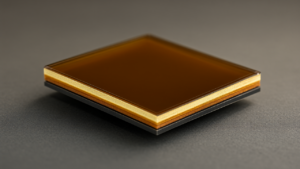
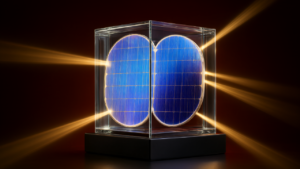
A research team led by Prof. Anita Ho-Baillie from the University of Sydney has developed a perovskite-silicon tandem solar cell with a certified conversion efficiency of 29.1%. The team successfully improved device stability, with cells retaining ≥95% of their efficiencies after more than 1,000 thermal cycles and 26 humidity freeze cycles, exceeding the minimum requirements of the international IEC61215 standard.
Technical Details
The performance gains were achieved by addressing defects in the ultra-thin molecular layers used at microscopic interfaces. Specifically, the team focused on self-assembled monolayers (SAM), which typically suffer from molecules clumping together in solution, resulting in patchy coverage and energy losses.
- Chemical Optimization: The researchers identified the acidity of the SAM solution as the critical factor controlling molecular dispersion. By using a newly designed molecule to adjust acidity, they prevented aggregation and created a uniform molecular layer.
- Analysis: Ultraviolet photoelectron spectroscopy was employed to measure electronic energy levels at the interface. This provided evidence that the chemical adjustment improved energy alignment and transport, facilitating more efficient charge flow.
- Infrastructure: The project utilized advanced microanalysis from Adelaide Microscopy (part of Microscopy Australia) and fabrication support from the Australian National Fabrication Facility (ANFF), enabled by the National Collaborative Research Infrastructure Strategy (NCRIS).
Background & Context
Perovskite-silicon tandem cells stack two light-absorbing materials tuned to different parts of the solar spectrum to exceed the efficiency of conventional silicon cells. However, transitioning this technology from the lab to commercial use has been hindered by the difficulty of forming reliable, even molecular layers at the device interfaces.
Significance & Outlook
This research, reported in Joule, demonstrates that practical changes in chemistry can resolve nanoscale defects that undermine long-term reliability. By simultaneously increasing efficiency and durability, the findings provide a blueprint for high-performance solar technologies and bring perovskite-silicon tandems closer to commercial deployment.
Source: https://micro.org.au/news/molecular-makeover-boosts-solar-performance/
Get our weekly technology intelligence — free
Receive an infographic that lets you judge at a glance whether each field’s analysis report is worth reading.
Subscribe Free — Weekly Tech Intelligence
By subscribing, you’ll receive Troy-Technical’s weekly technology intelligence newsletter.
- Your email and selected fields are used only to deliver the newsletter.
- We never share your information with third parties.
- You can unsubscribe anytime via the link in each email.
See our Privacy Policy for details.
Takes about a minute · Unsubscribe anytime