

Key Findings
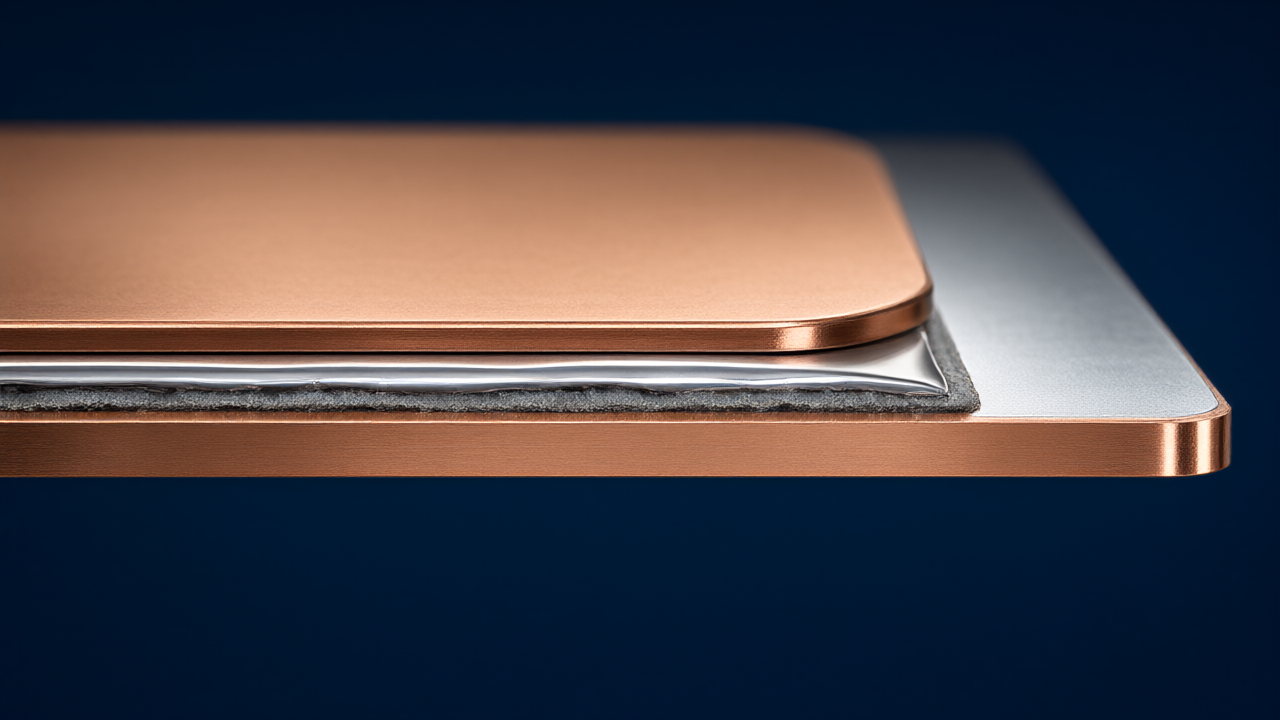
Research conducted by der8auer using an electron microscope demonstrates that gallium-based liquid metal TIM does not evaporate or dry out over time. Instead, it reacts with copper coolers to form a solid compound, CuGa2. In tests, the TIM appeared liquid after one hour, showed crystals at two months, and remained unchanged after two years. This reaction creates a solid film that cannot be remelted, as CuGa2 remains solid up to approximately 254 degrees Celsius.
Technical Details
The chemical reaction varies significantly based on the cooler material:
- Copper: Gallium bonds with copper to form CuGa2 (one copper atom to two gallium atoms). This layer grows about 1 micrometer per day, eventually reaching 50 to 100 micrometers. The heat conductivity of CuGa2 is approximately 100 W/mK, compared to roughly 400 W/mK for bare copper.
- Nickel Plating: Gallium forms NiGa5 (one nickel atom to five gallium atoms). This layer is significantly thinner—between 1 and 10 micrometers—making nickel plating generally superior as it protects the underlying copper and absorbs less gallium.
- Aluminum: Gallium penetrates grain boundaries once the oxide layer is broken, causing surface swelling within five minutes and making the metal brittle within half an hour.
Background and Context
The TIM used is a gallium-indium-tin alloy that remains liquid at room temperature (melting at 11 degrees Celsius). The need for advanced cooling is driven by rising power densities in hardware such as the RTX 5090 and RTX 5080, which der8auer states have “twice” and “three times” the power density of the 8800 GTX, respectively.
Significance and Outlook
Due to the risks of hardware destruction and the complexity of residue removal, this TIM is recommended only for enthusiasts and high-power density components. Thermal Grizzly is exploring new coatings to replace nickel by next year and is developing a KryoSheet graphene pad for bare dies. Additionally, gallium costs have risen sharply, increasing from €300 per kilogram five years ago to €2,500–3,000 currently, influenced by China’s export license requirements.
Get our weekly technology intelligence — free
Receive an infographic that lets you judge at a glance whether each field’s analysis report is worth reading.
Subscribe Free — Weekly Tech Intelligence
By subscribing, you’ll receive Troy-Technical’s weekly technology intelligence newsletter.
- Your email and selected fields are used only to deliver the newsletter.
- We never share your information with third parties.
- You can unsubscribe anytime via the link in each email.
See our Privacy Policy for details.
Takes about a minute · Unsubscribe anytime