

Key Findings
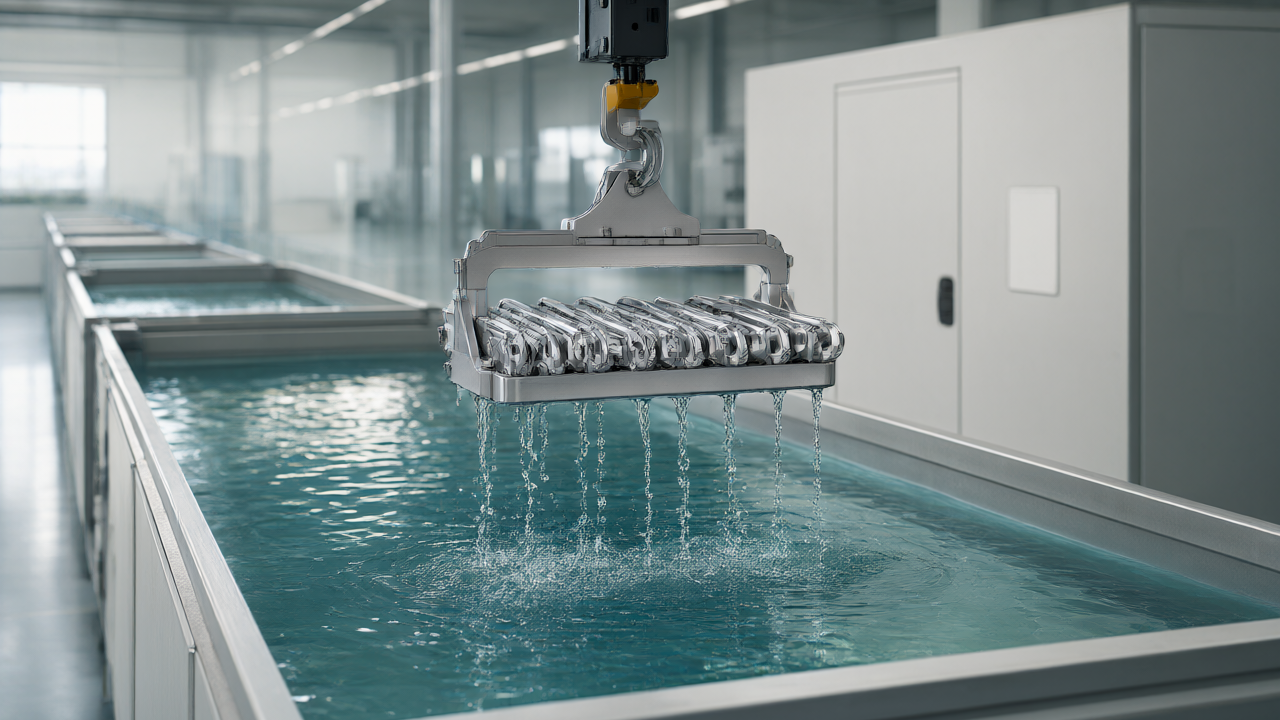
Henkel’s latest BONDERITE portfolio focuses on increasing productivity and sustainability across the electrochemical aluminium anodising process. The most significant performance gains are found in the sealing stage, where the BONDERITE M ED 11011 hot sealing additive increases productivity by a minimum of 20 percent and can at least double the standard life span of sealed parts.
Technical Details
The product line addresses three critical stages of the anodising process:
- Degreasing: BONDERITE C AK 62115 is a one-component, non-etching degreaser designed for high-gloss aesthetic parts that cannot be etched. It simplifies handling compared to two-component alternatives and removes residual brushing paste.
- Etching: BONDERITE C AK 62250 is a long-life etching additive tailored for E6 finishes (a thorough etching process used to eliminate larger surface defects). It is designed for bath stability, reduced drag-out, and no foaming.
- Sealing:
- BONDERITE M ED 11011 (Hot Sealing): Sets a standard sealing time of 3 min/µm and reduces bath make-up by 50 percent or more, lowering the CO2 footprint.
- BONDERITE M ED 11150/11151 (Cold Sealing): These QUALANOD approved additives are completely nickel-free, removing traditional toxicity issues without compromising sealing quality or process time.
Background & Context
Aluminium naturally forms an uncontrolled, unaesthetic oxide layer when exposed to oxygen and weathering. While galvanic coating prevents this, it adds weight. Anodising converts the outermost layer into a controlled, smooth oxide skin typically between 5 and 25 µm thick, protecting the surface from further corrosion without adding significant mass.
Significance & Outlook
These innovations address the growing industrial demand for lightweight, aesthetic aluminium components. By reducing chemical consumption and eliminating toxic substances like nickel, Henkel aims to provide a more sustainable and cost-effective alternative to traditional anodising methods, particularly for manufacturers seeking to maximize process efficiency and reduce environmental impact.
Get our weekly technology intelligence — free
Receive an infographic that lets you judge at a glance whether each field’s analysis report is worth reading.
Subscribe Free — Weekly Tech Intelligence
By subscribing, you’ll receive Troy-Technical’s weekly technology intelligence newsletter.
- Your email and selected fields are used only to deliver the newsletter.
- We never share your information with third parties.
- You can unsubscribe anytime via the link in each email.
See our Privacy Policy for details.
Takes about a minute · Unsubscribe anytime