

Key Findings
The developed catalyst demonstrated an active platinum surface area of 96.3 square metres per gram, significantly higher than the 60.6 square metres per gram recorded for a commercial catalyst. In accelerated durability testing, the material retained 96.9% of its active platinum surface after 30,000 cycles, with a voltage decrease of only 22.8 millivolts. Additionally, the catalyst exhibited strong resistance to carbon corrosion during high-voltage cycling tests.
Technical Details
The catalyst architecture utilizes a multi-layered approach to prevent degradation:
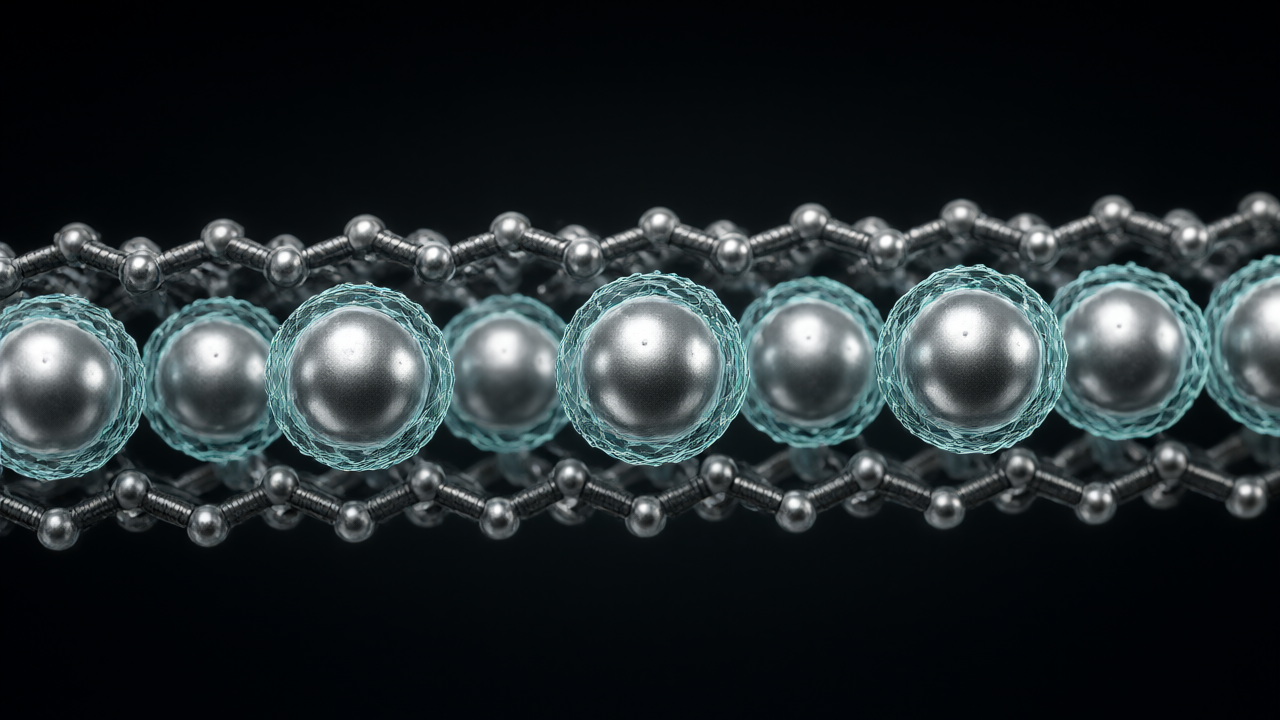
- Nitrogen-doped graphene shells: These wrappers encapsulate platinum nanoparticles. The nitrogen modifies the interaction between platinum and oxygen-containing molecules, which maintains catalytic activity while protecting the nanoparticles.
- Single-walled carbon nanotubes: These serve as a corrosion-resistant support structure. They restrict the movement of platinum, thereby reducing the formation of larger particles that typically diminish the active surface area.
Background & Context
Fuel cells provide a method for converting hydrogen’s chemical energy directly into electricity with water as the primary by-product, making them suitable for public transportation and heavy-duty vehicles. However, widespread adoption is hindered by the high cost of platinum and the tendency of conventional catalysts to lose efficiency. This efficiency loss is primarily caused by particle aggregation and the corrosion of carbon supports under demanding operating conditions.
Significance & Outlook
By combining nitrogen-enhanced graphene with carbon nanotubes, this structure addresses the critical issues of catalyst corrosion and platinum migration. The researchers intend to further refine the performance to reduce the total amount of platinum required. Lowering these material requirements could reduce overall costs and support the broader implementation of hydrogen-based clean-energy technologies.
Get our weekly technology intelligence — free
Receive an infographic that lets you judge at a glance whether each field’s analysis report is worth reading.
Subscribe Free — Weekly Tech Intelligence
By subscribing, you’ll receive Troy-Technical’s weekly technology intelligence newsletter.
- Your email and selected fields are used only to deliver the newsletter.
- We never share your information with third parties.
- You can unsubscribe anytime via the link in each email.
See our Privacy Policy for details.
Takes about a minute · Unsubscribe anytime