

Key Findings
Chemists at the Massachusetts Institute of Technology (MIT) have demonstrated a method to extract pure hydrogen gas from ammonia while significantly reducing the required temperature and energy. Unlike conventional ammonia cracking, which requires temperatures exceeding 500 degrees Celsius, this electrochemical strategy operates at approximately 200 to 300 degrees Celsius. Furthermore, the process produces a concentrated, high-purity stream of hydrogen, removing the need for separate purification stages that typically follow thermal cracking.
Technical Details
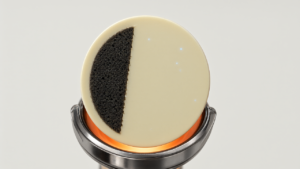
The system utilizes a design that couples a hydrogen-selective palladium membrane with a hydrogen-generating electrode via a molten hydroxide electrolyte. The process follows these steps:
- Ammonia is first dehydrogenated using a catalyst containing ruthenium and cesium.
- The liberated hydrogen reaches the palladium membrane, where an electrochemical gradient creates a driving force—described as a “vacuum for hydrogen”—pulling the gas through the membrane.
- As hydrogen crosses the membrane, it is converted into protons and electrons.
- These components travel through the molten electrolyte and an external circuit, recombining at a second electrode to form pure hydrogen gas.
Because the membrane blocks other reaction components, the system actively pumps hydrogen from low to high concentrations. This continuous removal prevents accumulated hydrogen from inhibiting the reaction, allowing the process to proceed under milder conditions.
Background & Context
Hydrogen is essential for semiconductor manufacturing, chemical processing, and fuel cells, but it is difficult to transport unless compressed or liquefied at cryogenic temperatures. Ammonia is a preferred chemical carrier because it is already manufactured and shipped at a large scale. However, traditional “cracking” to recover hydrogen is energy-intensive due to high heat requirements and the need to separate the resulting hydrogen from nitrogen and unreacted ammonia.
Significance & Outlook
The MIT team, led by Rui Zeng and Yogesh Surendranath, demonstrated that this electrochemical approach also works for methylcyclohexane, a type of liquid organic hydrogen carrier (LOHC). The researchers indicate that these concepts could be translated to other important dehydrogenation reactions that are otherwise thermodynamically unfavorable or kinetically sluggish.
Get our weekly technology intelligence — free
Receive an infographic that lets you judge at a glance whether each field’s analysis report is worth reading.
Subscribe Free — Weekly Tech Intelligence
By subscribing, you’ll receive Troy-Technical’s weekly technology intelligence newsletter.
- Your email and selected fields are used only to deliver the newsletter.
- We never share your information with third parties.
- You can unsubscribe anytime via the link in each email.
See our Privacy Policy for details.
Takes about a minute · Unsubscribe anytime