
Key Findings
Fysiverse-UniWAM demonstrated superior performance across 24 real-world tasks using four robot platforms. In 13 MAP navigation tests, the model ranked first in all position error metrics and in 11 orientation error metrics. For mobile manipulation, UniWAM-Scaled achieved a first-place average success rate of 80.0%, surpassing π₀.₅ by 17.5 percentage points. In seven fixed-station evaluations, it achieved a 68.9% success rate, trailing π₀.₅ by only 2.5 percentage points. In the MAP-Bench benchmark, the model recorded an average position error of 9.85 cm and an average orientation error of 2.30°, reducing errors by 30.1% and 44.0% respectively compared to the strongest external baseline.
Technical Details
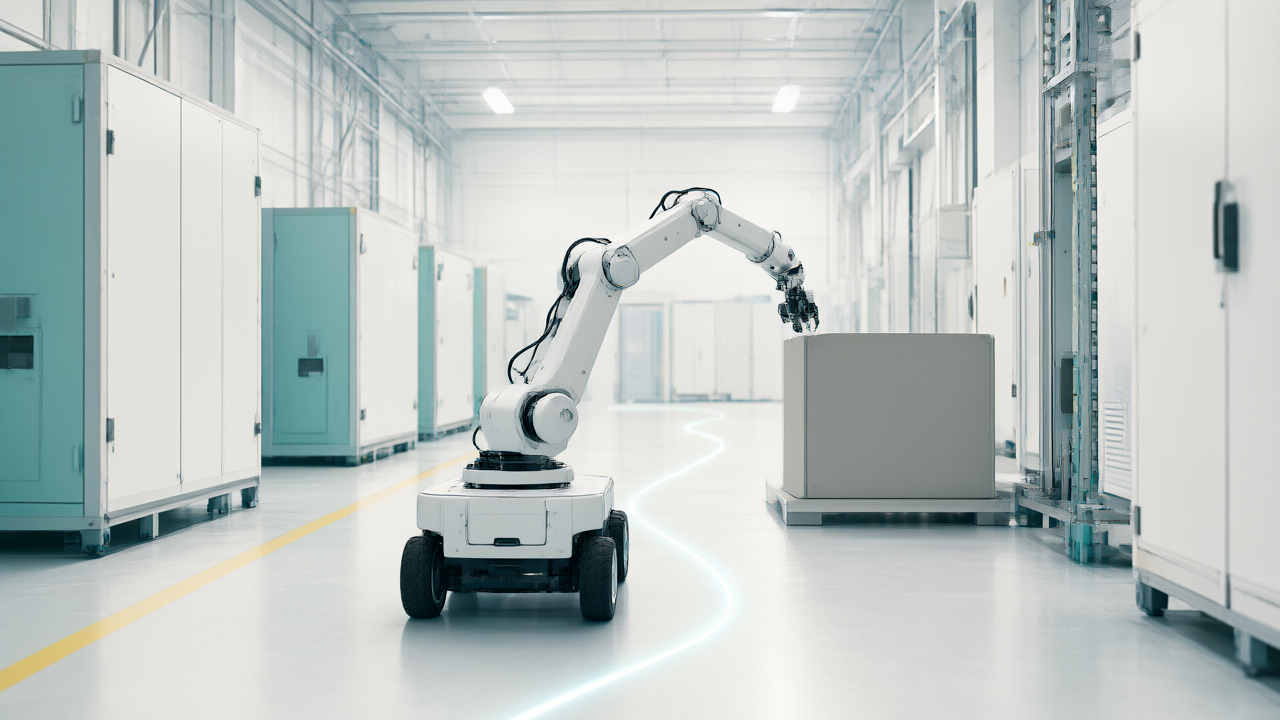
The model utilizes a “Mixed-Stream” architecture that shares a unified video DiT and action DiT backbone via a Mixture-of-Transformers (MoT) mechanism. It separates data into two streams: a navigation stream for environment observation and chassis action, and an operation stream for multi-view observation and arm action. To improve precision, the team introduced Manipulation Anchor Pose (MAP) and the MAP-Data dataset, which contains over 1.5 million trajectories totaling approximately 7,500 hours. MAP generates reference docking poses and approach trajectories using HM3D, InteriorGS, and private scene data combined with vision-language models and automatic path planning.
Background and Context
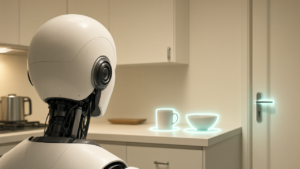
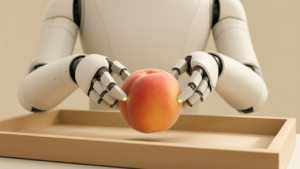
Unlike traditional semantic navigation that only requires reaching a target vicinity, the MAP approach ensures the chassis stops at a specific position and orientation necessary for manipulation. The model’s capabilities were demonstrated through complex tasks, including interactive grasping, following human hands to deliver objects, three-layer cup stacking with dual arms, high-precision test tube insertion, and long-sequence coffee preparation.
Significance and Outlook
The team demonstrated that UniWAM-Sim, trained solely on MAP-Data without real robot demonstration data, could be deployed directly to two real platforms with a position error of 18.7 cm and orientation error of 6.34°. This suggests that while large-scale robot pre-training remains important, it is not the only prerequisite for building unified robotic capabilities.
Source: https://original.ifeng.com/c/8xhHJZYQw7o
Get our weekly technology intelligence — free
Receive an infographic that lets you judge at a glance whether each field’s analysis report is worth reading.
Subscribe Free — Weekly Tech Intelligence
By subscribing, you’ll receive Troy-Technical’s weekly technology intelligence newsletter.
- Your email and selected fields are used only to deliver the newsletter.
- We never share your information with third parties.
- You can unsubscribe anytime via the link in each email.
See our Privacy Policy for details.
Takes about a minute · Unsubscribe anytime