


Key Findings
Tiled base editing screens have identified rare intragenic suppressor mutations that rescue the function of misfolded NPC1 proteins. A significant discovery is a promiscuous second-site variant capable of correcting various different pathogenic NPC1 mutations, rather than being limited to a single specific allele.
Technical Details
The study utilized tiled adenine and cytosine base editing to perform mutagenesis of the endogenous NPC1 locus in haploid human cells. These cells carried the prevalent NPC1 I1061T disease allele. To identify effective correctors, the researchers employed phenotypic reporters focusing on protein abundance and cholesterol transport. The resulting corrector mutations were found to be distributed across multiple domains of the protein.
Background & Context
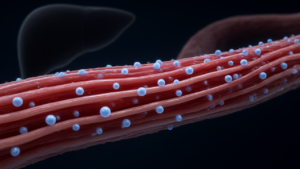
NPC1 is a lysosomal cholesterol transporter; when it misfolds, it causes Niemann-Pick type C disease. While therapeutic base editing can directly revert approximately 30% of disease-causing missense mutations to wild-type sequences, many mutations remain unreachable. Installing second-site corrector mutations offers a strategy to improve protein stability or function across multiple pathogenic alleles when the original mutation cannot be directly corrected.
Significance & Outlook
The identified corrector mutations improve protein stability, promote lysosomal trafficking, and facilitate ER exit. The efficacy of these mutations was validated in patient-derived fibroblasts and induced neurons, where they successfully restored cholesterol clearance. This research establishes in situ base editing screens as a viable method for discovering actionable second-site corrector mutations for therapeutic applications.
Source: https://doi.org/10.64898/2026.10.30.763201
Get our weekly technology intelligence — free
Receive an infographic that lets you judge at a glance whether each field’s analysis report is worth reading.
Subscribe Free — Weekly Tech Intelligence
By subscribing, you’ll receive Troy-Technical’s weekly technology intelligence newsletter.
- Your email and selected fields are used only to deliver the newsletter.
- We never share your information with third parties.
- You can unsubscribe anytime via the link in each email.
See our Privacy Policy for details.
Takes about a minute · Unsubscribe anytime