


Key Findings
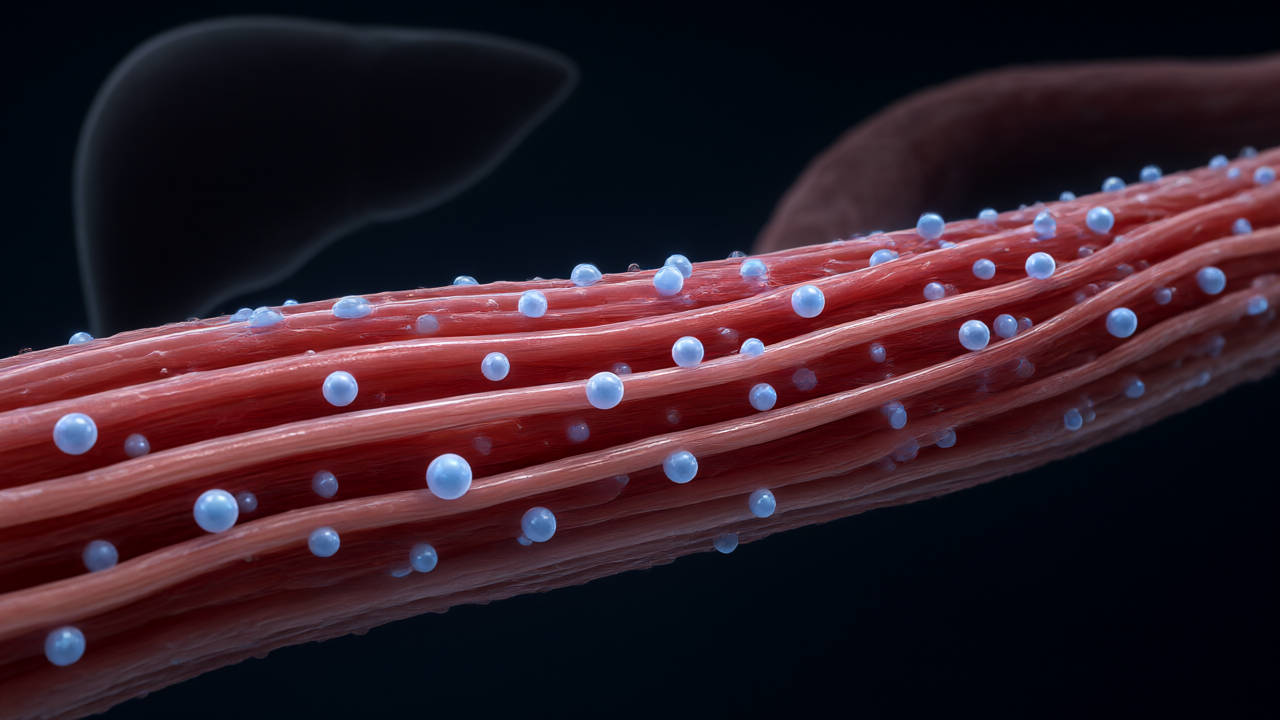
A study published in The Journal of Clinical Investigation demonstrates that a single administration of a liver-sparing myotropic AAV can ameliorate muscular dystrophy in humanized mice. The treatment utilizes base editing to achieve these results, specifically focusing on muscle-directed delivery to reduce off-target effects in the liver.
Technical Details
The research involves the use of a myotropic AAV (Adeno-Associated Virus) vector designed to be liver-sparing. This engineering ensures that the base editing machinery is delivered preferentially to muscle tissues rather than accumulating in the liver. The study was conducted using humanized mice models to evaluate the efficacy of the base editing approach in treating muscular dystrophy.
Background & Context
The research was a collaborative effort involving multiple institutions, including the University of Texas Southwestern Medical Center (Department of Molecular Biology, Hamon Center for Regenerative Science and Medicine, and Senator Paul D. Wellstone Muscular Dystrophy Specialized Research Center), Harvard Medical School (Grousbeck Gene Therapy Center, Schepens Eye Research Institute, and Massachusetts Eye and Ear Infirmary), The Broad Institute of Harvard and MIT, and Cima Universidad de Navarra. Key contributors include YCP and HL as co-first authors, with Eric N. Olson serving as the corresponding author.
Significance & Outlook
By utilizing a liver-sparing myotropic AAV, this method addresses a primary challenge in gene therapy: the tendency of AAV vectors to sequester in the liver, which can limit therapeutic efficacy in muscles and increase the risk of hepatotoxicity. The successful amelioration of muscular dystrophy in humanized mice via base editing suggests a more targeted and potentially safer mechanism for treating genetic muscle diseases.
Source: https://doi.org/10.1172/JCI202378
Get our weekly technology intelligence — free
Receive an infographic that lets you judge at a glance whether each field’s analysis report is worth reading.
Subscribe Free — Weekly Tech Intelligence
By subscribing, you’ll receive Troy-Technical’s weekly technology intelligence newsletter.
- Your email and selected fields are used only to deliver the newsletter.
- We never share your information with third parties.
- You can unsubscribe anytime via the link in each email.
See our Privacy Policy for details.
Takes about a minute · Unsubscribe anytime