

Key Findings
A collaborative team from Qingdao Agricultural University, Politecnico di Milano, and Trinity College Dublin has achieved a record-high ammonia yield rate of 40.67 μg h⁻¹ cm⁻² with a Faradaic efficiency of 24.9%. Published in September 2026 in eScience (DOI: 10.1016/j.esci.2025.100513), the study introduces a cobalt hydroxide catalyst that enables efficient nitrogen reduction under ambient conditions.
Technical Details
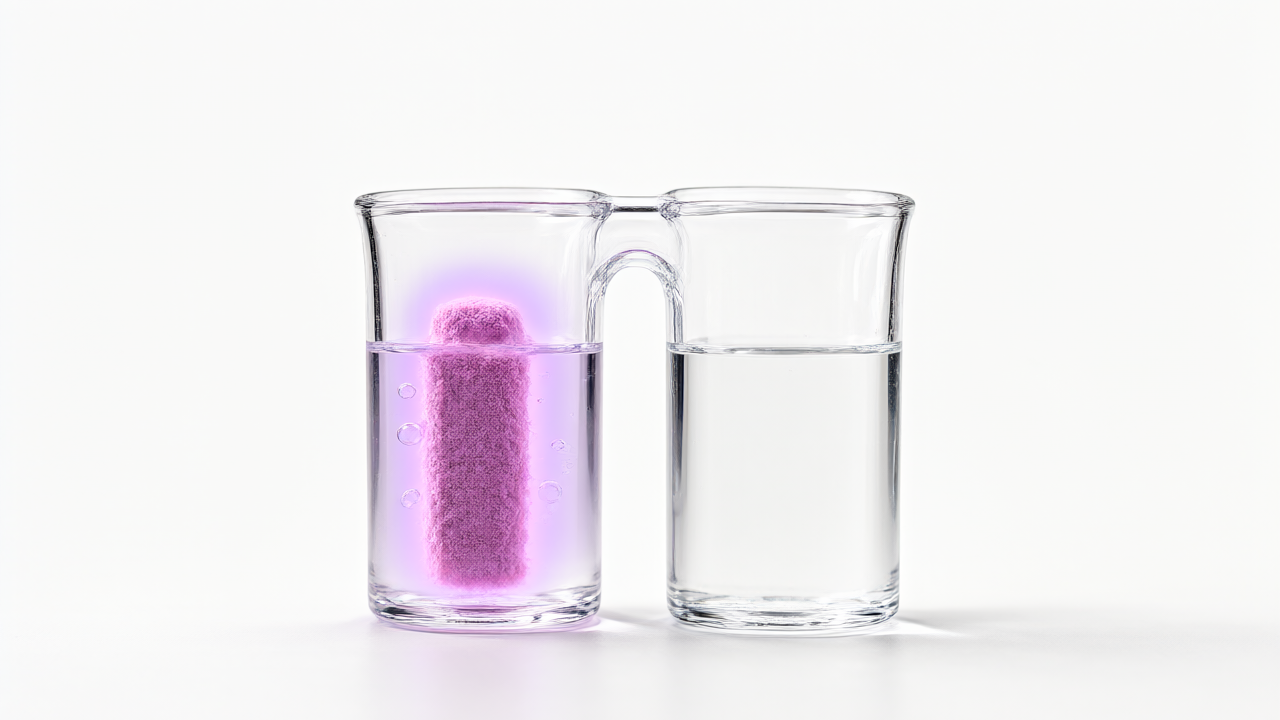
The core innovation is the “hydroxide-activated hydrogen spillover” (HAHS) mechanism. By controlling synthesis temperature, the researchers induced targeted lattice distortion in the Co(OH)₂ catalyst, which elongated Co–O bonds and weakened adjacent O–H bonds. This structural tuning allows hydrogen atoms from surface hydroxyl groups to detach and participate directly in the nitrogen reduction reaction, creating surface hydrogen vacancies that are continuously replenished by the electrolyte.
- Energy Barrier: Density functional theory calculations show the initial N₂ activation on Co(OH)₂ is nearly barrierless (ΔG = 0.01 eV).
- Stability: The catalyst maintained structural integrity over 180 hours of continuous operation.
- Validation: The mechanism was verified using in situ electron spin resonance and isotope-labeled differential electrochemical mass spectrometry.
The HAHS mechanism bypasses one elementary step compared to conventional associative pathways, accelerating intermediate turnover and suppressing the competing hydrogen evolution reaction.
Background & Context
Global ammonia production currently relies on the Haber-Bosch process, which requires extreme heat and pressure, consuming 1–2% of global energy and emitting approximately 1.6 tons of CO₂ per ton of ammonia. While electrocatalytic nitrogen reduction is a greener alternative, the strong N≡N triple bond (941 kJ/mol) typically creates high activation barriers and poor selectivity.
Significance & Outlook
This lattice engineering approach enables a scalable, cost-effective strategy for distributed, on-site ammonia production. By aligning with renewable energy sources, the process allows for green ammonia synthesis from air, water, and electricity. Beyond fertilizer production, this technology supports the use of ammonia as a carbon-free hydrogen carrier for energy storage and transportation.
Source: https://www.miragenews.com/catalytic-shortcut-converts-nitrogen-to-ammonia-1774944/
Get our weekly technology intelligence — free
Receive an infographic that lets you judge at a glance whether each field’s analysis report is worth reading.
Subscribe Free — Weekly Tech Intelligence
By subscribing, you’ll receive Troy-Technical’s weekly technology intelligence newsletter.
- Your email and selected fields are used only to deliver the newsletter.
- We never share your information with third parties.
- You can unsubscribe anytime via the link in each email.
See our Privacy Policy for details.
Takes about a minute · Unsubscribe anytime