
Key Findings
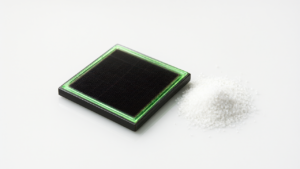
A research team led by Professors Zhang Xiaohong and Liu Jiang at Soochow University has achieved a certified photoelectric conversion efficiency of 35.1% with a perovskite-silicon tandem solar cell. This result matches the efficiency of traditional multi-junction Gallium Arsenide (GaAs) cells used in space applications but at an estimated cost of less than 1% of the GaAs alternative. Specifically, while GaAs cells can cost hundreds of thousands of yuan per square meter, the new cells are estimated to cost several hundred yuan per square meter.
Technical Details
The device utilizes a tandem structure where a top perovskite layer absorbs visible light and a bottom crystalline silicon layer absorbs long-wavelength infrared light, pushing the theoretical efficiency limit above 43%. To overcome the challenge of uneven coverage on the rough pyramid-textured surface of the silicon base, the team implemented a “spatial conjugate” molecular design. By introducing controllable twists within the molecules, they inhibited excessive π-π stacking, allowing for a conformal coverage rate exceeding 80% on the textured surface.
Additional milestones include:
- A certified efficiency of 34.6% on ultra-thin silicon wafers (60 micrometers thick).
- An efficiency of 29.8% on commercial silicon wafer sizes (261 square centimeters).
- Mechanical durability maintaining 97% of initial efficiency after 43,000 extreme bending cycles.
Background and Context
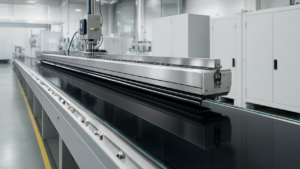
Traditional space-grade GaAs cells rely on expensive Metal-Organic Chemical Vapor Deposition (MOCVD) equipment and rare raw materials. In contrast, the Soochow University team uses a low-temperature solution coating method for the perovskite layer, avoiding high-temperature diffusion and expensive vacuum equipment. The project involved collaboration with LONGi, which provided and optimized the bottom crystalline silicon cells.
Significance and Outlook
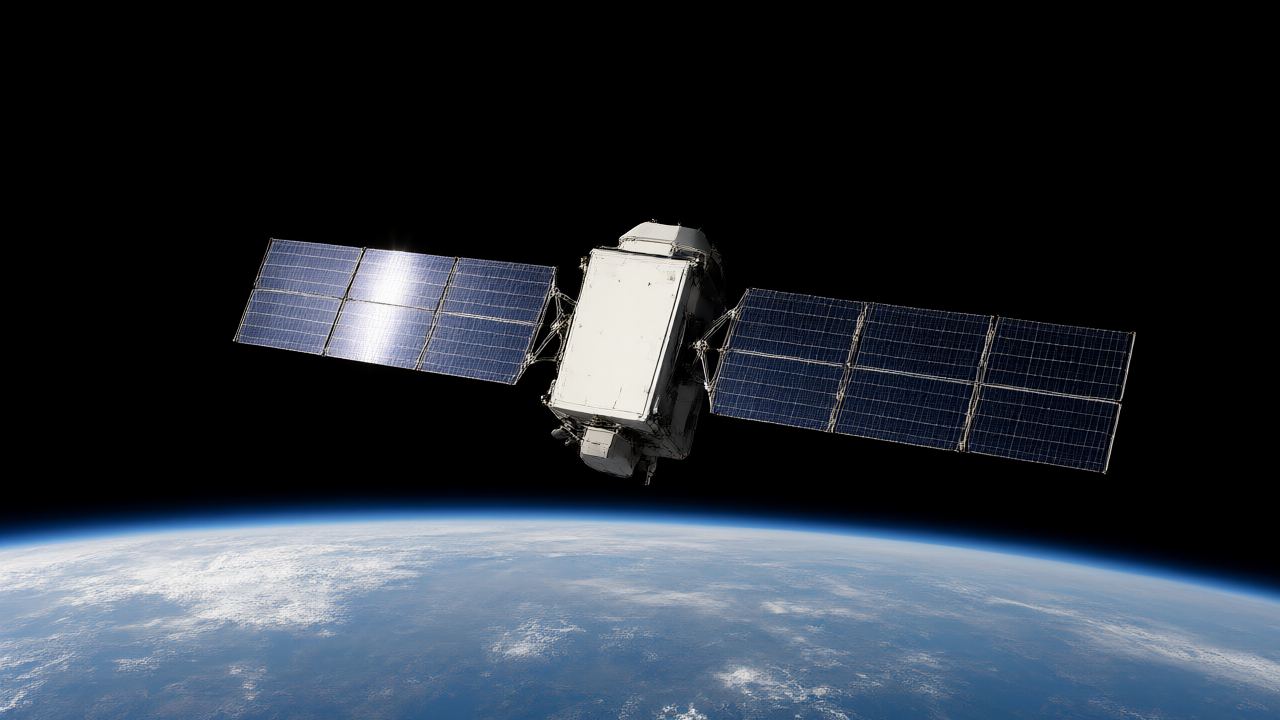
The technology aligns with China’s “15th Five-Year Plan” for electronic information manufacturing, which identifies space photovoltaics as a key application scenario. To achieve industrialization, the team must now verify the cells’ durability against space-specific stressors, including atomic oxygen, UV radiation, and thermal cycling between -120°C and 150°C. The target for viability is maintaining over 80% efficiency after 25,000 simulated thermal cycles.
Source: https://finance.sina.com.cn/jjxw/2026-11-11/doc-iniyixya8481537.shtml
Get our weekly technology intelligence — free
Receive an infographic that lets you judge at a glance whether each field’s analysis report is worth reading.
Subscribe Free — Weekly Tech Intelligence
By subscribing, you’ll receive Troy-Technical’s weekly technology intelligence newsletter.
- Your email and selected fields are used only to deliver the newsletter.
- We never share your information with third parties.
- You can unsubscribe anytime via the link in each email.
See our Privacy Policy for details.
Takes about a minute · Unsubscribe anytime