


Key Findings
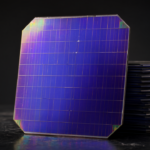
The study reports the first n–i–p double-junction perovskite device to exceed 25% efficiency, specifically achieving 25.3% for 0.096 cm² devices and 24.7% for 1.045 cm² devices, with a stabilized power output of 24.4%. Furthermore, integrating this n–i–p double-junction device with a p–i–n narrow-bandgap subcell (1.25 eV) resulted in a four-terminal triple-junction device with 28% efficiency.
Technical Details
To address the stringent material constraints of monolithic n–i–p integration, the researchers utilized a 2.0 eV Cs-based all-inorganic wide-bandgap subcell. The team implemented an additive-free P3HT hole-selective contact, which was reconfigured using MeO-2PACz to enhance molecular organization and promote efficient hole extraction.
Additional optimizations included:
- PCBM modification of the ALD-SnO₂ electron-selective contact in the 1.55 eV bottom subcell.
- Engineering of the interconnection layer to balance carrier coupling and suppress charge accumulation and voltage loss.
- Selection of materials for the wide-bandgap top subcell and hole-selective contact capable of withstanding bottom-subcell fabrication temperatures.
Background & Context
While all-perovskite tandem solar cells offer the potential for ultrahigh efficiencies, monolithic devices have predominantly used the p–i–n architecture. The n–i–p architecture is more challenging because the preformed top subcell must remain stable during the subsequent fabrication of the bottom subcell, which typically involves high temperatures that limit material choices.
Significance & Outlook
By alleviating the transport bottleneck in monolithic n–i–p tandems through interfacial modification, this work advances the viability of n–i–p architectures. The achievement of 25.3% efficiency in double-junction and 28% in triple-junction configurations demonstrates a significant step forward in perovskite tandem technology.
Source: https://www.nature.com/articles/s41467-026-79553-y
Get our weekly technology intelligence — free
Receive an infographic that lets you judge at a glance whether each field’s analysis report is worth reading.
Subscribe Free — Weekly Tech Intelligence
By subscribing, you’ll receive Troy-Technical’s weekly technology intelligence newsletter.
- Your email and selected fields are used only to deliver the newsletter.
- We never share your information with third parties.
- You can unsubscribe anytime via the link in each email.
See our Privacy Policy for details.
Takes about a minute · Unsubscribe anytime