
Key Findings
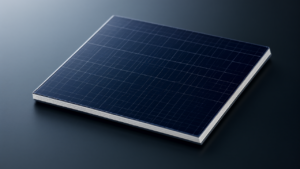
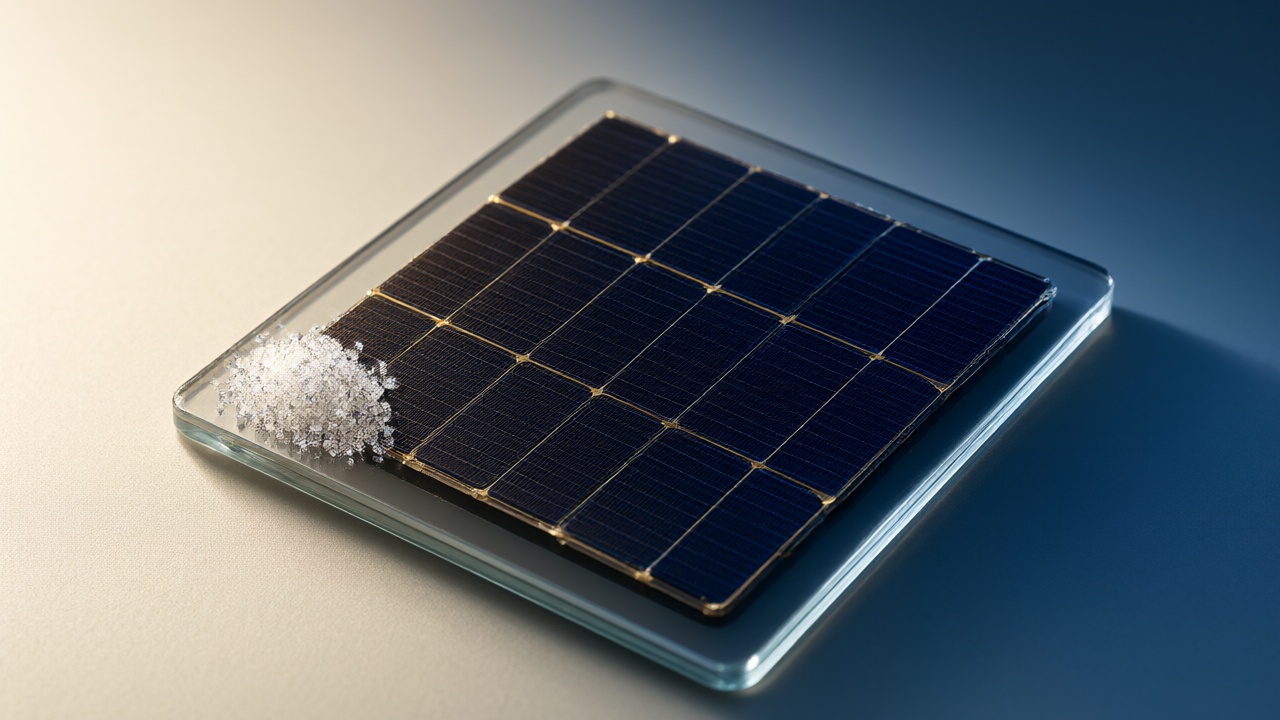
A research team from the State Key Laboratory of Silicon and Advanced Semiconductor Materials at Zhejiang University has developed a method to enhance the stability and efficiency of perovskite solar cells. By introducing nanodiamonds into the perovskite thin film, the team achieved a certified steady-state photoelectric conversion efficiency of 27.04%. Additionally, small-scale modules measuring 16.1 square centimeters reached an efficiency of 24.3%.
Technical Details
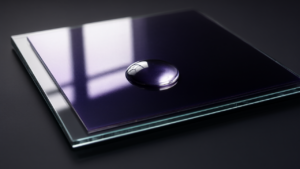
The study, published in the journal Science on November 20, 2026, identifies “mechanical heterogeneity” as a primary cause of instability in perovskite’s “soft lattice” structure. Using an in-situ nanoindentation platform at the Zhejiang University Hangzhou International Innovation Center, the team discovered that creep at grain boundaries is significantly higher than within the grain interiors under the same load. This disparity causes the material to degrade during the repeated thermal expansion and contraction associated with day-night temperature cycles.
To resolve this, the team utilized diamond particles with an average diameter of approximately 10 nanometers as reinforcing agents. These nanodiamonds restructure the elastic field of the thin film, redistributing stress more uniformly across the film rather than concentrating it at the grain boundaries, thereby increasing the deformation resistance of the boundaries.
Background and Context
Perovskites are synthetic semiconductor materials capable of rapid production via solution processing. While laboratory efficiencies for single-junction small-area cells have reached 28%—comparable to silicon—and theoretical limits for tandem cells reach 46%, stability remains the primary barrier to industrialization. The “soft lattice” nature of the material makes it susceptible to mechanical failure from repeated thermal stress.
Significance and Outlook
The integration of nanodiamonds demonstrates a substantial improvement in long-term durability. In simulated day-night light cycle tests lasting 5,000 hours, the diamond-reinforced cells maintained over 90% of their initial efficiency, whereas the control group decayed to approximately 50%.
Source: https://news.qq.com/rain/a/20261120A0CQA700
Get our weekly technology intelligence — free
Receive an infographic that lets you judge at a glance whether each field’s analysis report is worth reading.
Subscribe Free — Weekly Tech Intelligence
By subscribing, you’ll receive Troy-Technical’s weekly technology intelligence newsletter.
- Your email and selected fields are used only to deliver the newsletter.
- We never share your information with third parties.
- You can unsubscribe anytime via the link in each email.
See our Privacy Policy for details.
Takes about a minute · Unsubscribe anytime