


Key Findings
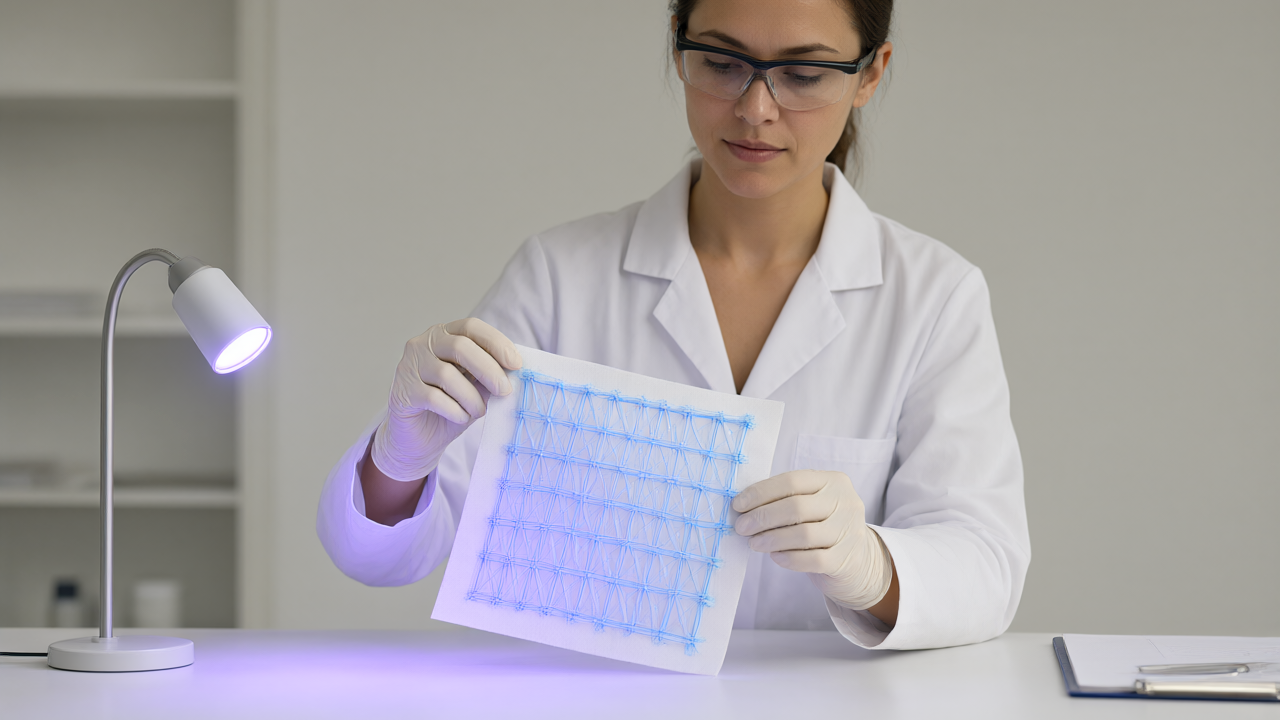
Experimental investigation published in Fashion and Textiles demonstrates that treating polyethylene terephthalate (PET) fabric with ultraviolet-C (UV-C) light and ozone significantly improves the adhesion of directly deposited thermoplastic polyurethane (TPU). The process increased peel strength by up to 239 percent compared to untreated control fabrics. Notably, this enhancement occurred without the use of intermediate adhesive chemical layers, and the overall tensile strength of the substrate fabric decreased by less than 3 percent.
Technical Details
The researchers utilized a dry surface modification method using a UV irradiator emitting 254 nanometers radiation at an intensity of 20 milliwatts per square centimeter. PET fabric swatches were irradiated for 30 or 60 minutes at distances of either 2 centimeters or 5 centimeters. This resulted in energy doses ranging from 1,440 millijoules per square centimeter to 18,000 millijoules per square centimeter.
Following treatment, TPU filaments were deposited via fused deposition modeling (FDM) using the following parameters:
- Nozzle temperature: 240 degrees Celsius
- Build platform temperature: 60 degrees Celsius
- Printing velocity: 30 millimeters per second
- Internal infill density: 20 percent
- Minimum printing gap: 300 (calibrated against a fabric thickness of 0.31 millimeters)
Focused ion beam scanning electron microscopy revealed that while untreated PET fibers were smooth, treated fibers exhibited localized micro-etching and blister-like features caused by photo-oxidative reactions.
Background & Context
3D-printed composite fabrics are valued in wearable technology for combining additive manufacturing precision with textile flexibility. However, PET is chemically inert and hydrophobic with low surface energy, which hinders molecular interaction with molten polymers. While previous research focused on mechanical adjustments—such as reducing nozzle-to-bed distance or increasing temperatures to lower melt viscosity—this study targets the physicochemical properties of the substrate itself.
Significance & Outlook
By providing a targeted physical and chemical approach to surface modification, this method mitigates premature delamination during bending and stretching. This increases the functional durability of polymer structures printed directly onto woven textiles, supporting the long-term reliability of integrated mechanical components and protective frameworks in advanced apparel.
Get our weekly technology intelligence — free
Receive an infographic that lets you judge at a glance whether each field’s analysis report is worth reading.
Subscribe Free — Weekly Tech Intelligence
By subscribing, you’ll receive Troy-Technical’s weekly technology intelligence newsletter.
- Your email and selected fields are used only to deliver the newsletter.
- We never share your information with third parties.
- You can unsubscribe anytime via the link in each email.
See our Privacy Policy for details.
Takes about a minute · Unsubscribe anytime