
Key Findings
On July 9, 2026, the International Society for Stem Cell Research (ISSCR) 2026 annual meeting featured interim clinical results from the inaugural Phase 1/2a trial utilizing autologous iPSC-derived dopaminergic progenitor cells for Parkinson’s Disease (PD). Presented by Dr. Jeanne Loring of Scripps Research, the data revealed favorable safety and a trend towards functional improvement at 12 months post-transplantation in 8 patients with mild to moderate PD.
Technical / Clinical Details
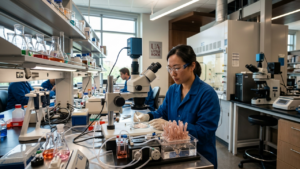
The therapeutic approach involves generating dopaminergic progenitor cells from a patient’s own induced pluripotent stem cells (iPSCs) and subsequently transplanting them into the patient’s brain. This autologous strategy inherently minimizes the risk of immune rejection, a significant challenge in allogeneic cell therapies. Dr. Loring also reported on the development of innovative quality control tools crucial for the consistent and safe manufacturing of these personalized cell products. These tools are pivotal for ensuring the uniformity and integrity of regenerative medicine therapies, setting new benchmarks for quality assurance in the field. The interim data specifically underscored the excellent safety profile, with no serious adverse events reported, alongside encouraging initial trends in patient-reported outcomes related to motor function and quality of life.
Background & Context
Parkinson’s Disease is a debilitating, progressive neurodegenerative disorder caused by the degeneration of dopamine-producing neurons, with no curative treatments currently available. Existing therapies aim to manage symptoms but do not halt disease progression. The advent of iPSC technology has opened new avenues for regenerative medicine, enabling the generation of functional dopaminergic neurons from a patient’s own cells for transplantation. This personalized approach represents a profound shift in therapeutic strategy, offering the potential to restore lost neurological function and fundamentally alter the disease course.
Strategic Significance & Outlook
These positive interim results are expected to accelerate the clinical development of autologous iPSC-derived cell therapy for Parkinson’s Disease. Future studies will focus on evaluating long-term safety and efficacy in larger patient cohorts. Furthermore, the robust quality control tools developed could be applied to the manufacturing of other autologous cell therapy products, contributing to broader advancements across the regenerative medicine industry. Successful translation of this technology promises to offer PD patients sustained symptom control and significant improvements in their quality of life, addressing a critical unmet medical need.
Get our weekly technology intelligence — free
Receive an infographic that lets you judge at a glance whether each field’s analysis report is worth reading.
Subscribe Free — Weekly Tech Intelligence
By subscribing, you’ll receive Troy-Technical’s weekly technology intelligence newsletter.
- Your email and selected fields are used only to deliver the newsletter.
- We never share your information with third parties.
- You can unsubscribe anytime via the link in each email.
See our Privacy Policy for details.
Takes about a minute · Unsubscribe anytime





Comments