Key Findings
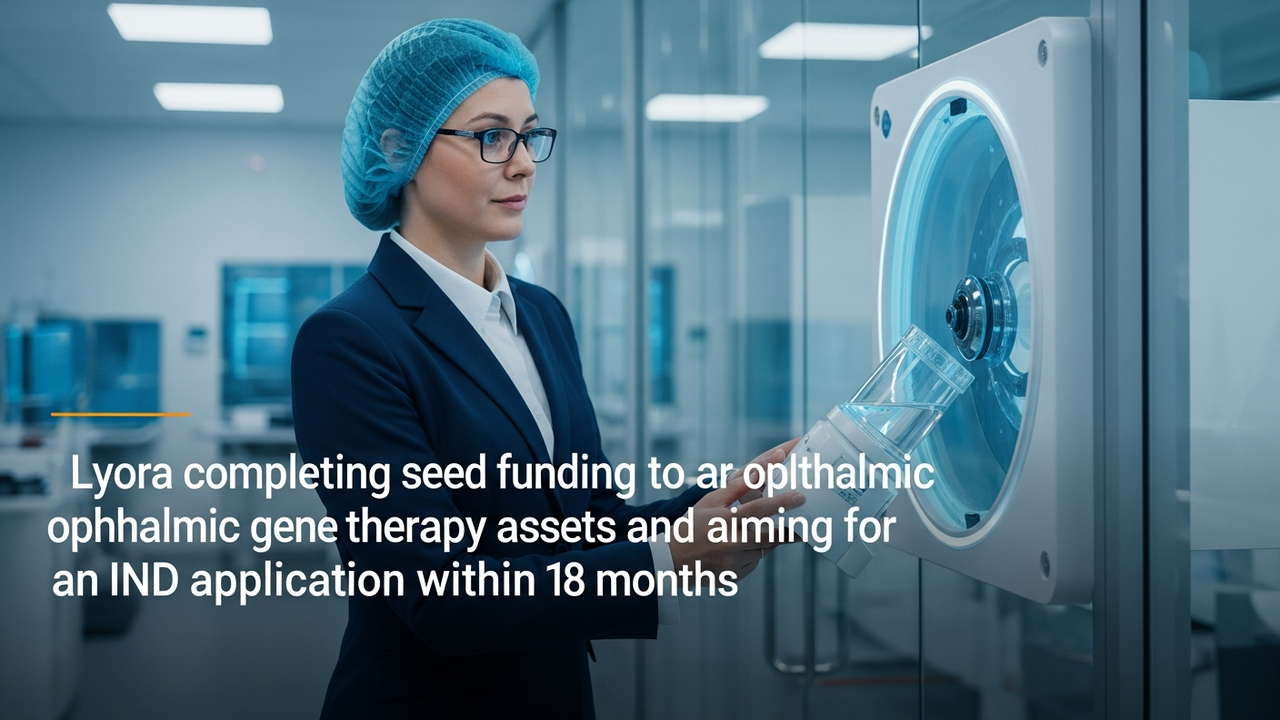
On July 14, 2026, Lyora, a new biotechnology company, announced the successful completion of its seed funding round, officially launching operations with the goal of developing and advancing ophthalmic gene therapy assets. The company plans to submit its first Investigational New Drug (IND) application to the U.S. Food and Drug Administration (FDA) within the next 18 months for a lead product candidate.
Technical / Clinical Details
Lyora focuses on innovative gene therapy approaches for severe eye diseases, particularly inherited retinal and optic nerve disorders. Their pipeline aims not only to target specific genetic mutations but also to develop platform technologies capable of addressing a broad spectrum of ocular conditions. The seed funding will be allocated towards accelerating preclinical research, optimizing manufacturing processes, and strengthening engagement with regulatory authorities. The IND submission target signifies the establishment of safety and efficacy in animal models and the completion of preparations for human administration. Ocular gene therapy is particularly promising because the eye is a relatively isolated organ, facilitating localized delivery that can achieve high therapeutic effects while minimizing systemic side effects.
Background & Context
Eye diseases are a leading cause of visual impairment worldwide, and many inherited ocular conditions lack effective treatments. In recent years, advancements in gene therapy technology have led to the approval of groundbreaking treatments for some diseases like retinitis pigmentosa, but numerous unmet medical needs persist. The entry of startups like Lyora into this field and their ability to raise significant seed funding indicate that investors see substantial growth potential in the ophthalmic gene therapy market. This competitive environment is expected to further accelerate technological innovation, leading to a more diverse and effective array of treatment options for patients.
Strategic Significance & Outlook
Lyora’s seed funding and its plan to file an IND within 18 months clearly demonstrate the company’s commitment to rapid progress in the ophthalmic gene therapy sector. Successful transition to clinical trials could offer new hope to patients suffering from intractable eye diseases. Early funding also helps Lyora build a strong foundation for securing further capital in the future and expanding its pipeline. Progress in preclinical data and the IND application will be crucial indicators for understanding the evolution of ophthalmic gene therapy and market dynamics.
Source: #
Get our weekly technology intelligence — free
Receive an infographic that lets you judge at a glance whether each field’s analysis report is worth reading.
Subscribe Free — Weekly Tech Intelligence
By subscribing, you’ll receive Troy-Technical’s weekly technology intelligence newsletter.
- Your email and selected fields are used only to deliver the newsletter.
- We never share your information with third parties.
- You can unsubscribe anytime via the link in each email.
See our Privacy Policy for details.
Takes about a minute · Unsubscribe anytime








Comments