Key Findings
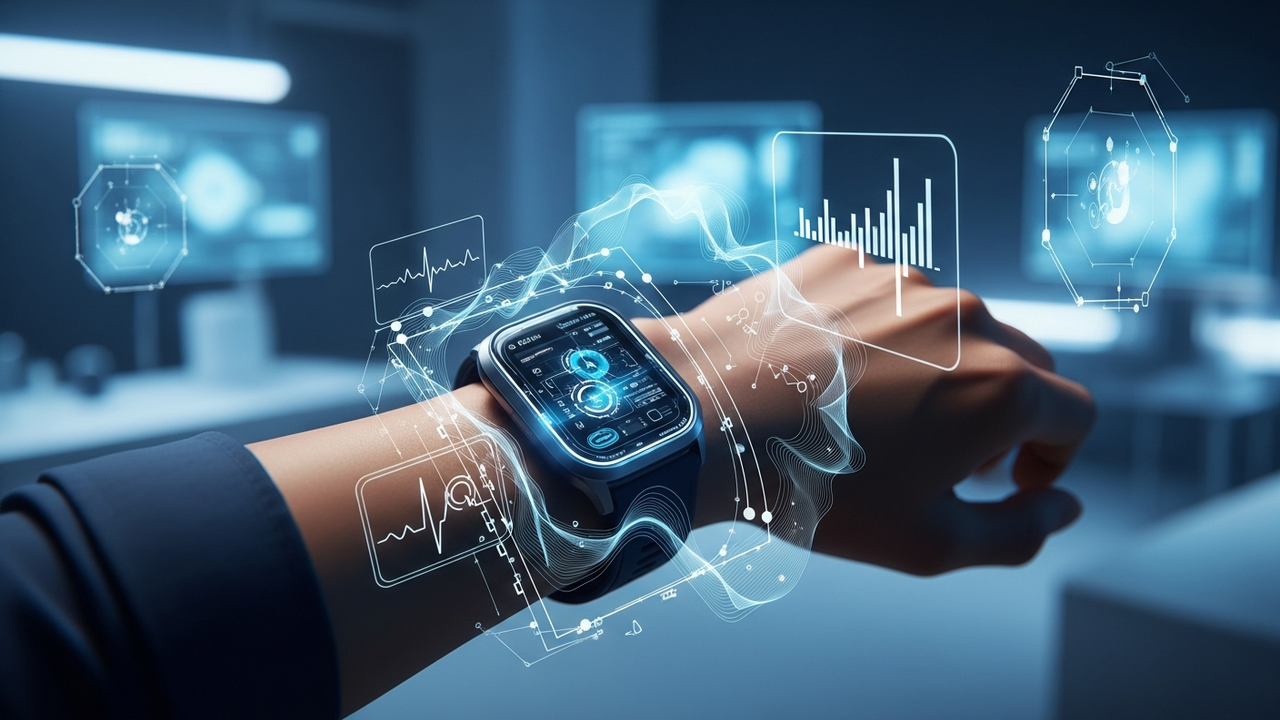
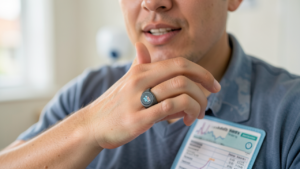
This comprehensive review paper meticulously analyzes the state-of-the-art in wearable (bio)sensors for health monitoring, underscoring an accelerating trend towards continuous, non-invasive or minimally invasive measurement of bodily fluids such as sweat, saliva, and interstitial fluid. Notably, the paper highlights significant advancements in microneedle-based glucose sensors and emphasizes the critical importance of integrating Artificial Intelligence (AI) and Machine Learning (ML) to process sensor data, enhance analytical performance, and manage the vast volumes of data generated. This convergence is bringing closer a future where personalized, real-time health information is readily accessible.
Technical & Clinical Details
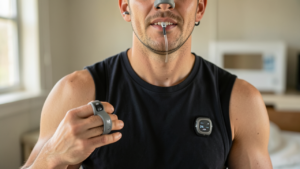
- Body Fluid-Based Non-Invasive Monitoring: Evolving technologies are enabling the detection of various biomarkers (e.g., glucose, lactate, electrolytes, cortisol, alcohol) from body fluids like sweat, saliva, tears, and interstitial fluid, moving beyond traditional blood tests. This significantly reduces user burden and allows for continuous data collection in a more naturalistic manner.
- Microneedle-Based Glucose Sensors: Microneedles, with their extremely fine, needle-like structures, can penetrate only the outermost layer of the skin to measure interstitial glucose levels painlessly. This dramatically reduces invasiveness compared to traditional blood sampling or subcutaneous CGM implants, thereby improving patient acceptance. Companies like Dexcom and Abbott are at the forefront of this technology.
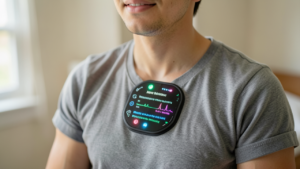
- AI/ML for Data Analysis: The immense datasets generated by wearable sensors are analyzed by AI and machine learning algorithms. This enables noise reduction, pattern recognition, anomaly detection, and prediction of future health states. For example, AI can learn the impact of diet and exercise on glucose fluctuations to provide personalized advice.
- Advances in Materials Science: The development of flexible conductive materials (e.g., graphene, silver nanowires), polymer substrates, and biocompatible materials is crucial for creating comfortable and durable wearable sensors. These innovations improve sensor adherence to the skin and the stability of signal transmission.
Background & Industry Context
The global prevalence of chronic diseases and the aging population place immense strain on healthcare systems. In this context, wearable sensors are expected to play a central role in preventive medicine, early diagnosis, and disease management. Coupled with the widespread adoption of smartphones and cloud computing, the ability to collect and analyze real-time, personal health data is a powerful driver for realizing personalized medicine. However, the introduction of such technologies is accompanied by multifaceted challenges, including data accuracy, privacy protection, cybersecurity, and regulatory approval processes.
Strategic Significance & Outlook
Wearable sensor technology is poised for continued rapid evolution. In the future, multiplex sensors capable of simultaneously measuring a greater number of biomarkers with high precision are likely to become common. Furthermore, with deeper integration of AI and machine learning, sensors will evolve beyond mere data collection devices into intelligent health coaches that profoundly understand an individual’s health status, predict disease risks, and recommend preventive interventions. However, for widespread adoption, standardization of data, interoperability, and compliance with diverse international regulatory requirements are indispensable. By overcoming these challenges, wearable sensors hold the potential to redefine the future of health management.
Source: https://pubs.acs.org/doi/10.1021/acsnano.6b02604
Get our weekly technology intelligence — free
Receive an infographic that lets you judge at a glance whether each field’s analysis report is worth reading.
Subscribe Free — Weekly Tech Intelligence
By subscribing, you’ll receive Troy-Technical’s weekly technology intelligence newsletter.
- Your email and selected fields are used only to deliver the newsletter.
- We never share your information with third parties.
- You can unsubscribe anytime via the link in each email.
See our Privacy Policy for details.
Takes about a minute · Unsubscribe anytime



Comments