Key Findings
A research team led by Steve Albrecht has successfully developed a novel carborane-based electron transport material (ETM) that dramatically enhances the power conversion efficiency of perovskite solar cells. This innovative ETM led to an absolute efficiency increase of 1.5% for single p-i-n perovskite cells (from 23.4% to 24.9%) and a remarkable 2.4% absolute gain for perovskite-silicon tandem cells (from 29.1% to 31.5%). This high-performance material, now patented and commercially available, presents a significant alternative to conventional fullerene (C60) layers.
Technical Details and Innovation
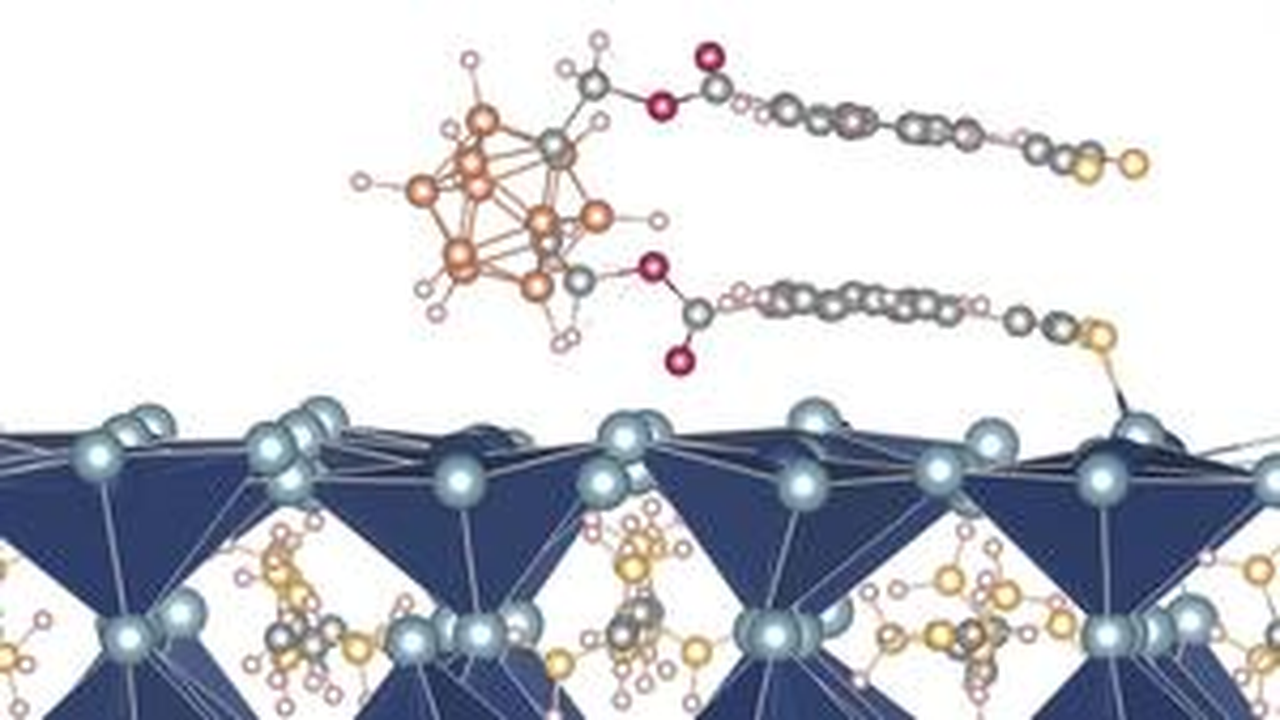
The newly developed carborane-based ETM is engineered to reduce charge carrier losses at the critical interface between the perovskite absorber and the electron transport layer. While traditional fullerene derivatives like C60 have been effective, they often present challenges in terms of long-term stability and optimal charge extraction efficiency. Carborane molecules, known for their unique electronic structure and robust chemical stability, provide a more efficient pathway for electron transfer and suppress non-radiative recombination events. The particularly significant absolute improvement of 2.4% in perovskite-silicon tandem cells underscores the material’s ability to optimize charge separation and transport even in complex device architectures. This ETM combines excellent electron conductivity with superior resilience against degradation, contributing to enhanced device longevity.
Background and Industry Context
Perovskite solar cells are garnering substantial global attention as a next-generation photovoltaic technology, offering the potential for high efficiencies and low manufacturing costs. Tandem configurations, especially those combining perovskites with high-performance silicon solar cells, are considered one of the most promising avenues to exceed the theoretical efficiency limits of single-junction devices. However, maximizing the performance and ensuring the long-term reliability of these devices critically depends on optimizing charge transport at the interfaces between different layers. The development of this novel ETM directly addresses this crucial need, accelerating the commercialization pathway for high-efficiency solar cells.
Strategic Significance and Outlook
The introduction of this carborane-based ETM opens new possibilities for further boosting the performance of perovskite solar cells, particularly within the tandem architecture. The fact that this material is already patented and commercially available facilitates a rapid transition from research to market, potentially having a substantial impact on the broader solar energy industry. In the future, this technology is expected to become a standard component in the design of next-generation solar cells, thereby accelerating the deployment of clean energy and making significant contributions towards achieving energy efficiency and sustainability targets. The research team is now focused on further optimizing this material and exploring its application across various device architectures to cement its role in the future of solar power.
Source: https://www.eurekalert.org/news-releases/1136395
Get our weekly technology intelligence — free
Receive an infographic that lets you judge at a glance whether each field’s analysis report is worth reading.
Subscribe Free — Weekly Tech Intelligence
By subscribing, you’ll receive Troy-Technical’s weekly technology intelligence newsletter.
- Your email and selected fields are used only to deliver the newsletter.
- We never share your information with third parties.
- You can unsubscribe anytime via the link in each email.
See our Privacy Policy for details.
Takes about a minute · Unsubscribe anytime









Comments