Key Findings
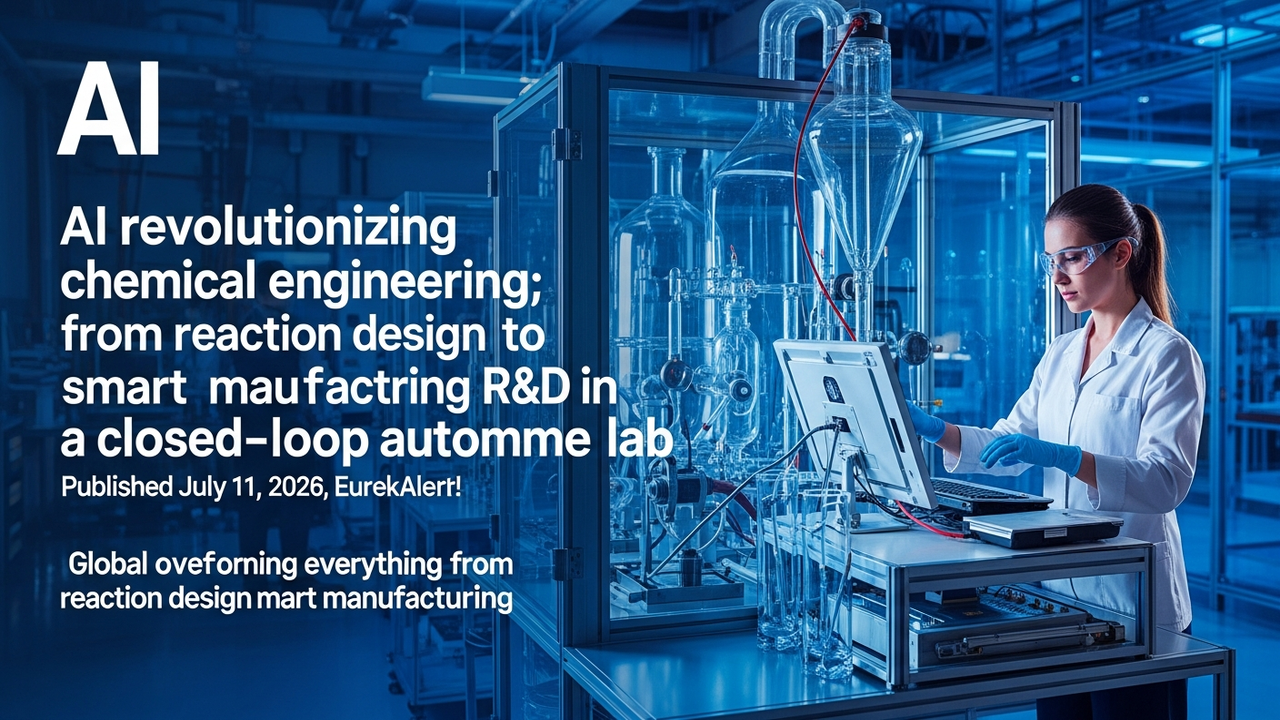
Artificial Intelligence (AI) is fundamentally restructuring the field of chemical engineering, driving transformative changes from reaction design to smart manufacturing. The introduction of AI-driven autonomous labs, in particular, represents a groundbreaking achievement that dramatically accelerates the research and development (R&D) cycle.
Technical / Clinical Details
Foundation models, pre-trained on extensive chemical datasets, are effectively adapted for complex tasks such as predicting molecular properties and generating novel molecules. These models learn the deep relationships between chemical structure and function, providing new chemical insights that were previously difficult for humans to discover. Furthermore, ‘closed-loop autonomous labs,’ which combine AI-driven proposal systems with robotic synthesis and testing platforms, fully automate the research process. AI autonomously proposes promising molecular structures or reaction conditions, robots synthesize them, analytical instruments evaluate their performance, and AI learns from these results to determine the next optimization step, in a continuous cycle. This accelerates the virtual screening of vast chemical libraries and enables the proposal of new candidate materials at an unprecedented pace. For instance, the time required to discover polymers or catalysts with specific functionalities could be shortened from months to years.
Background & Context
Chemical engineering forms the bedrock of modern society’s essential products, including pharmaceuticals, energy materials, plastics, and electronic components. However, developing new products has historically been a highly complex and costly endeavor, consuming extensive time and resources for myriad experiments, safety tests, and process optimizations. Traditional trial-and-error approaches limited the speed of innovation, and in an era of increasing environmental regulations and intense market competition, more efficient development methods became imperative. The integration of AI and robotics offers a powerful solution to this long-standing challenge.
Strategic Significance & Outlook
The impact of AI on chemical engineering is immeasurable. The widespread adoption of closed-loop autonomous labs will accelerate the discovery of new drugs, the development of high-performance materials, and the design of sustainable chemical processes across the pharmaceutical, materials science, and energy sectors. This will lead to shorter development times, reduced R&D costs, and the exploration of previously uncharted chemical spaces. In the future, ‘smart chemical plants,’ where AI manages chemical process design, optimization, manufacturing, and quality control holistically, are expected to materialize, dramatically boosting overall industrial productivity and competitiveness. This will serve as a powerful driving force towards achieving a sustainable society.
Source: https://www.eurekalert.org/news-releases/1135768
Get our weekly technology intelligence — free
Receive an infographic that lets you judge at a glance whether each field’s analysis report is worth reading.
Subscribe Free — Weekly Tech Intelligence
By subscribing, you’ll receive Troy-Technical’s weekly technology intelligence newsletter.
- Your email and selected fields are used only to deliver the newsletter.
- We never share your information with third parties.
- You can unsubscribe anytime via the link in each email.
See our Privacy Policy for details.
Takes about a minute · Unsubscribe anytime







Comments