
Key Findings
Argonne National Laboratory is leading a groundbreaking initiative to advance autonomous scientific discovery through the integration of artificial intelligence (AI) and robotics. This approach is set to fundamentally revolutionize experimental processes in biology, chemistry, and materials science, thereby dramatically accelerating discovery cycles.
Technical / Clinical Details
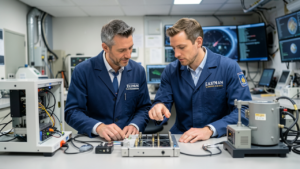
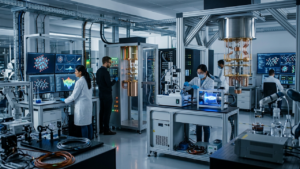
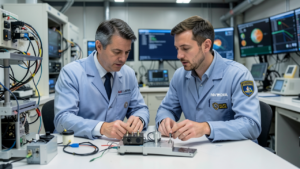
The ‘Robotic Autonomous Platforms for Innovative Discovery (RAPID)’ lab at Argonne National Laboratory serves as a central hub for merging AI with cutting-edge robotics. In this lab, AI analyzes historical data, simulation results, and scientific knowledge to propose promising candidate materials with specific functionalities. Subsequently, these proposed materials are rapidly synthesized by automated robotic systems, and subjected to various tests for precise characterization. This entire process operates in a closed loop: experimental results are fed back into the AI models in real-time, which then inform the next optimization steps. This autonomous learning and execution cycle significantly reduces the time and cost associated with traditional human-driven trial-and-error processes for materials discovery. For instance, the discovery cycle for specific catalysts or battery materials can be shortened from months to mere weeks.
Background & Context
Scientific discovery, particularly in novel materials development, is a time and resource-intensive process involving the exploration of an immense number of possibilities to find optimal solutions. Traditional laboratory work has heavily relied on the expertise of researchers and manual experimentation, which inherently limits the speed of progress. Autonomous labs, combining AI and robotics, address this bottleneck by offering a new paradigm for scientific research capable of tackling more complex problems. This trend is accelerating across leading research institutions worldwide, positioned as a critical strategy to expand the frontiers of science.
Strategic Significance & Outlook
Argonne National Laboratory’s RAPID lab stands at the forefront of autonomous scientific discovery, poised to have an immeasurable impact on the field of materials science. This technology will accelerate breakthroughs addressing major societal challenges, including new drug development, energy storage materials, specialized materials required for quantum computing, and environmental technologies. In the future, such autonomous labs are expected to become standard, fostering an environment where scientists can focus on higher-level hypothesis generation and theoretical inquiry. This will enable discoveries previously deemed impossible, ushering in a new era of scientific and technological innovation.
Source: https://www.anl.gov/article/inside-argonnes-push-toward-autonomous-scientific-discovery
Get our weekly technology intelligence — free
Receive an infographic that lets you judge at a glance whether each field’s analysis report is worth reading.
Subscribe Free — Weekly Tech Intelligence
By subscribing, you’ll receive Troy-Technical’s weekly technology intelligence newsletter.
- Your email and selected fields are used only to deliver the newsletter.
- We never share your information with third parties.
- You can unsubscribe anytime via the link in each email.
See our Privacy Policy for details.
Takes about a minute · Unsubscribe anytime






Comments