Key Findings
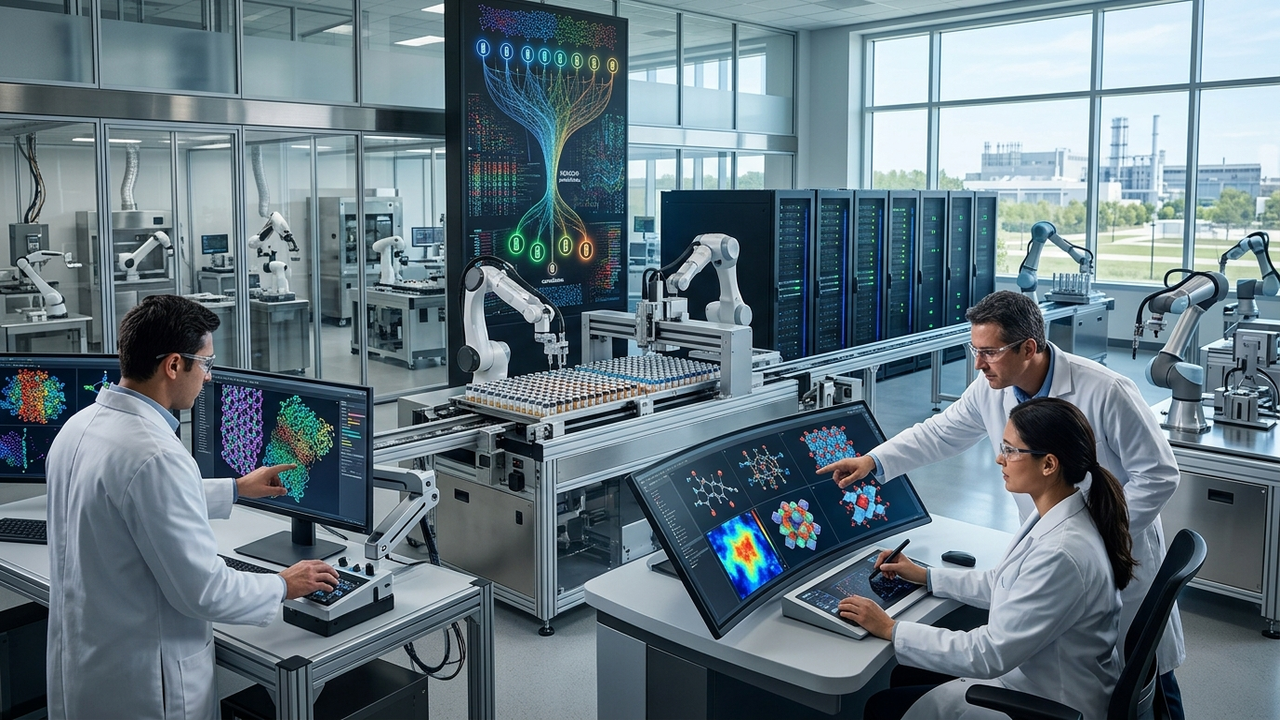
Argonne National Laboratory has dramatically accelerated the materials discovery process by implementing an Artificial Intelligence (AI)-driven methodology. Specifically, the lab successfully narrowed down 500,000 stable materials to 18 highly promising candidates for battery development in just 80 hours. This AI-powered approach significantly reduces the time and cost associated with traditional materials exploration, leading to major advancements, particularly in next-generation battery technology.
Technical / Clinical Details
This AI-driven system operates by combining vast material databases with advanced machine learning algorithms. AI analyzes multi-dimensional data, including material composition, crystal structure, electronic properties, and simulation results, to predict materials likely to meet specific functional requirements (e.g., high energy density, fast charging capability, long cycle life, safety). The ‘N2116 electrolyte,’ synthesized in collaboration with Microsoft AI, stands as a concrete achievement demonstrating this promise. N2116 electrolyte not only enables fast charging but also achieves higher energy density and superior cycle stability compared to conventional liquid lithium-ion batteries, offering a more sustainable and safer battery solution. This resolves previous challenges regarding safety (leakage, fire hazards) and performance (degradation) associated with traditional electrolytes.
Background & Context
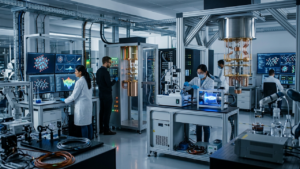
Battery technology is indispensable for the widespread adoption of electric vehicles (EVs) and renewable energy storage systems, with a global demand for high-performance and safe batteries on the rise. However, the discovery and development of new materials have historically been time-consuming and costly bottlenecks. Argonne National Laboratory, supported by the U.S. Department of Energy, is leveraging AI and automation technologies to overcome this challenge. This initiative is part of the ‘Self-Driving Labs’ concept, aiming to accelerate the discovery process tenfold by establishing a closed-loop R&D cycle where AI designs experiments, robots execute them, and AI analyzes the results. This represents a crucial strategy for establishing U.S. leadership in the international battery competition, benchmarking against advancements in Asian and European nations.
Strategic Significance & Outlook
The implementation of AI-driven materials discovery methods will have ripple effects beyond the battery sector, impacting a wide range of materials science fields, including catalysts, semiconductors, and structural materials. Moving forward, AI models are expected to become even more sophisticated, applying to the optimization of more complex material systems and synthesis pathways. The discovery of promising candidates like the N2116 electrolyte will particularly accelerate scale-up research for its practical application. In the future, fully autonomous ‘self-driving labs,’ minimizing human intervention, are expected to become the new standard for materials innovation, dramatically reducing the time from design to synthesis, characterization, and commercialization of new materials. This holds the potential to deliver innovative solutions to energy and environmental challenges more rapidly, globally impacting sustainable technology.
Get our weekly technology intelligence — free
Receive an infographic that lets you judge at a glance whether each field’s analysis report is worth reading.
Subscribe Free — Weekly Tech Intelligence
By subscribing, you’ll receive Troy-Technical’s weekly technology intelligence newsletter.
- Your email and selected fields are used only to deliver the newsletter.
- We never share your information with third parties.
- You can unsubscribe anytime via the link in each email.
See our Privacy Policy for details.
Takes about a minute · Unsubscribe anytime




Comments