Key Findings
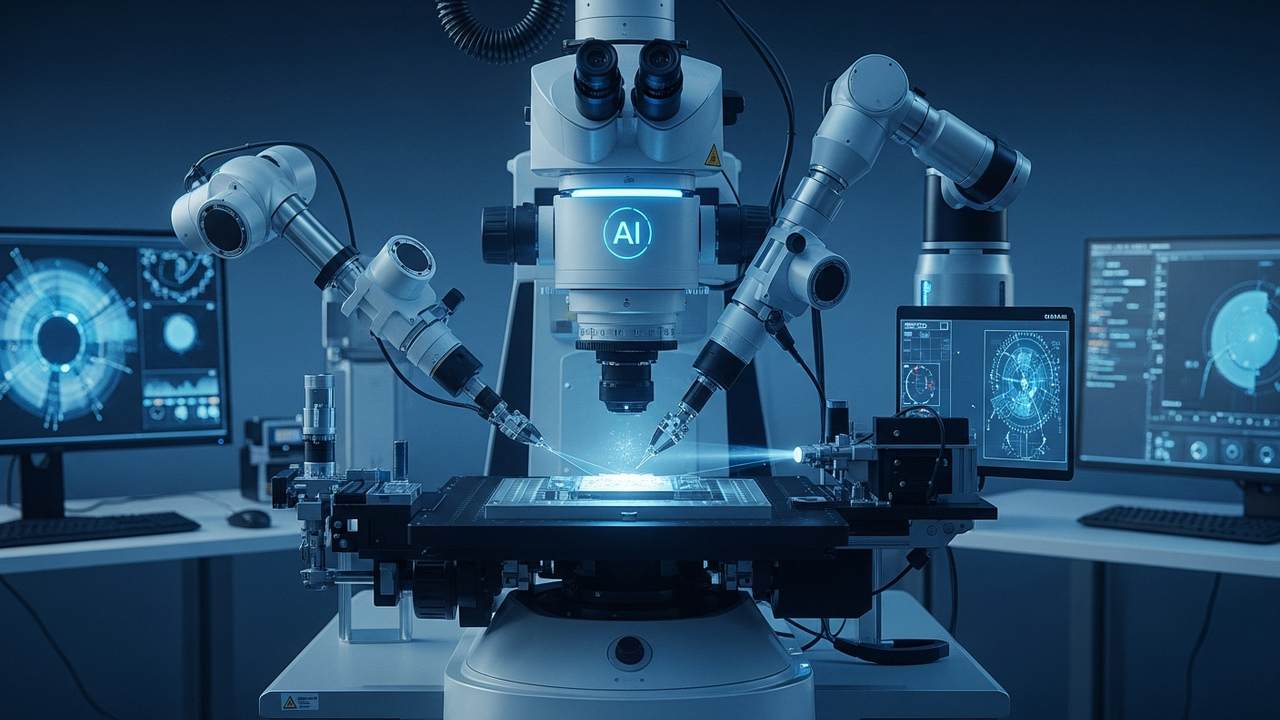
The evolution of Self-Driving Microscopy (SDM) has been comprehensively reviewed, highlighting its transition from merely automated systems to fully autonomous closed-loop systems, driven by the integration of AI and machine learning. This advancement is set to dramatically accelerate scientific research, particularly at the nanoscale.
Technical / Clinical Details
SDM leverages AI algorithms to autonomously execute data acquisition (e.g., optimizing scan paths, selecting regions of interest), real-time analysis (e.g., image recognition, pattern detection), and dynamic adjustment of experimental conditions based on the results. This allows researchers to explore nanoscale phenomena and material properties more efficiently and accurately, with minimal manual intervention. For instance, to elucidate the formation mechanism of specific nanostructures, AI can adjust microscope scan parameters, acquire optimal image data, analyze it on the fly, and determine the next observation point. This closed-loop control significantly reduces the time and effort traditionally required for microscope operation, alleviating research bottlenecks. Furthermore, the review discusses the potential of integrating SDM with autonomous synthesis systems, which would enable a distributed network experimental ecosystem where material characterization and synthesis are tightly linked, accelerating the entire process from novel material discovery to practical application.
Background & Context
In materials science, especially nanotechnology, understanding the correlation between material structure and properties at the nanoscale is paramount. However, high-resolution microscopes like traditional Scanning Probe Microscopes (SPM) require delicate operation by skilled operators and manual analysis of vast amounts of data, limiting the pace of research. Advancements in AI and machine learning have overcome this challenge, paving the way for microscopes to evolve into ‘self-driving’ systems that autonomously learn, explore, and optimize. This enables breakthroughs across a wide range of fields, from fundamental science to industrial applications.
Strategic Significance & Outlook
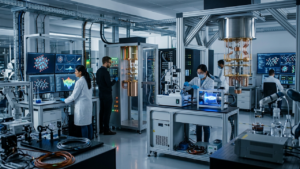
The evolution of Self-Driving Microscopy (SDM) will continue to expand the frontiers of nanomaterials research. Applications are particularly anticipated in fields where microstructures critically influence function, such as quantum materials, catalysts, nanoelectronics, and biomedical materials. The integration of SDM with autonomous synthesis systems is one of the ultimate goals of AI-driven materials discovery, further accelerating the realization of ‘self-driving labs.’ This ecosystem will seamlessly connect the design, optimization, and manufacturing of new functional materials, dramatically increasing the pace of scientific discovery and is projected to contribute to solving major societal challenges related to energy, environment, and healthcare.
Source: https://pubs.acs.org/doi/10.1021/acs.accounts.6c00273
Get our weekly technology intelligence — free
Receive an infographic that lets you judge at a glance whether each field’s analysis report is worth reading.
Subscribe Free — Weekly Tech Intelligence
By subscribing, you’ll receive Troy-Technical’s weekly technology intelligence newsletter.
- Your email and selected fields are used only to deliver the newsletter.
- We never share your information with third parties.
- You can unsubscribe anytime via the link in each email.
See our Privacy Policy for details.
Takes about a minute · Unsubscribe anytime




Comments