
Key Findings
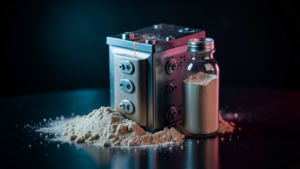
According to SciTechDaily, researchers have developed a groundbreaking AI-driven methodology that successfully identified two promising high-temperature dielectric material candidates from a vast virtual chemical space of 150 million possibilities, crucial for future electronics. This ‘inverse design’ strategy cleverly combines multimodal literature mining with physics-informed machine learning to efficiently determine material compositions by starting from desired performance objectives. This approach dramatically accelerates traditional materials discovery processes, representing a critical advancement for meeting the demands of advanced technologies operating in high-temperature environments, such as electric vehicles (EVs), power electronics, and aerospace equipment.
Technical & Clinical Details
The AI-driven materials discovery system first builds a knowledge base of material structures, compositions, and properties by mining extensive data from existing materials science literature. Next, machine learning models, incorporating principles of physics, predict the characteristics of unknown material candidates based on this data and specific dielectric performance targets (e.g., high heat resistance, low dielectric loss). In an inverse design approach, desired properties are defined first, and the AI then proposes chemical compositions likely to possess those properties. Unlike traditional ‘forward design’ (predicting properties from known materials), inverse design significantly narrows the search space, enabling more efficient material discovery. The AI screened 150 million virtual materials, ultimately pinpointing the two most promising candidates. These predicted materials are expected to combine stability at high temperatures with excellent dielectric properties, pending experimental validation for their practical applicability.
Background & Industry Context
The modern electronics industry, particularly in the EV and aerospace sectors, demands miniaturization, higher efficiency, and increased power output, leading to elevated operating temperatures within devices. Previous dielectric materials often reached their performance limits in such extreme environments. The discovery of materials that possess high heat resistance while maintaining superior dielectric properties is essential for the further advancement of these technologies. However, finding optimal materials from a vast array of candidates is a time-consuming and resource-intensive task, making conventional trial-and-error approaches inefficient. The introduction of AI offers a powerful solution to this challenge, driving a paradigm shift in materials science R&D.
Strategic Significance & Outlook
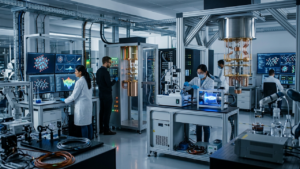
The success of AI-driven inverse design methods will extend to the exploration of many other functional materials, including semiconductors, catalysts, and battery materials. This technology has the potential to shorten material discovery periods from years to months, dramatically accelerating the market introduction of new products and technologies. In the future, deeper integration with ‘autonomous labs’—where AI autonomously handles material design, synthesis, and characterization—could usher in an era of ‘materials-on-demand’ driven by material innovation without human intervention. The two identified dielectric candidates are expected to contribute to improved EV charging efficiency, enhanced reliability of power electronics, and lighter, higher-performance aerospace equipment, generating significant economic impact across related industries. This clearly demonstrates AI’s continued expansion of the frontiers of materials science.
Get our weekly technology intelligence — free
Receive an infographic that lets you judge at a glance whether each field’s analysis report is worth reading.
Subscribe Free — Weekly Tech Intelligence
By subscribing, you’ll receive Troy-Technical’s weekly technology intelligence newsletter.
- Your email and selected fields are used only to deliver the newsletter.
- We never share your information with third parties.
- You can unsubscribe anytime via the link in each email.
See our Privacy Policy for details.
Takes about a minute · Unsubscribe anytime






Comments