Background
Polymer materials are indispensable across virtually every sector of modern society, from electronics and automotive to medicine and energy. However, their complex structures and diverse properties have historically rendered the discovery and optimization of new polymers a highly time-consuming and costly process. Leveraging its established expertise in polymer science, Japan aims to strengthen its competitive position by integrating cutting-edge AI and automation technologies. Research institutions like Tohoku University WPI-AIMR are at the forefront, striving to establish international leadership through the fusion of materials science and information science. With significant global investments in similar AI-driven material discovery programs, this research marks a crucial Japanese contribution to the intensifying international competition in materials informatics.
Key Findings
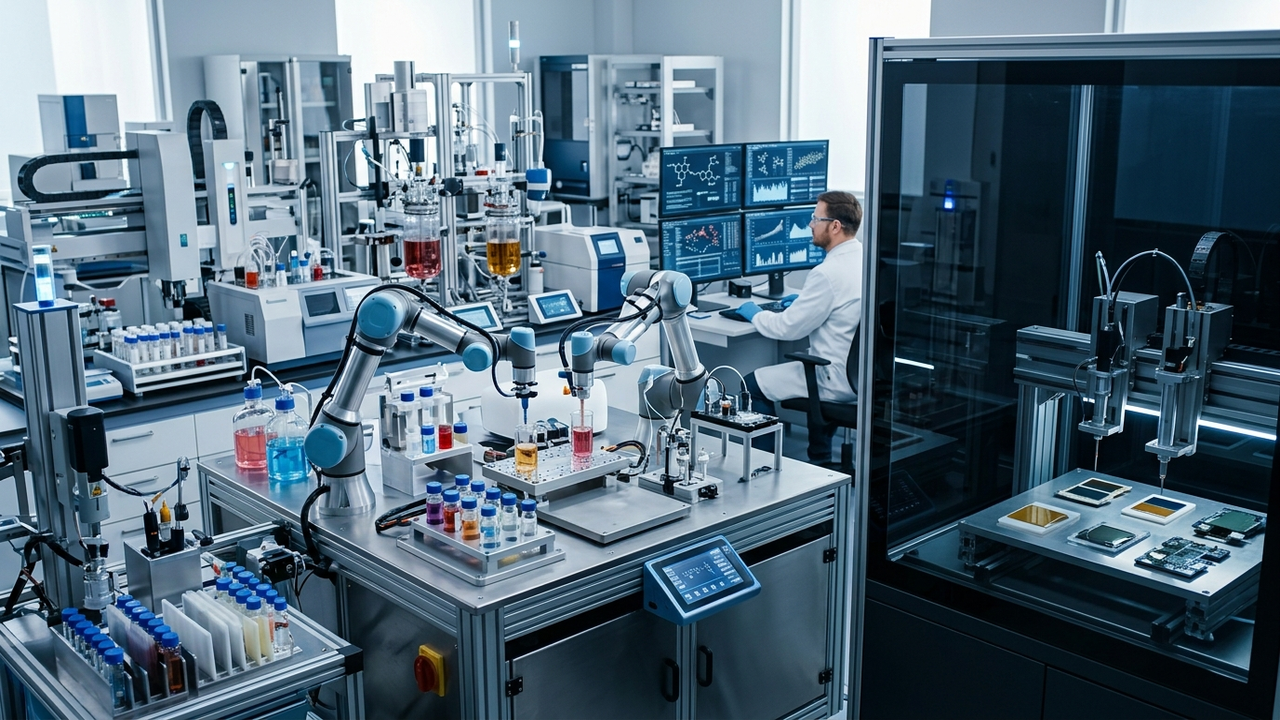
A research team at Tohoku University’s WPI-AIMR has developed an innovative integrated system designed to overcome significant bottlenecks in AI-driven polymer materials discovery. This pioneering system seamlessly integrates a suite of tools—including extensive polymer databases, advanced predictive models, intelligent AI agents, and fully automated laboratories—to enable self-automated workflows. The deployment of this closed-loop AI system, underpinned by vast material datasets, has demonstrably and dramatically enhanced the efficiency of energy material exploration. These groundbreaking findings, published in JACS Au on August 14, 2026, are poised to establish a new benchmark for AI applications in polymer science.
Technical Details
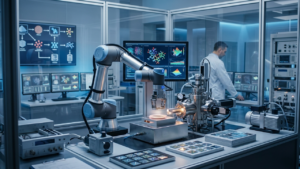
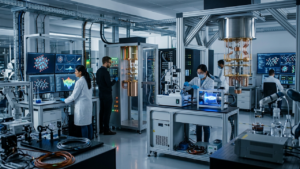
At the core of this integrated system lies a comprehensive database, meticulously aggregating vast amounts of polymer structure and property data. Machine learning models, trained on this extensive dataset, then predict novel polymer candidates optimized for specific functional requirements, such as high ionic conductivity, thermal stability, or enhanced mechanical strength. These predicted candidates undergo further evaluation and optimization by sophisticated AI agents. The most promising candidates are subsequently routed to an automated laboratory system. Here, robotic arms autonomously execute material synthesis, conduct precise characterization (e.g., Differential Scanning Calorimetry (DSC), Thermogravimetric Analysis (TGA), X-ray Diffraction (XRD)), and perform rigorous performance testing. Crucially, the experimental data generated is fed back into the central database in real-time, enabling the AI model to continuously learn and refine its predictions for subsequent iterations. This creates a fully automated ‘closed-loop’ process, drastically shrinking the polymer material development cycle from the traditional months or years down to mere weeks or months. The immediate impact is expected in energy materials, paving the way for novel electrolyte polymers in lithium-ion batteries and advanced polymer electrolyte membranes for fuel cells.
Strategic Significance & Outlook
Tohoku University’s pioneering research is set to profoundly reshape the landscape of AI-driven polymer materials discovery. Looking ahead, this integrated system is envisioned to scale significantly, broadening its applicability to an expansive array of polymer types, including self-healing polymers and biodegradable polymers. The advent of fully autonomous ‘self-driving labs’ promises to propel polymer material R&D forward at an unprecedented pace, with minimal human intervention required. This accelerated development is anticipated to yield enhancements in material functionality, sustainability, and cost-efficiency, thereby fast-tracking the introduction of innovative products to market. Ultimately, this work lays the groundwork for an end-to-end autonomous material innovation ecosystem, where AI intelligently generates polymer ‘recipes’ tailored to specific application demands, and robotic systems autonomously manufacture and validate their performance, establishing a new global benchmark for material innovation.
Source: https://www.tohoku.ac.jp/en/press/polymeric_materials_discover_with_ai.html
Get our weekly technology intelligence — free
Receive an infographic that lets you judge at a glance whether each field’s analysis report is worth reading.
Subscribe Free — Weekly Tech Intelligence
By subscribing, you’ll receive Troy-Technical’s weekly technology intelligence newsletter.
- Your email and selected fields are used only to deliver the newsletter.
- We never share your information with third parties.
- You can unsubscribe anytime via the link in each email.
See our Privacy Policy for details.
Takes about a minute · Unsubscribe anytime




Comments