
Key Findings
While attention often focuses on DRAM shortages in the AI semiconductor supply chain, ABF (Ajinomoto Build-up Film) substrates are emerging as a more profound and challenging bottleneck. These substrates are indispensable for packaging high-performance AI accelerators and servers, with their supply constraints becoming a primary factor delaying AI chip market entry.
Technical and Clinical Details
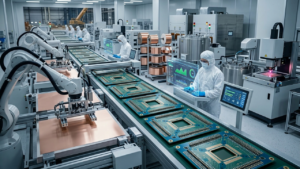
ABF substrates are crucial interconnect materials for packaging high-performance semiconductors such as CPUs, GPUs, and ASICs (Application-Specific Integrated Circuits). As AI chips evolve, the need to integrate more chiplets and HBM (High Bandwidth Memory) demands ABF substrates with a greater number of layers, finer wiring, and tighter tolerances. This escalating technical requirement makes ABF substrate manufacturing highly complex and capital-intensive, hindering rapid production capacity expansion. Japan’s Ibiden and Taiwan’s Unimicron are prominent ABF substrate manufacturers directly exposed to the rising demand for AI server and accelerator packaging, elevating their strategic value. Furthermore, AT&S, with its dual strength in ABF substrates and high-end PCBs (Printed Circuit Boards), is gaining attention as an investment vehicle for the AI theme.
Background and Industry Context
The explosive growth of AI applications demands a dramatic leap in data processing capabilities, prompting a shift in semiconductor chip design from traditional monolithic structures to advanced packaging techniques like chiplets and heterogeneous integration. In these new architectures, where multiple functional chips are integrated within a single package, ABF substrates become critically important for inter-chip signal transmission. However, ABF substrate manufacturing requires specialized materials (Ajinomoto Build-up Film) and sophisticated production processes, creating high barriers to entry and leading to market dominance by a few key players. This dynamic has resulted in supply failing to keep pace with surging demand, clearly highlighting ABF substrates as a bottleneck for the entire AI supply chain.
Strategic Significance and Outlook
The ABF substrate shortage is projected to persist until 2028, significantly impacting AI chip supply plans. While substrate manufacturers benefit from strong pricing power, they are simultaneously compelled to undertake massive capital investments to meet customer demands for increased production. This situation underscores the growing importance of long-term strategic partnerships between semiconductor manufacturers and ABF substrate suppliers. For investors, beyond DRAM and GPU manufacturers, ABF substrate suppliers such as Ibiden, Unimicron, and AT&S may represent the hidden ‘golden stocks’ poised to truly benefit from the AI boom. Technological innovation and capacity expansion in ABF substrates will be key determinants of the AI industry’s growth trajectory going forward.
Source: https://denisdoroshenko.substack.com/p/forget-dram-the-real-ai-shortage
Get our weekly technology intelligence — free
Receive an infographic that lets you judge at a glance whether each field’s analysis report is worth reading.
Subscribe Free — Weekly Tech Intelligence
By subscribing, you’ll receive Troy-Technical’s weekly technology intelligence newsletter.
- Your email and selected fields are used only to deliver the newsletter.
- We never share your information with third parties.
- You can unsubscribe anytime via the link in each email.
See our Privacy Policy for details.
Takes about a minute · Unsubscribe anytime







Comments