Key Findings
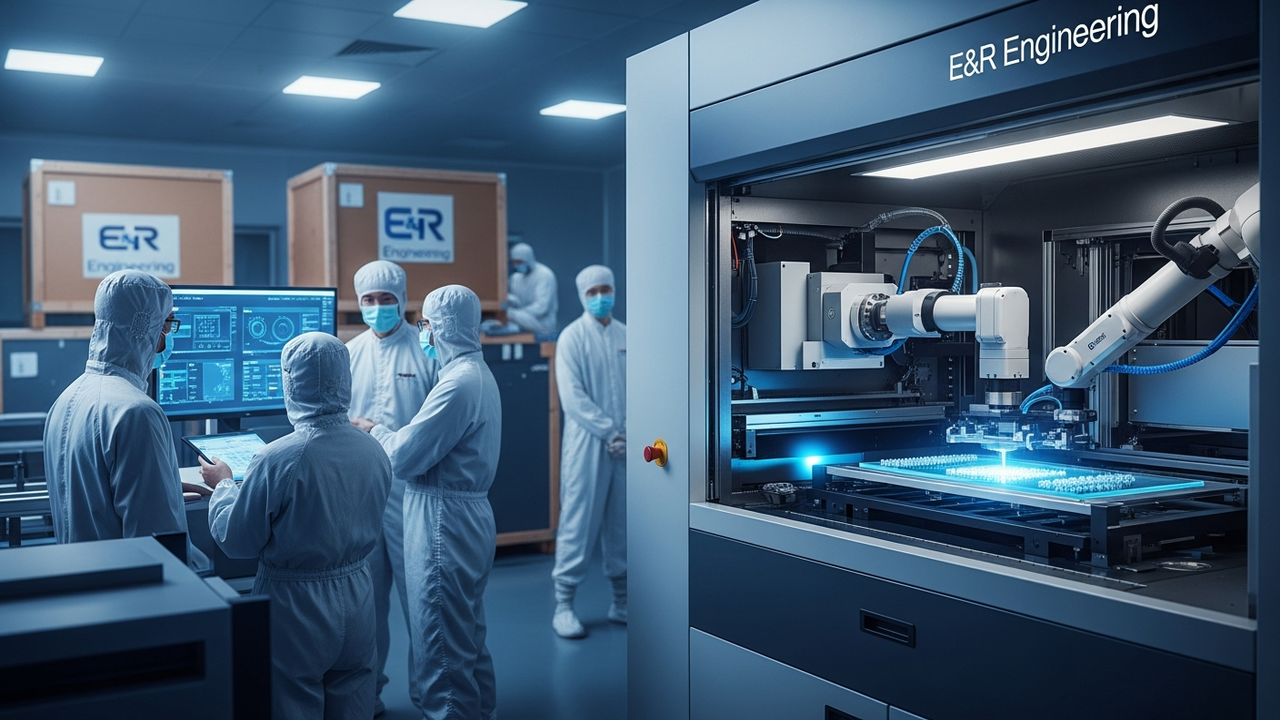
Amidst the surging demand for High-Performance Computing (HPC) and AI, glass substrates are gaining prominence as a next-generation advanced semiconductor packaging technology, accelerating the formation of a robust Through-Glass Via (TGV) supply chain in Taiwan. E&R Engineering has successfully developed critical laser modification technology for TGV manufacturing, with concrete steps towards commercialization demonstrated by completed equipment validation and shipments to a U.S. customer. Multiple Taiwanese companies are aiming for pilot production lines and yield testing within the current year, indicating rapid market momentum, and related equipment suppliers are actively securing orders.
Technical & Business Details
- Advantages of Glass Substrates: Glass substrates offer several significant advantages over traditional silicon interposers, including larger sizes, superior mechanical stability, a lower coefficient of thermal expansion (CTE), and improved high-frequency electrical characteristics. These properties enable higher I/O density and enhanced power delivery, crucial for large-scale AI chips and high-performance processors, thereby improving overall system performance and reliability.
- Significance of TGV Technology: TGV is a pivotal technology for next-generation packaging, enabling electrical connections through the thickness of the glass substrate. E&R Engineering’s developed laser modification technology facilitates precise and efficient TGV formation, paving the way for the mass production of glass substrates. This technology addresses previous challenges in micro-drilling and subsequent metallization processes.
- Materializing Supply Chain: In Taiwan, a comprehensive TGV glass substrate supply chain is coalescing, involving material suppliers, equipment manufacturers, and OSAT (Outsourced Semiconductor Assembly and Test) companies. Suppliers of equipment for all essential TGV manufacturing steps, including drilling, thermal treatment, wet processes, and inspection systems, have already begun receiving customer orders, signaling rapid market adoption.
Background & Context
The evolution of AI is pushing the boundaries of semiconductor packaging technology. For AI accelerators, high-speed data transfer and power efficiency between chips are paramount, and current organic substrates and silicon interposers are nearing their physical limits. Glass substrates are seen as an innovative solution to these challenges, with major players like TSMC, Intel, and Samsung incorporating them into their next-generation roadmaps. For instance, TSMC is planning mass production of glass substrates with its CoPoS (Co-Packaging Optical System) solution by 2028, with Nvidia confirmed as its initial customer.
Strategic Significance & Outlook
The establishment of Taiwan’s TGV supply chain represents a crucial step in accelerating the commercialization of glass-based advanced packaging technology. This will enable further leaps in AI semiconductor performance, making even more powerful AI systems possible. Sigmaintell Consulting forecasts the global glass-core packaging market to grow rapidly from approximately $240 million in 2026 to $8.5 billion in 2028 and $27.6 billion by 2030, indicating that investment in this sector is set to intensify significantly over the coming years. Taiwan is poised to establish itself as a dominant player in this nascent, high-growth market.
Source: https://www.taiwannews.com.tw/en/news/6397144
Get our weekly technology intelligence — free
Receive an infographic that lets you judge at a glance whether each field’s analysis report is worth reading.
Subscribe Free — Weekly Tech Intelligence
By subscribing, you’ll receive Troy-Technical’s weekly technology intelligence newsletter.
- Your email and selected fields are used only to deliver the newsletter.
- We never share your information with third parties.
- You can unsubscribe anytime via the link in each email.
See our Privacy Policy for details.
Takes about a minute · Unsubscribe anytime






Comments