Key Findings
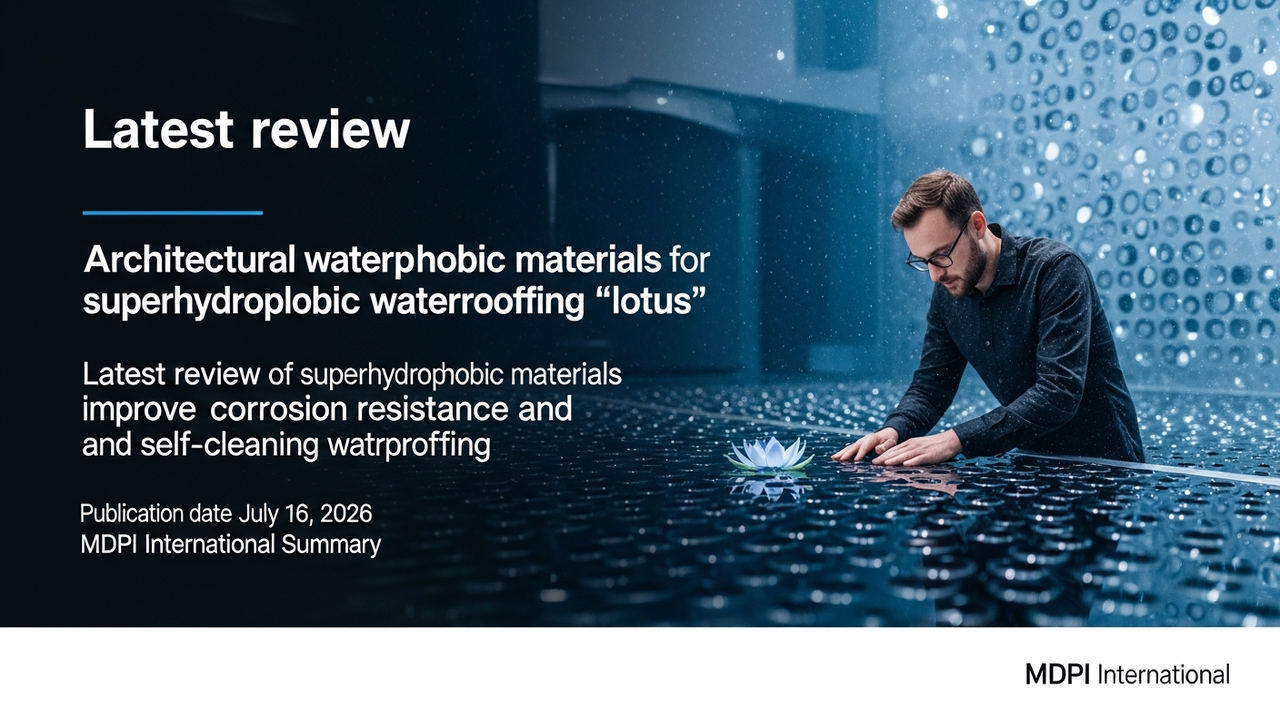
A comprehensive review has been published on the advancements in superhydrophobic materials for building waterproofing applications. The review meticulously analyzes wetting theory, the mechanisms of superhydrophobic surface formation, and material modification strategies, broadly presenting their application potential in the construction sector. Specifically, superhydrophobic coatings applied to concrete, steel, and building envelope materials are highlighted for their exceptional water repellency, self-cleaning capabilities, and corrosion resistance, positioning them as groundbreaking solutions for extending building lifespan and reducing maintenance costs.
Technical / Clinical Details
The essence of superhydrophobic materials lies in their surface exhibiting an extremely high contact angle with water (generally above 150 degrees) and a low sliding angle (typically less than 10 degrees). This property is achieved through a combination of finely structured surfaces and low surface energy materials, mimicking the ‘Lotus-Effect’ observed in nature. The review indicates that various materials, including fluorinated polymers, silica nanoparticles, barium titanate, and carbon nanotubes, are utilized in constructing superhydrophobic surfaces. These materials are applied to building substrates using diverse techniques such as sol-gel methods, electrochemical polymerization, chemical vapor deposition, and spray coating. This enables self-cleaning functions, where water droplets easily roll off the surface, effectively removing dust and dirt, and robust waterproofing, preventing deterioration from moisture infiltration.
Background & Context
Buildings are constantly exposed to the threats of deterioration from water, moisture, pollutants, and corrosive agents, which shorten their lifespan and escalate repair costs. While conventional waterproofing materials and coatings offer some protection, they often face limitations in long-term durability and self-cleaning capabilities. Superhydrophobic materials provide an innovative solution to these challenges, particularly promising for protecting buildings in harsh environments. This aligns with broader trends in the construction industry towards enhancing sustainability and efficiency.
Strategic Significance & Outlook
Several technical bottlenecks and industrialization challenges still impede the commercialization of superhydrophobic materials. Key issues include improving cost-effectiveness in large-scale production, ensuring long-term mechanical durability, enhancing stability against UV radiation and chemicals, and expanding applicability to diverse building materials. Future research and development must focus on overcoming these challenges and establishing more environmentally friendly and cost-efficient manufacturing processes. Promoting international collaboration and standardization will also be crucial in accelerating the widespread adoption of this innovative material technology.
Source: https://www.mdpi.com/2571-9637/9/3/60
Get our weekly technology intelligence — free
Receive an infographic that lets you judge at a glance whether each field’s analysis report is worth reading.
Subscribe Free — Weekly Tech Intelligence
By subscribing, you’ll receive Troy-Technical’s weekly technology intelligence newsletter.
- Your email and selected fields are used only to deliver the newsletter.
- We never share your information with third parties.
- You can unsubscribe anytime via the link in each email.
See our Privacy Policy for details.
Takes about a minute · Unsubscribe anytime






Comments