Background
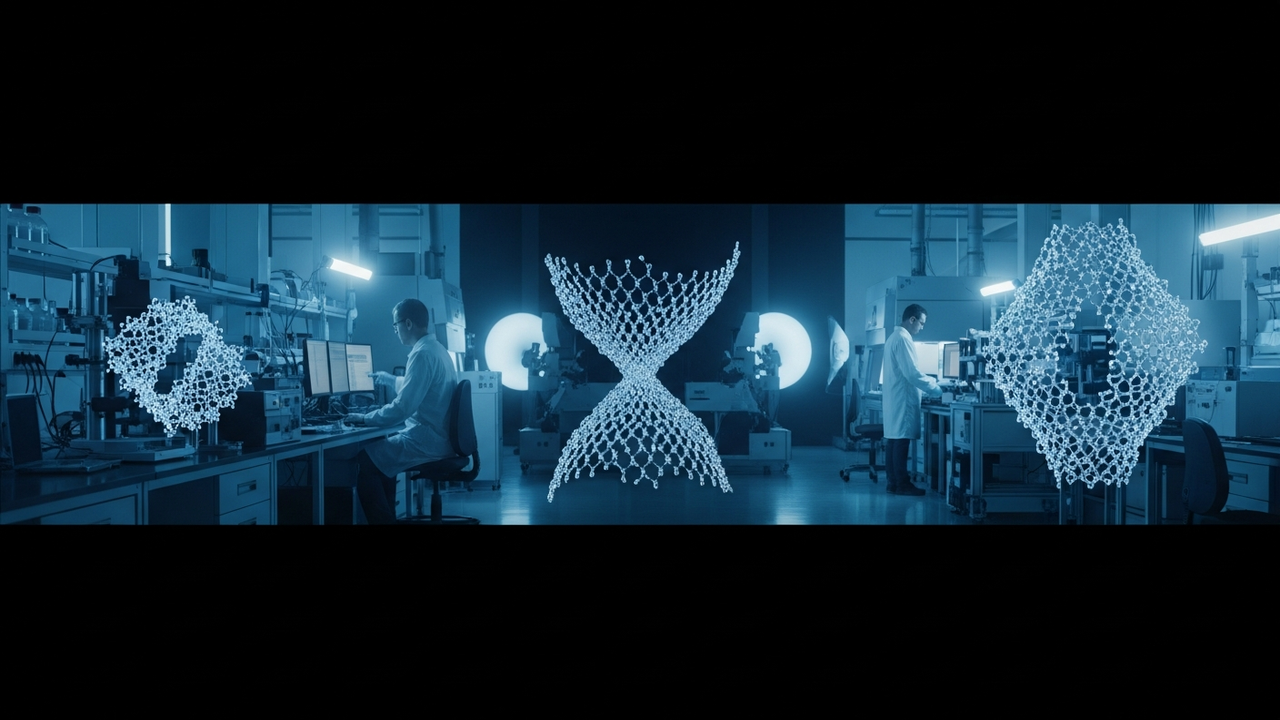
Quantum materials science is one of the most active fields in physics, aiming to fundamentally understand electron behavior and develop materials with new functionalities. Traditionally, material properties were primarily thought to be determined by chemical composition and crystal structure. However, the discovery of ‘twistronics’ revealed that a new degree of freedom—the geometric arrangement between layers—profoundly influences material properties. This goes beyond mere advancements in nanofabrication techniques, expanding the very concept of material design. This research holds the potential to be foundational for various cutting-edge technologies, including quantum computing, energy storage, and high-performance sensors, leading research institutions and companies worldwide to accelerate investments in this domain.
Key Findings
The 2026 Kavli Prize in Nanoscience has been awarded to Professors Eva Andrei, Pablo Jarillo-Herrero, and Allan MacDonald for their groundbreaking contributions to ‘twistronics,’ a revolutionary field that manipulates quantum states by precisely controlling the twist angle between atomic layers. Their seminal research demonstrated that a minute twist between graphene layers can dramatically alter electronic properties, fundamentally reshaping our understanding of quantum materials. Professor Andrei and colleagues were the first to experimentally observe that twisting two layers of graphene by a ‘magic angle’ of approximately 1.1 degrees could give rise to exotic quantum phenomena such as superconductivity and insulator transitions.
Technical Details
‘Twistronics’ involves stacking atomically thin layers of 2D materials, particularly graphene, and introducing a tiny rotation angle (twist angle) between them to induce entirely new electronic properties and quantum phenomena. Building on initial observations, Professor Jarillo-Herrero further demonstrated that precise control of this twist angle allows for dramatic tuning of the material’s electrical, magnetic, and optical properties. From a theoretical physics perspective, Professor MacDonald constructed groundbreaking models that explain these phenomena, elucidating the mathematical relationships between the twist angle and changes in electron band structure. This phenomenon reveals novel material properties unattainable through simple material combinations, offering a new paradigm for the design of, particularly, superconducting materials.
Strategic Significance & Outlook
The awarding of the 2026 Kavli Prize reaffirms the global significance and future potential of the ‘twistronics’ field. It is anticipated that this field will expand further, with applications to various 2D materials beyond graphene (e.g., molybdenum disulfide, boron nitride) and the development of new functional materials using more complex multilayer structures. This promises breakthroughs in technologies previously considered impossible, such as room-temperature superconductors, fundamental elements for topological quantum computers, and highly efficient optoelectronic devices. This research serves as an exemplary case of how fundamental science contributes to technological innovation and shapes the future of society.
Get our weekly technology intelligence — free
Receive an infographic that lets you judge at a glance whether each field’s analysis report is worth reading.
Subscribe Free — Weekly Tech Intelligence
By subscribing, you’ll receive Troy-Technical’s weekly technology intelligence newsletter.
- Your email and selected fields are used only to deliver the newsletter.
- We never share your information with third parties.
- You can unsubscribe anytime via the link in each email.
See our Privacy Policy for details.
Takes about a minute · Unsubscribe anytime



Comments