
Key Findings
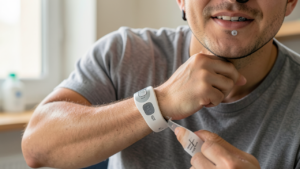
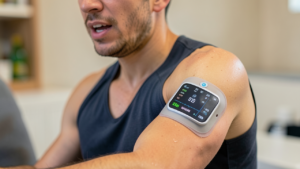
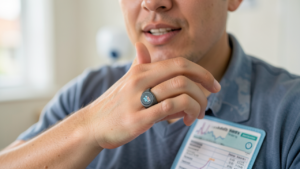
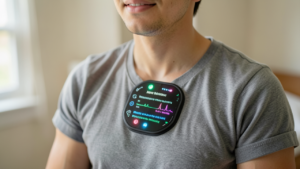
An engineering team at the University of California San Diego (UC San Diego) announced the development of the world’s first fully integrated smart ring capable of simultaneously and continuously tracking multiple biomarkers—including glucose, ketones, vitamin C, uric acid, lactate, and alcohol—directly from sweat. This innovative wearable device, worn on the finger, automatically collects sweat via a permeable hydrogel and analyzes this biological information in real-time using a built-in electrochemical sensor array. The technology promises to deliver detailed insights into an individual’s metabolic status and health trends, opening new avenues for non-invasive health monitoring and personalized preventive medicine.
Technical & Clinical Details
- Fully Integrated Smart Ring: While conventional wearable devices often specialize in specific biomarkers or utilize separate sensors for multiple functions, this smart ring is the first to accurately measure multiple biomarkers simultaneously by integrating several electrochemical sensors into a single, compact form factor.
- Non-Invasive Sweat Collection and Analysis: A permeable hydrogel embedded within the ring passively draws and collects sweat from the user’s skin. This sweat sample is then guided through microfluidic channels within the ring to an electrochemical sensor array, which incorporates enzymes specific to each biomarker, such as glucose oxidase and lactate oxidase. Concentrations are measured via changes in electrical signals, allowing high-frequency data acquisition without invasive methods like blood draws.
- Monitored Biomarkers: The current prototype can monitor a diverse range of crucial health indicators, including blood sugar levels (glucose), ketone bodies (indicating fat burning), vitamin C (related to immune function), uric acid (associated with kidney function and metabolism), lactate (indicating muscle fatigue), and alcohol consumption levels.
Background & Industry Context
The wearable health monitoring market is expanding rapidly, but many devices have been limited to basic metrics like heart rate and activity levels. There is a strong demand across various application areas—including diabetes management, early detection of metabolic disorders, optimization of nutrition and exercise, and real-time alcohol intake tracking—for technologies that non-invasively and continuously monitor more detailed biofluid-based biomarkers. This breakthrough from UC San Diego transcends the limitations of conventional wearable technology, paving the way for more personalized and precise medicine.
Strategic Significance & Outlook
This smart ring technology holds immense potential to provide more detailed insights into individual health status and enable proactive health management. Moving forward, its accuracy and reliability will be further validated through clinical trials, aiming for medical device approval and eventual commercialization as a consumer product. In the future, this technology is expected to be widely adopted for glucose management in diabetic patients, performance optimization for athletes, or as an advanced health tool for health-conscious individuals, significantly contributing to extended healthy lifespans and reduced healthcare costs. Its multi-parameter simultaneous measurement capability could set a new standard for wearable biosensors.
Get our weekly technology intelligence — free
Receive an infographic that lets you judge at a glance whether each field’s analysis report is worth reading.
Subscribe Free — Weekly Tech Intelligence
By subscribing, you’ll receive Troy-Technical’s weekly technology intelligence newsletter.
- Your email and selected fields are used only to deliver the newsletter.
- We never share your information with third parties.
- You can unsubscribe anytime via the link in each email.
See our Privacy Policy for details.
Takes about a minute · Unsubscribe anytime





Comments