
Key Findings: University of Chicago and Argonne National Laboratory Secure $20M NSF Grant to Revolutionize Polymer Research with AI Robotic Lab ‘PoLARIS’
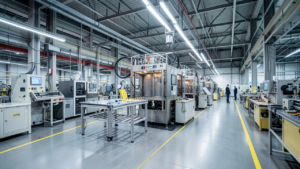
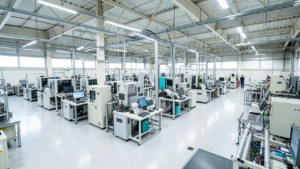
A research team from the University of Chicago and Argonne National Laboratory has been awarded a total of $20 million in grants from the U.S. National Science Foundation (NSF) to establish “PoLARIS” (Polymer Laboratory for AI, Robotics, Informatics, and Standards), a remotely operable robotic laboratory. This state-of-the-art facility aims to dramatically accelerate the process of advanced polymer research, making it more accessible and reproducible by integrating artificial intelligence (AI), robotics, and specialized analytical instruments.
Technical & Business Details: Automation of Polymer Research through Fusion of AI, Robotics, and Informatics
PoLARIS leverages AI and robotics to automate the entire process of polymer synthesis, characterization, and data analysis. Robotic arms perform precise chemical synthesis and test materials under various environmental conditions. The vast amounts of collected data are then analyzed by materials informatics techniques, and machine learning models learn the relationships between polymer structures and their properties. This closed-loop system allows researchers to design and execute experiments remotely, acquiring and analyzing data in real-time. This significantly reduces experimental trial-and-error, dramatically shortening the time from new polymer material discovery to optimization. Specifically, its efficiency is enhanced in developing polymers with targeted functionalities (e.g., self-healing properties, conductivity, biocompatibility).
Background & Industry Context: Challenges in Polymer Development and the Rise of Industry 4.0
Polymer materials are indispensable in nearly all industrial sectors of modern society (automotive, medical, electronics, energy, etc.). However, the discovery and optimization of new polymers have been a time-consuming and costly bottleneck due to their diversity and complexity. In the context of Industry 4.0 and smart lab concepts, automated research facilities that integrate AI and robotics are key to overcoming these challenges and dramatically boosting R&D efficiency. Facilities like PoLARIS represent a crucial infrastructure investment to strengthen global competitiveness in this field.
Strategic Significance & Outlook: Rapid Market Entry of New Polymer Materials and Broad Industrial Impact
The establishment of PoLARIS will dramatically shorten the time from new polymer material discovery to market entry, accelerating innovation in manufacturing. This will facilitate the rapid development of higher-performance and more sustainable products (e.g., lightweight structural materials, longer-lasting batteries, biodegradable plastics), contributing to strengthening the competitiveness of related industries and solving societal challenges. The remote operation capability is expected to break down geographical barriers, enabling more diverse researchers and companies to access advanced research infrastructure, thereby stimulating the entire research ecosystem. This serves as a significant driving force for digital transformation in materials science.
Get our weekly technology intelligence — free
Receive an infographic that lets you judge at a glance whether each field’s analysis report is worth reading.
Subscribe Free — Weekly Tech Intelligence
By subscribing, you’ll receive Troy-Technical’s weekly technology intelligence newsletter.
- Your email and selected fields are used only to deliver the newsletter.
- We never share your information with third parties.
- You can unsubscribe anytime via the link in each email.
See our Privacy Policy for details.
Takes about a minute · Unsubscribe anytime







Comments