
Key Findings
The AI optical chip market is currently experiencing substantial growth, fueled by the explosive expansion of artificial intelligence (AI) and machine learning (ML) applications. This groundbreaking technology leverages light for both data transmission and processing, achieving dramatic improvements in bandwidth, latency, and power efficiency across the board compared to conventional electronic chips. Consequently, AI optical chips are establishing themselves as an indispensable foundational technology for scaling AI workloads within data centers and high-performance computing (HPC) environments.
Technical / Clinical Details
AI optical chips integrate state-of-the-art photonics technologies, including silicon photonics, co-packaged optics (CPO), and optical neural networks. This enables light signals to transmit data at high speeds with low loss both within and between chips, effectively overcoming the ‘copper wall’ problem—namely, increasing power consumption and bandwidth limitations—inherent in traditional electrical wiring. Specifically, they significantly alleviate the I/O bandwidth constraints of electronic chips, efficiently handling the immense data flow required for AI model training and inference. As a result, AI clusters can be deployed with higher density, improving the utilization efficiency of computational resources and reducing overall operational costs.
Background & Context
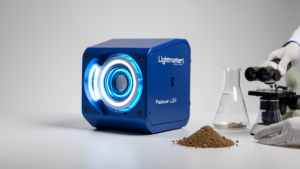
The evolution of AI places unprecedented demands on computing infrastructure. Training large-scale AI models requires massive data transfers between GPUs, which has historically been a bottleneck for conventional electronic interconnects. As Moore’s Law approaches its physical limits, the semiconductor industry is focusing not only on enhancing data processing capabilities but also on improving data transfer efficiency and power efficiency. Leading companies such as NVIDIA, Intel, and Lightmatter recognize optical technology as key to next-generation AI systems and are making massive investments in this field. The increasing demand for AI optical chips clearly indicates that this technology is essential for shaping the future of AI.
Strategic Significance & Outlook
AI optical chip technology is projected to continue its strong growth across next-generation computing applications, particularly in AI. The widespread adoption of this technology will not only dramatically boost the performance of AI servers but also holds the potential to significantly improve the overall energy efficiency of data centers. In the future, more densely integrated optical I/O solutions are expected to become prevalent and serve as standard features in chip design. This is anticipated to foster new innovations in all fields requiring high bandwidth and low latency, such as autonomous driving, AR/VR, quantum computing, and healthcare diagnostics. AI optical chips will strengthen the foundation of the information society and build the technological base for AI to deeply permeate all aspects of society.
Get our weekly technology intelligence — free
Receive an infographic that lets you judge at a glance whether each field’s analysis report is worth reading.
Subscribe Free — Weekly Tech Intelligence
By subscribing, you’ll receive Troy-Technical’s weekly technology intelligence newsletter.
- Your email and selected fields are used only to deliver the newsletter.
- We never share your information with third parties.
- You can unsubscribe anytime via the link in each email.
See our Privacy Policy for details.
Takes about a minute · Unsubscribe anytime







Comments